• 2 min read
MS-21 gets runway aid for PD-14 engine failures
A new MS-21 control algorithm is designed to keep the jet on the runway centerline after touchdown, even with crosswinds, ice, and one failed PD-14.
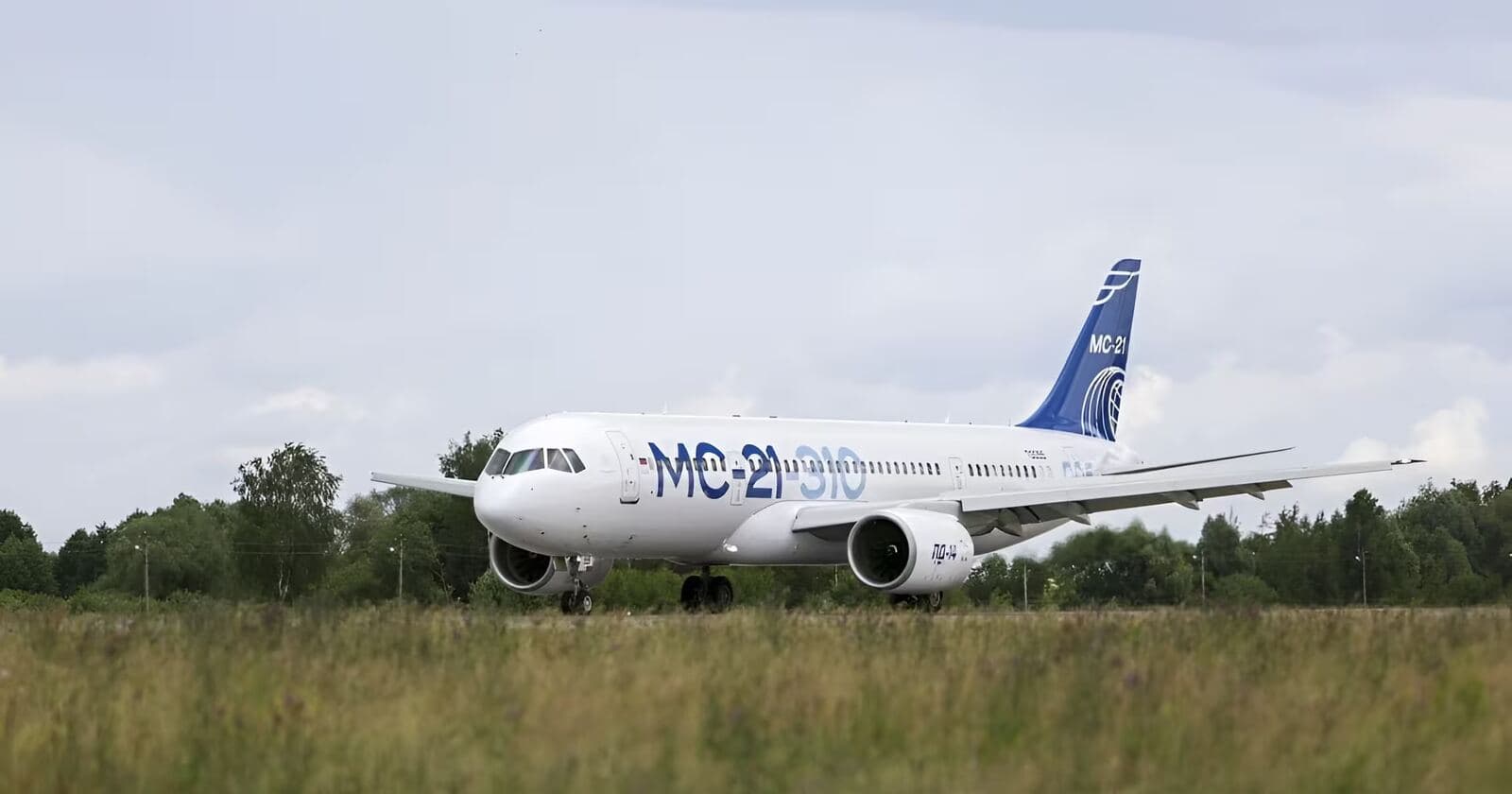
Image: ITzine
Engineers at the Moscow Institute of Electromechanics and Automation have developed a system for the MS-21 that helps the airliner stay on the runway centerline even during a hard landing, in a crosswind, and after a PD-14 engine failure.
According to the patent materials, the algorithm intervenes in spoiler operation and maintains control after touchdown. The problem is a practical one for civil aviation: on large airliners, crosswinds, a slippery runway, and asymmetric thrust after an engine failure can make directional control during the landing roll much harder.
The system:
Recommended reading
Boeing 787 engine hits 50 million hours
- uses data from the localizer radio beacon
- monitors the position of the rudder
- automatically partially retracts spoilers on one half-wing
- can be instantly disabled by the pilot
In the modeled scenario, the aircraft landed on an ice-covered runway with a friction coefficient of 0.2, in a 15 m/s crosswind, with one engine failed. Without the new control logic, simulation data showed the jet departing beyond the runway limits by nearly 25 meters. With the algorithm enabled, maximum lateral deviation dropped to about 1 meter, and the landing roll was even slightly shorter.
The institute remains one of the main developers of the information and computing complex for the MS-21. The work also fits into the broader import-substitution program for the aircraft’s onboard digital control system. The jet already has its own PD-14 engine; now it also has more refined ground-handling logic, where the margin for error is often smaller than it is in the air.

Frontier Editor
Dan is our resident futurist, covering electric mobility, space exploration, and the smart home. He's interested in atoms just as much as bits. Whether it's a new battery chemistry, a reusable rocket, or a protocol that finally makes IoT devices talk to each other, Dan breaks down the engineering that pushes humanity forward.
via ITzine