• 3 min read
OpenAI backlash hits Moonshot’s Kimi K3
Moonshot AI’s open-source Kimi K3 is drawing praise for performance—and a fierce backlash from OpenAI allies over Chinese models.
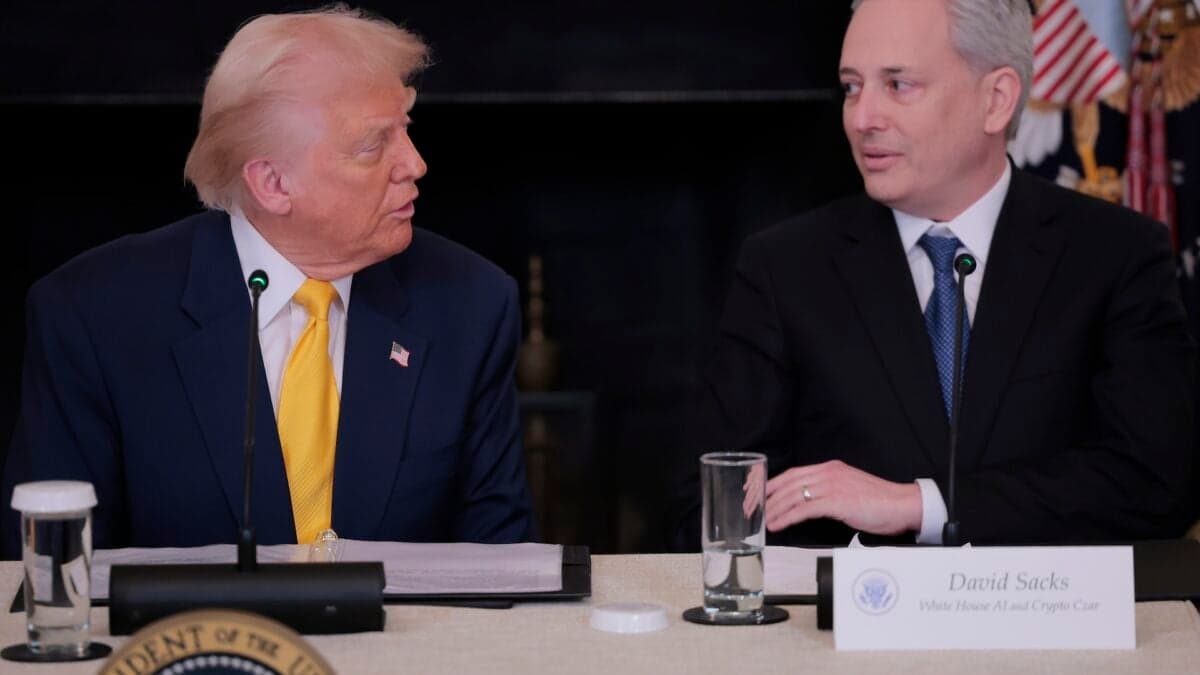
Image: Gizmodo
Moonshot AI’s Kimi K3 has kicked off another fight over open-source AI. The Chinese lab released the model last week, and the response quickly spilled from benchmarking talk into a broader political and business clash over whether powerful open-weight models should be allowed to spread.
At the center of it is Dean Ball, OpenAI’s recently hired “Head of Strategic Futures.” In posts on X, Ball said Kimi K3 is competitive with leading US systems, a claim the source says is supported by benchmarks reportedly putting it alongside Anthropic’s Claude Fable and OpenAI’s GPT-5.6. He also called the open-source approach a risk that makes AI “ungovernable.”
“I am personally surprised the Chinese state continues to allow the open sourcing of models this good, given potential risks. To be clear, I myself might be fine with models presenting this level of marginal risk being open weight, but I am surprised that China is fine with it.”
Ball went further, arguing that Chinese labs are embracing open models because “they are behind” and because open-weight releases create “a cloak of ungovernability” over AI. He also argued that open source is “inherently decelerationist” because it reduces incentives for future AI capex. In his view, that could end in “full AI communism,” where AI becomes a state-provided public utility rather than a commercial product.
The source frames Ball’s argument less as a safety case than as a defense of the economics behind closed-model companies such as OpenAI. It also points to a tension with OpenAI’s earlier charter, which said the company would stop competing and help another organization if that group reached artificial general intelligence first.
Trump administration scrutiny of Chinese AI models
Ball also suggested the Trump administration may treat Chinese models as a strategic threat. According to the source, he wrote that officials would not necessarily need an outright ban. Instead, they could warn that there “may be backdoors in Chinese AI models,” whether or not that is true, creating enough regulatory risk to push regulated enterprises away.
Recommended reading
Nvidia’s deepfake detector scans video in 22 ms
That idea lines up with a recent Axios report cited by the source. Axios said the administration had previously explored putting Chinese AI labs on the Commerce Department’s Entity List, which would restrict operations in the US without a license. Trump also reportedly considered an executive order that would make US companies responsible for risks tied to hosting Chinese models.
David Sacks pushes back
Not everyone on the right agrees with restricting open models. David Sacks, the former AI and Crypto Czar to Trump, criticized Ball over the weekend, writing on X that “The leading closed labs, already a duopoly in terms of AI model revenue, want the government to eliminate their open-source competition.”
The source notes that Sacks is hardly a pure open-source advocate. It describes him as broadly hostile to regulation and says he has previously accused Anthropic of seeking regulatory capture. It also says he reportedly played a leading role in killing federal AI legislation and backed efforts to limit state-level rules.
That leaves Kimi K3 as more than just another model launch. It has become a flashpoint in a bigger fight over China, competition, and whether the next wave of AI should be controlled by a few closed labs or made widely available at lower cost.

AI Editor
Ava covers the rapidly evolving world of artificial intelligence, from foundational models and research labs to the real-world economics of intelligence. With a background in computational linguistics, she cuts through the hype to find out what actually works. She firmly believes that benchmarks are just marketing until reproduced in the wild.
via Gizmodo