• 2 min read
Ouroboros speeds edge video AI by 2.61x
Seoul National University says Ouroboros cuts video AI computation by 87.0% and energy use by 64.5% on NVIDIA Jetson Orin devices.
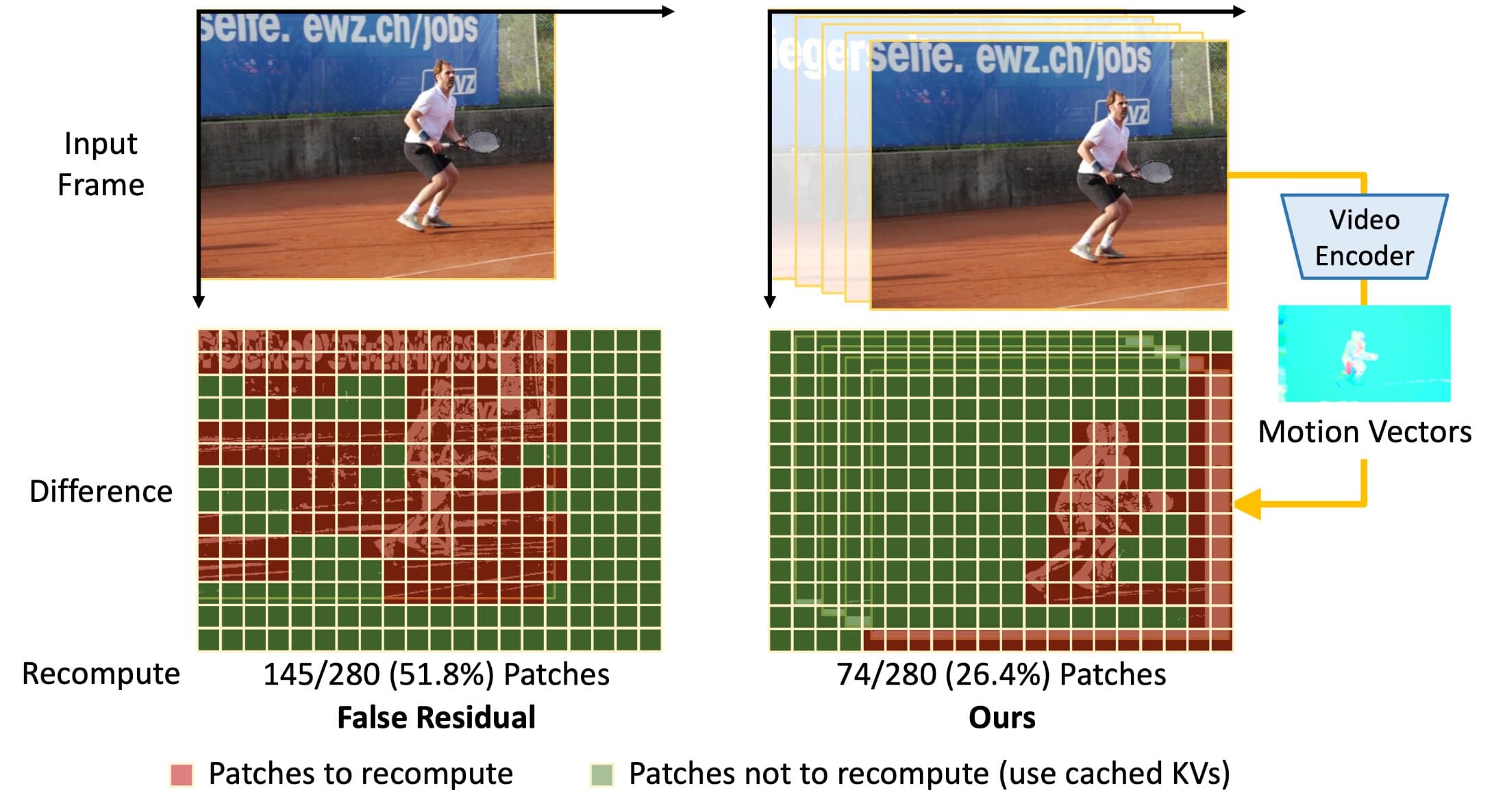
Image: TechXplore
A team at Seoul National University College of Engineering says its Ouroboros system can make vision transformer video analysis run 2.61× faster on edge devices while using just 13.0% of the computation required by conventional methods. In tests on NVIDIA Jetson Orin hardware, the researchers reported an 87.0% reduction in computational load and a 64.5% drop in energy consumption, with accuracy loss kept below 1% for object detection and instance segmentation.
The work was led by Kyunghan Lee, a professor in the Department of Electrical and Computer Engineering, and was presented orally on June 23 at ACM MobiSys 2026, held June 22–24 in Cambridge, U.K.
Current video AI systems often waste compute by reprocessing visual information that barely changes from frame to frame. That is especially costly for vision transformers, which split images into many patches and calculate relationships across all of them, driving up memory and compute demands on devices such as smartphones, robots and drones.
Ouroboros tackles that by tracking motion rather than relying only on pixel positions or frame differences. The system uses motion vectors from hardware video encoders to identify visual information that persists across consecutive frames, even when objects or backgrounds move. It then recomputes only regions with meaningful changes and reuses previous results elsewhere.
The researchers also introduced a toroidal input space so objects crossing the left-right or top-bottom edges of a frame can still be treated as continuous. They paired that with a computation structure designed to reduce memory access costs, so lower compute demand translates into real speed and energy gains.

Recommended reading
OVH patched Januscape with mass reboots and a Sydney test
The team says the approach is a system-level technology, not a new vision transformer model, which should make it easier to apply across existing video AI models. It also reported benefits in edge-server setups, where Ouroboros achieved higher accuracy with lower network bandwidth than existing methods.
Lee said the group plans to commercialize the technology with physical AI and AI semiconductor companies.
“This research is significant in that it secures a core technology capable of simultaneously addressing both computational and network bottlenecks, which have been major obstacles to implementing physical AI systems, including humanoid systems. We plan to actively pursue commercialization of Ouroboros in collaboration with physical AI and AI semiconductor companies.”
The paper is “Ouroboros: Instilling Motion Awareness in ViTs for Efficient Video Analytics on the Edge” by Chanjeong Park et al., published in the Proceedings of the 24th Annual International Conference on Mobile Systems, Applications and Services (2026), DOI: 10.1145/3745756.3809212.

Enterprise Editor
Marcus follows the money. He covers enterprise software, cloud architecture, and the tectonic shifts in Big Tech strategy. He translates dense earnings calls and complex M&A activity into actionable insights about where the industry is actually heading. If a tech giant makes a silent pivot, Marcus is usually the first to notice.
via TechXplore