• 2 min read
PennyLane packs quantum dev tools into one open platform
PennyLane is an open-source platform for quantum computing, machine learning, and chemistry, with Python 3.11+ support and broad hardware integration.
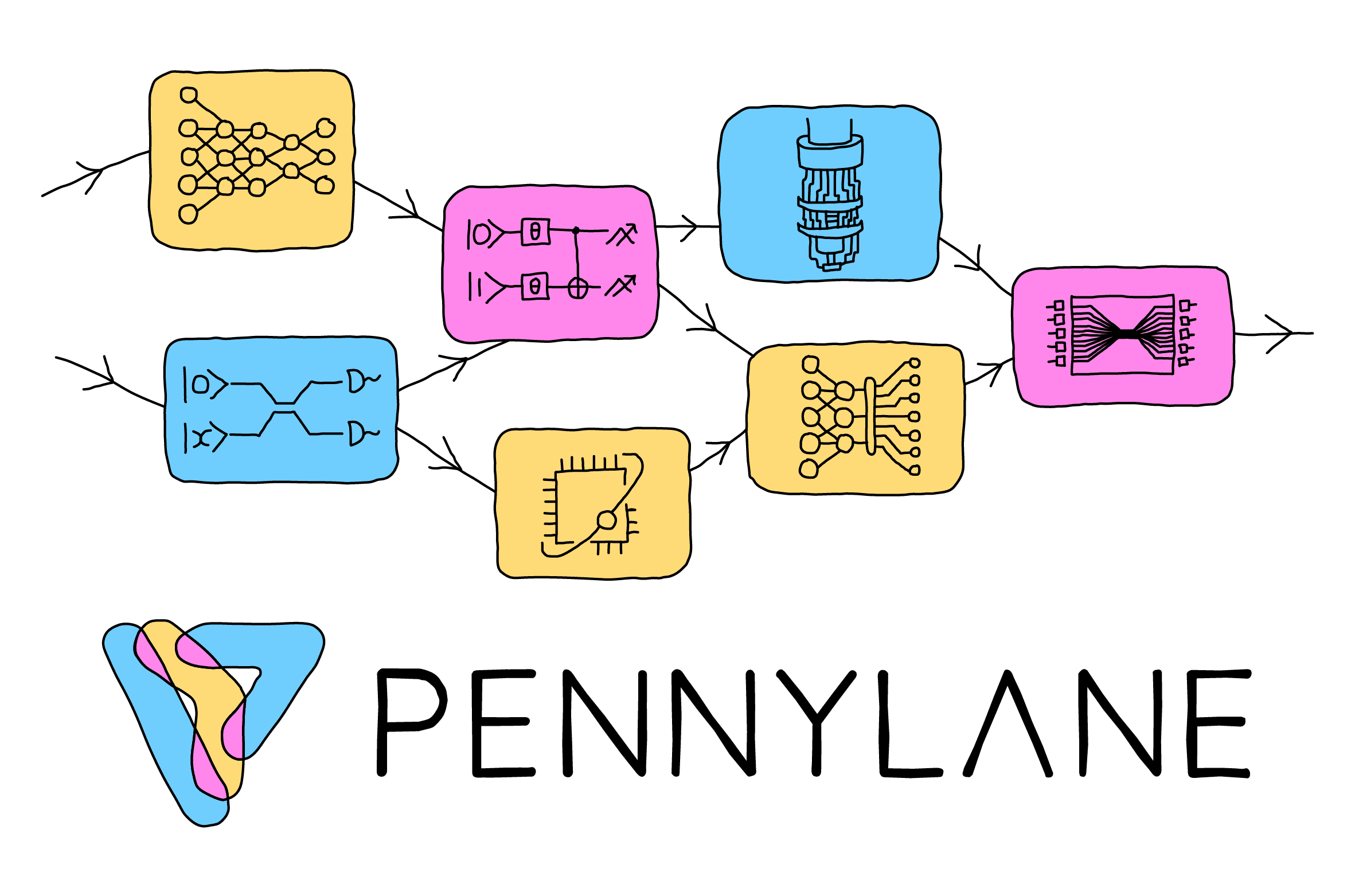
Image: Hacker News
PennyLane is an open-source quantum software platform aimed at quantum computing, quantum machine learning, and quantum chemistry. The project is designed to take developers from early experimentation to production-oriented implementation, with support for algorithm building, simulation, compilation, and deployment across different types of quantum hardware.
The repository highlights a few core selling points:
- access to a large library of research demos and interactive tutorials
- tooling for quantum chemistry, quantum information, optimization, and quantum machine learning
- performance-focused components including the Catalyst compiler and Lightning simulators
- compatibility with multiple hardware approaches, including superconducting qubits, trapped ion systems, neutral atoms, and photonics
According to the project page, PennyLane is built to be hardware agnostic while still offering tools to estimate resources and compile circuits for current and future devices. It also points to a large user community spanning researchers, developers, educators, and newcomers entering the field through hackathons and tutorials.

Recommended reading
OLED iPad mini could arrive in October
For installation, PennyLane requires Python version 3.11 and above and can be installed with pip using python -m pip install pennylane. The project also offers Docker images through its Docker Hub page.
New users are directed to an interactive tutorial set and a quickstart guide to begin building quantum circuits. The project also links out to documentation, developer guides, a discussion forum, and a library of demos for deeper research exploration.
Contributors are invited to fork the repository and submit pull requests, while support requests and bug reports are handled through the project’s GitHub issue tracker and discussion forum.
The project asks researchers using PennyLane to cite Ville Bergholm et al., PennyLane: Automatic differentiation of hybrid quantum-classical computations. 2018. arXiv:1811.04968. PennyLane is released under the Apache License, Version 2.0.

Computing Editor
Tomas lives in the terminal. He covers chips, laptops, and operating systems with a focus on performance and efficiency. He reads kernel changelogs the way other people read fiction, and he's always on the hunt for the perfect mechanical keyboard switch. If it processes data, Tomas has an opinion on it.
via Hacker News