• 3 min read
PewDiePie launches Odysseus, a local AI rival to ChatGPT
PewDiePie has unveiled Odysseus, a self-hosted AI environment he says is meant to compete with ChatGPT, Claude, and other cloud-based assistants. The pitch is straightforward: keep the model and your data on your own dev
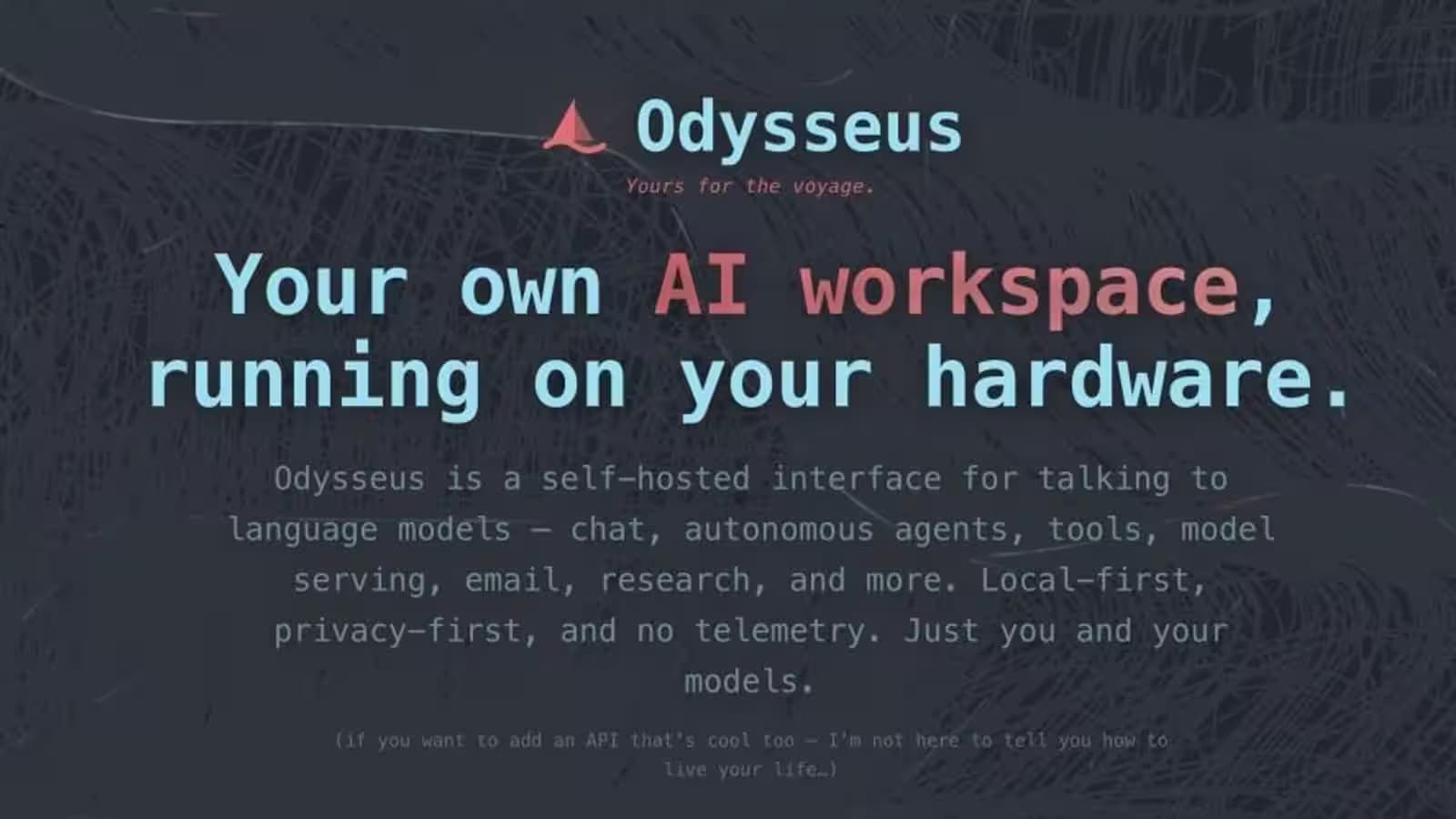
Image: ixbt.com
PewDiePie has unveiled Odysseus, a self-hosted AI environment he says is meant to compete with ChatGPT, Claude, and other cloud-based assistants. The pitch is straightforward: keep the model and your data on your own device, then only reach outside when you choose to. That makes Odysseus a local AI rival to ChatGPT in a year when every AI company wants your files, your prompts, and probably your soul.
Odysseus is being presented as a broader workspace rather than a single chatbot. It combines chat, document editing, and file-processing tools, with image editing also on the roadmap. PewDiePie says the project is still far from a polished product, which is refreshingly honest for a launch in a space that often treats “alpha” like a compliment.
How Odysseus works as a local AI workspace
The core promise is local execution. Instead of sending personal information to a third-party cloud, Odysseus runs on the user’s machine and keeps the main logic and data there. External APIs can still be connected, but they are meant to sit on the edge of the system rather than define it.

Recommended reading
xAI Sues Grok User Over Child Abuse Images
That model is not new, but it is getting more attention as users worry about privacy, cost, and vendor lock-in. Open-source local AI tools have been growing fast, and the market is already crowded with alternatives that try to offer similar control without forcing everything through a single cloud account.
Privacy-first design, with a few sharp edges
PewDiePie frames Odysseus as an assistant for writing, fact-checking, and polishing content, not a machine intended to replace human work. The more ambitious claim is that it can learn from the user over time by preserving context and adapting responses, which is exactly the sort of promise that sounds great until security researchers start asking awkward questions.
That concern is already surfacing. Because the system has broad access to local files and can operate with elevated permissions, developers and security researchers have pointed to possible attack paths. In other words, the same access that makes Odysseus useful could also make it dangerous if the architecture is sloppy.
Odysseus availability on Windows, Linux, macOS, and mobile
The project is already available on several platforms, including Windows, Linux, macOS, and mobile devices, thanks in part to community work. It is also being offered as free and open for further development, which gives it a better shot at building an ecosystem than a closed solo project would ever have.
The real test is whether Odysseus can grow beyond creator hype and into something stable enough for daily use. If it does, it could become a neat counterweight to centralized AI services; if it doesn’t, it will join the long list of promising local tools that were great in theory and annoying in practice.

AI Editor
Ava covers the rapidly evolving world of artificial intelligence, from foundational models and research labs to the real-world economics of intelligence. With a background in computational linguistics, she cuts through the hype to find out what actually works. She firmly believes that benchmarks are just marketing until reproduced in the wild.
via ixbt.com