• 4 min read
SpaceX in Nasdaq-100 Doesn’t Break Index Funds
SpaceX’s fast entry into the Nasdaq-100 forced index funds to buy in, but Burton Malkiel says that alone isn’t a reason to avoid passive investing.
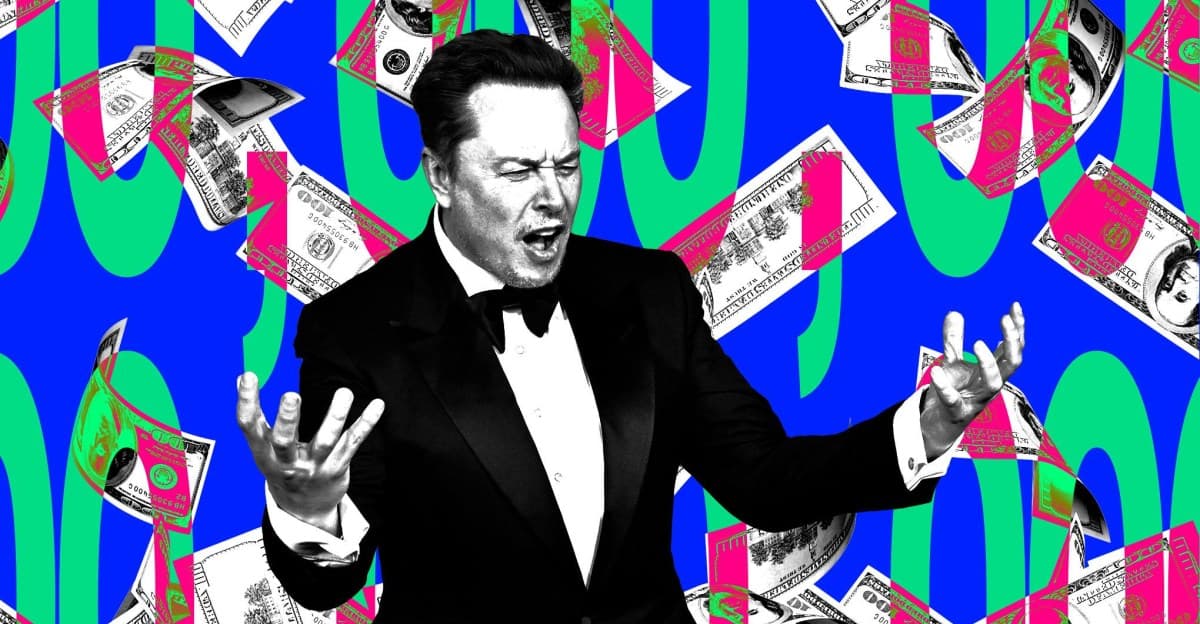
Image: The Verge
SpaceX’s rapid addition to the Nasdaq-100 has raised an obvious question: if a newly public, highly volatile company with a more than $1.5 trillion market cap enters major index funds, does that make supposedly safe passive investing riskier? According to Burton Malkiel, one of the best-known champions of index investing, the answer is still no.
Malkiel, whose 1973 book A Random Walk Down Wall Street helped popularize index funds, argues that the case for passive investing has not changed. Index funds aim to track benchmarks such as the S&P 500 or Nasdaq-100, rather than trying to pick winners. As he put it, only a small share of stocks drive most long-term market returns, and even experts are poor at identifying them in advance.
“If I were buying individual stocks, I would think twice about buying SpaceX, which is tremendously overhyped.”
That does not mean SpaceX’s inclusion is meaningless. Shortly before the IPO, Nasdaq changed the rules for the Nasdaq-100, allowing a large enough newly public company to enter on its 15th day of trading. Reuters reported that SpaceX requested the rule change. When the company joined the index on July 7th, funds tracking the benchmark had to buy shares.
Research from Harvard Business School suggests that forced index-fund buying can contribute to an IPO’s initial pop. The move also matters because SpaceX may be the first of several expected mega-IPOs to hit indexes quickly, with Anthropic and OpenAI also expected to debut later this year.

Recommended reading
Skyworth TV buyer finds 8GB, not 32GB
Why SpaceX’s index weight is smaller than its valuation suggests
Despite its enormous valuation, SpaceX sold less than 5 percent of its shares in the IPO. Because the Nasdaq adjusts for this, the company enters the index more like a smaller stock than its headline valuation implies. That limits its immediate effect on index funds.
That may change soon. Bloomberg’s Matt Levine notes that people with 180-day lockups will be able to sell more shares than were initially sold in the IPO once SpaceX publishes second quarter financial results, expected in mid-August. As more shares become tradable, SpaceX could take up a bigger share of relevant funds — though selling pressure could also push the stock lower.
Index inclusion may also make the stock less erratic than a typical IPO. The Wall Street Journal reported that index funds are likely to help absorb selling as employee lockups expire, potentially limiting steep drops.
Governance, concentration, and how to avoid SpaceX
Much of the backlash is not about passive investing mechanics at all. It is about Elon Musk’s control. The CEO of CalPERS and the New York state and city comptrollers criticized SpaceX’s “novel and extreme governance structure,” arguing that Musk holds too much power and outside shareholders have too few rights.
That is especially relevant for index funds because ordinary investors do not cast those governance votes themselves; large asset managers do. Critics already worry that passive investing concentrates too much influence in a few firms, while also reinforcing the dominance of the market’s biggest companies.
Malkiel does not see current market concentration as a reason to flee index funds, even with heavy exposure to companies tied to AI such as Nvidia, Apple, Microsoft, Amazon, Alphabet, Broadcom, and Meta. He argues that markets have always been concentrated and that every major technological shift, from railroads to the internet, has been overhyped.
For investors who still want no exposure to SpaceX, the simplest route may be to favor S&P 500 funds, since SpaceX isn’t being fast-tracked into that index. Another option is ESG funds, which often charge higher fees and may underperform standard index funds. Still, for investors focused on governance, Musk’s control could keep SpaceX out of some ESG portfolios.
One final wrinkle: SpaceX president Gwynne Shotwell donated company shares to Trump Accounts, investment accounts for children. President Donald Trump said the donation was worth $325 million.
Enterprise Editor
Marcus follows the money. He covers enterprise software, cloud architecture, and the tectonic shifts in Big Tech strategy. He translates dense earnings calls and complex M&A activity into actionable insights about where the industry is actually heading. If a tech giant makes a silent pivot, Marcus is usually the first to notice.
via The Verge