• 2 min read
Substack adds AI checks and takes a swipe at LinkedIn
Substack now lets readers scan posts for AI-written text and asks authors to disclose how they used AI. The rollout is live on web and iPhone, with Android coming later.
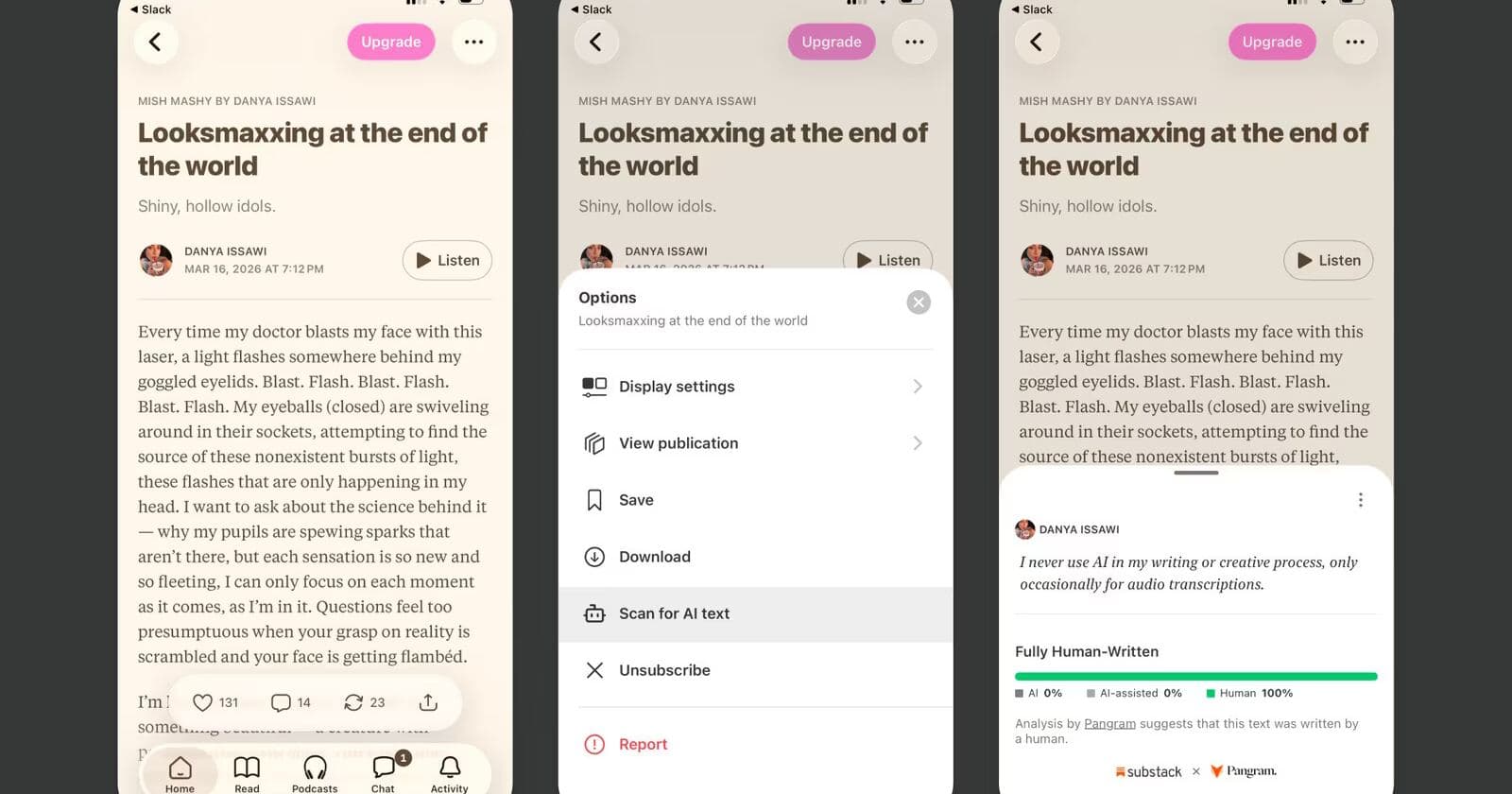
Image: ITzine
Substack has launched an AI text detection feature in partnership with Pangram, giving readers a way to scan posts of 100 words or more and giving writers a new field to disclose whether they used AI and for what purpose.
The feature is already live on the web and iPhone, with Android support planned later. In its announcement, Substack also took a shot at LinkedIn, saying the platform already has more than enough AI-generated content. In the same post, it described efforts to fake an artificial sense of “humanity” through generative text as “Claudefishing.”
That line is provocative, but the underlying issue is not new. AI detectors have long been controversial because they regularly get things wrong. They can miss generated text entirely or flag work by a real human author as AI-made, which is why these tools are often treated with skepticism.

Recommended reading
Why AI chatbots feel like fictional companions
The Atlantic previously examined the accuracy of Pangram and similar services, and the takeaway was not flattering: claims that a tool can reliably “detect AI” sound confident, but real-world performance depends heavily on factors like text length, topic, and how the text was rewritten.
Seen that way, Substack’s move looks less like an attempt to offer a flawless verdict and more like an effort to set expectations. Readers get a button to run a check, while authors are also asked to state openly where AI was used in a piece. In some cases, that kind of disclosure may be more useful than automated detection alone.
As generative content keeps spreading, those labels at least give readers some context about what they are looking at. How useful that becomes will depend on two things: how honestly writers fill out the disclosure field, and how seriously readers treat the detector’s result.

AI Editor
Ava covers the rapidly evolving world of artificial intelligence, from foundational models and research labs to the real-world economics of intelligence. With a background in computational linguistics, she cuts through the hype to find out what actually works. She firmly believes that benchmarks are just marketing until reproduced in the wild.
via ITzine