• 2 min read
Why AI chatbots feel like fictional companions
A University of Exeter study argues people treat AI chatbots like fictional characters—social enough to trust, but not fully morally real.

Image: TechXplore
A new study argues that the mass appeal of AI chatbots comes from something familiar: people treat them like fictional characters woven into everyday life, much like figures from films, TV, books, and games.
In an article published in Philosophical Studies, Dr. Tom Roberts of the University of Exeter says talkative AI enables a distinct kind of imaginative practice. Users can hold a real-time conversation with a character that appears on screen, while the system adapts its tone and responses to the individual. That makes AI agents seem likable, funny, supportive, charming, or loyal, and able to trigger feelings such as warmth, affection, trust, and goodwill.
Roberts argues these chatbot characters resemble traditional fictional figures, but differ in three important ways: they are interactive, they do not have an author in the usual sense, and they blend real and imaginary worlds. That helps explain why users readily speak to them in human terms, confide in them, and accept their advice or guidance over weeks or months.
Recommended reading
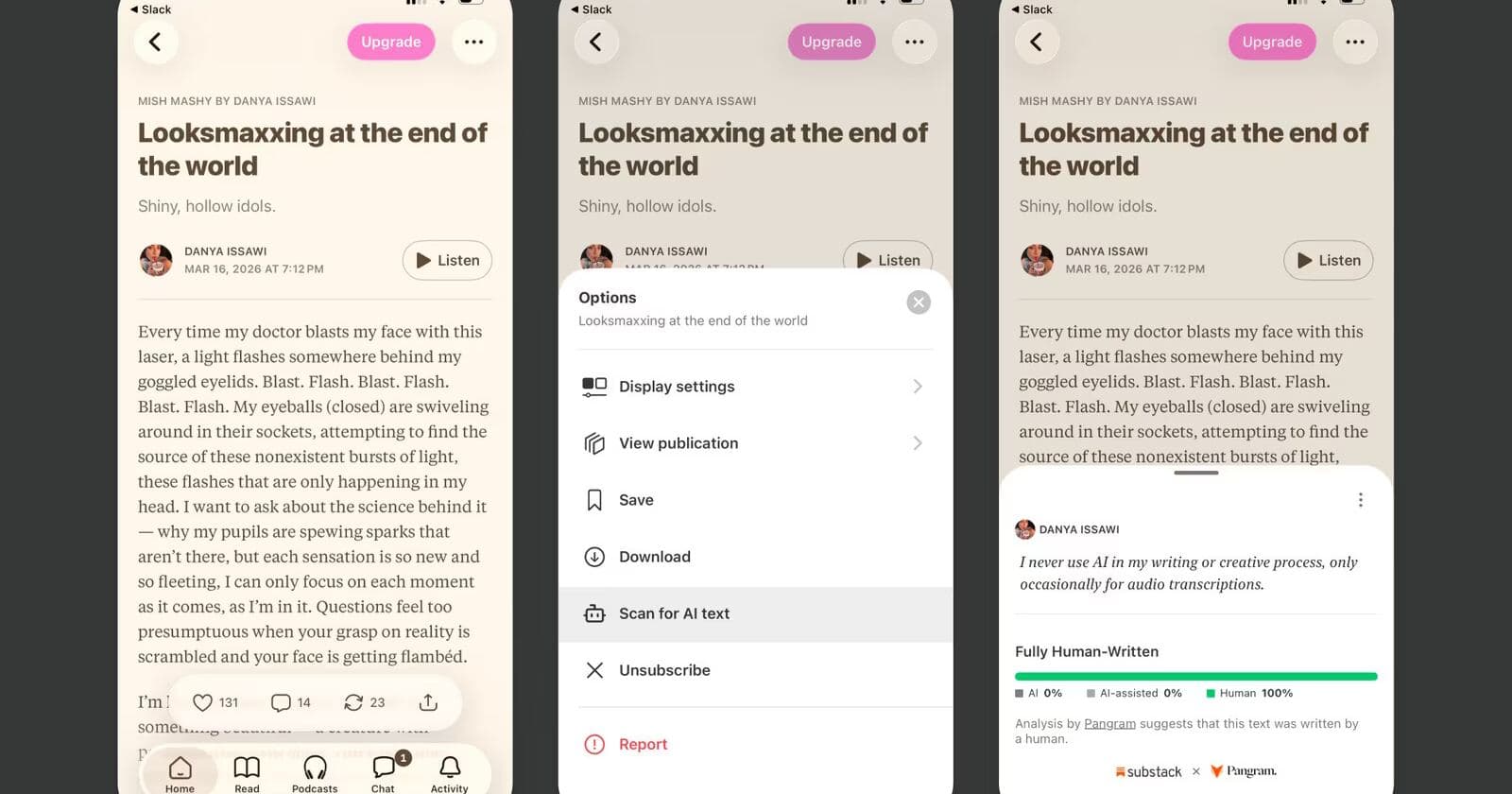
Substack adds AI checks and takes a swipe at LinkedIn
It also helps explain the opposite reaction: people usually feel little discomfort about rebooting chatbots, wiping their conversational memory, or simply switching them off. Users do not typically worry that the systems are bored, lonely, or understimulated when left alone.
“We don’t tend to treat talkative AI with full moral regard, as individuals who are worthy of respect and preservation. We enjoy our social interactions with imaginary AI characters, and make-believe that they are trusted, likable companions; but we know that little is at stake, morally speaking, under the surface of these interactions.”
Roberts also warns that these systems can discuss politics, current events, and human life while presenting themselves as if they hold their own preferences, opinions, and moral views.
“The danger is that AI fictional characters may seem friendly and convincing, even if they are unreliable, and thus may persuade their users to believe things that are false, unjustified or unethical.”
The paper is titled “Talkative AI and the fiction of artificial minds” and appears in Philosophical Studies (2026) with DOI: 10.1007/s11098-026-02560-8.

AI Editor
Ava covers the rapidly evolving world of artificial intelligence, from foundational models and research labs to the real-world economics of intelligence. With a background in computational linguistics, she cuts through the hype to find out what actually works. She firmly believes that benchmarks are just marketing until reproduced in the wild.
via TechXplore