• 2 min read
Tesla puts Starlink V5 into Cybercab’s roof
Tesla and SpaceX showed Starlink V5 built directly into the Cybercab roof, adding a backup data link for updates, navigation, and fleet services.
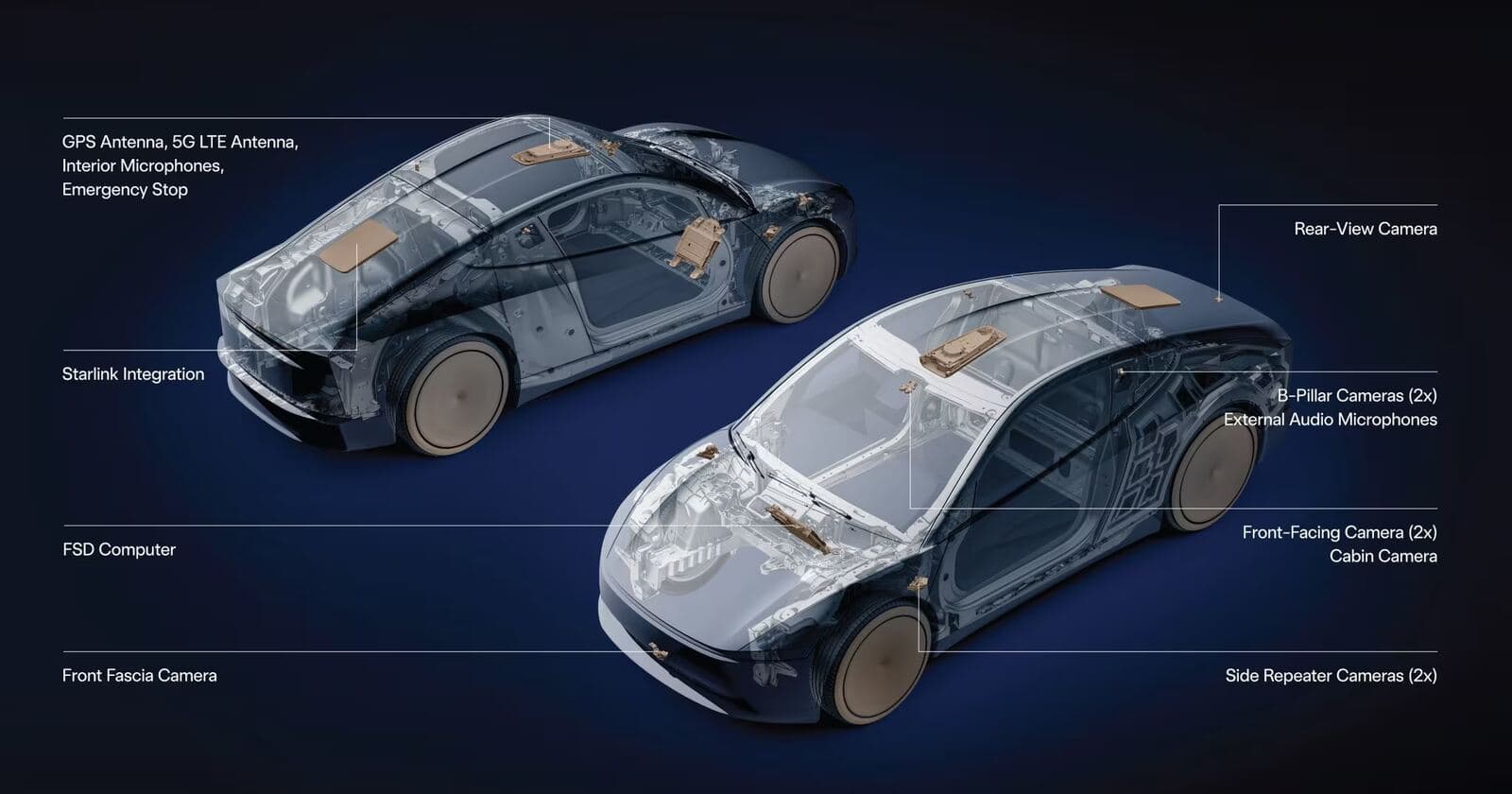
Image: ITzine
Tesla and SpaceX have shown how Starlink V5 satellite connectivity will be integrated into the Tesla Cybercab: the antenna is built directly into the roof, alongside cameras and other sensors. That makes it part of the vehicle itself rather than an external module or an add-on.
For autonomous driving, this is not a mandatory component. The Cybercab’s Full Self-Driving system relies on the AI4 computing platform and can drive even without a constant network connection. But internet access still matters for software updates, navigation with current data, remote diagnostics, and passenger services. It could also serve as a backup communications channel in areas where cellular coverage is weak.
That stands out because Tesla’s current driverless services operate only in a handful of US cities, including Austin, Houston, Dallas, and Miami. The idea of putting satellite internet directly into a vehicle is not new for Tesla, but in a production robotaxi it shifts from concept to a practical feature.
The move fits into the broader race around autonomous transport. Waymo is already expanding its robotaxi fleet across several US cities, while Tesla is trying to move beyond limited operating zones in Texas and Florida. In that context, a stable connection is useful not just for convenience, but also for remote fleet oversight.
SpaceX recently introduced Starlink V5 itself. According to the source, the terminal is smaller, lighter, and uses less power than its predecessor — a meaningful change for vehicles, where every watt and every centimeter matter.
Recommended reading
Chery packs 26 sensors into Exeed Exlantix ES 2027
If Tesla does begin installing Starlink V5 in Cybercabs at scale, satellite connectivity could become a core part of the service in places where mobile networks fall short. The bigger constraint is likely to be how quickly Tesla can expand robotaxi operations beyond a few test cities.

Frontier Editor
Dan is our resident futurist, covering electric mobility, space exploration, and the smart home. He's interested in atoms just as much as bits. Whether it's a new battery chemistry, a reusable rocket, or a protocol that finally makes IoT devices talk to each other, Dan breaks down the engineering that pushes humanity forward.
via ITzine