• 3 min read
8,000Hz mice sound fast — most players still don’t need them
8K polling cuts input reports to 0.125ms, but the gains are tiny for humans and the battery-life hit is steep. Even many pros stick to 1,000Hz.
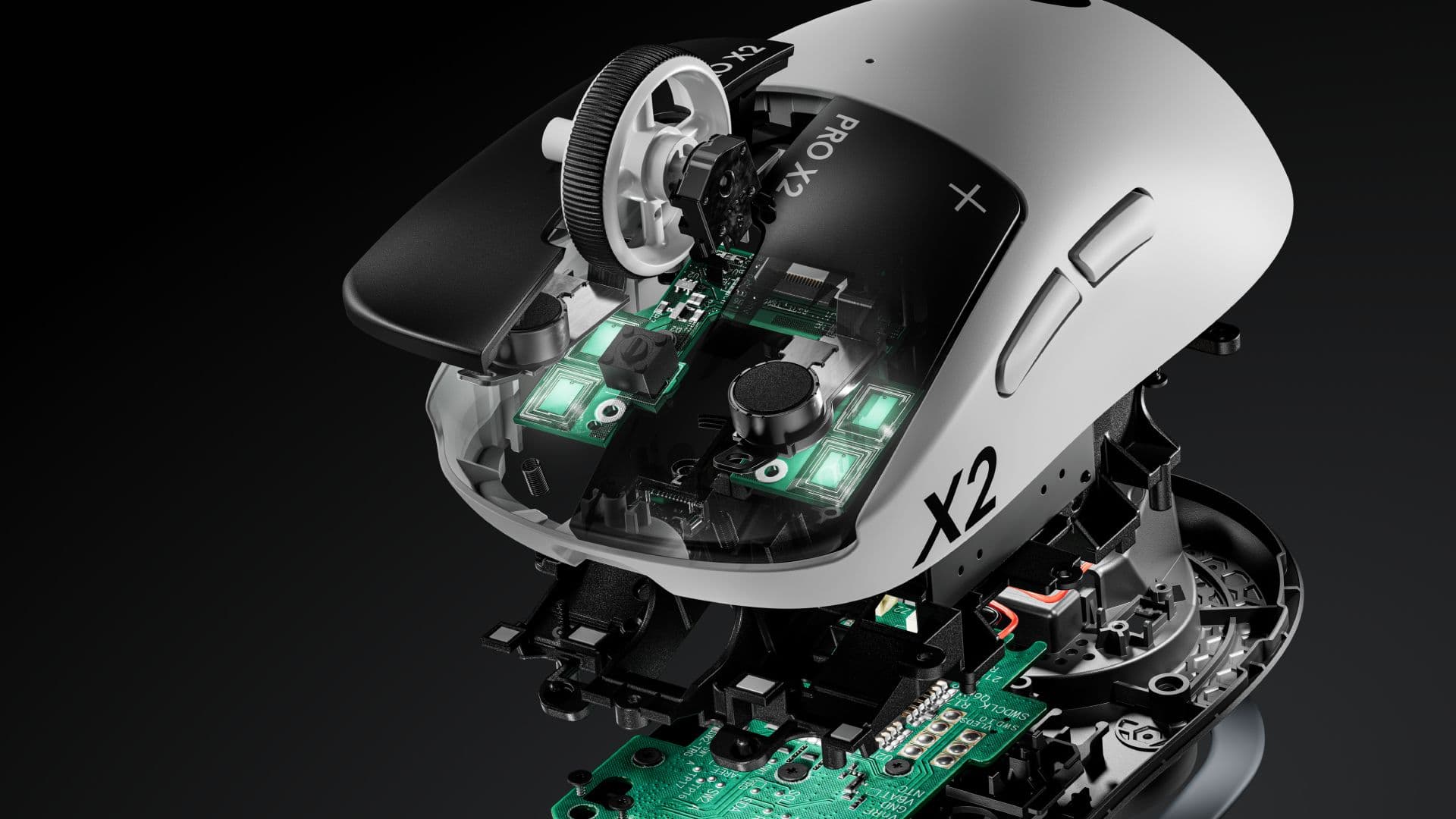
Image: TechRadar
8,000Hz polling sounds like the obvious upgrade for competitive gaming, but the real-world case is far less convincing. Polling rate is simply how often a mouse or keyboard sends data to a PC. For years, 1,000Hz was the standard, and while 4,000Hz and 8,000Hz are now common selling points on high-end esports gear, the benefit is much smaller than the marketing suggests.
Current devices pushing the feature include the Razer Viper V4 Pro, Logitech G Pro X2 Superstrike, Razer Huntsman V3 Pro Tenkeyless, Corsair Vanguard Pro 96, and Cherry XTRFY K63W Pro Compact Ultra-Wideband. At a technical level, 8,000Hz means the device reports to the PC every 0.125ms, compared with 0.25ms at 4,000Hz and 1ms at 1,000Hz. That cuts the theoretical maximum input delay by 0.875ms versus 1K.
That sounds significant, but only if the rest of the system can exploit it. Higher polling rates can put more strain on the CPU, reduce wireless battery life sharply, and in some cases introduce micro-stuttering.
Recommended reading
Torras Big Eye Pro packs 3-in-1 charging into an egg shape
The battery hit is especially hard. TechRadar’s source points to the Corsair Sabre V2 MG, which runs at 1,000Hz by default and delivers roughly 100 to 120 hours per charge. In 8K mode, that reportedly drops to about 18 hours on average — a reduction of around 85%. Similar declines show up elsewhere:
- Razer Viper V4 Pro: up to 180 hours at 1K, 45 hours at 8K
- Logitech G Pro X2 Superstrike: around 90 hours at 1K, around 20 to 35 hours at 8K
Human limits matter, too. The article cites average human reaction time at around 250-280ms, with the author averaging about 175ms. TenZ, described as one of the best VALORANT players, reportedly averages 135ms, while 100ms is possible for elite players even if many hover closer to 150ms. Against that backdrop, the difference between 1ms and 0.125ms polling intervals is extremely hard to perceive.
The strongest argument against 8K may be that top players often ignore it. According to the source:
- TenZ used the Pulsar TenZ Signature Edition at 1,600 DPI, 0.24 sensitivity, and 1,000Hz
- f0rsakeN of Paper Rex used the Pulsar Sustanto-X at 800 DPI, 0.71 sensitivity, and 4,000Hz
- donk of Team Spirit used a prototype Zowie X Donk at 800 DPI, 1.25 sensitivity, and 1,000Hz
- NiKo used a Razer Deathadder V4 Pro Niko Edition at 800 DPI, 0.9 sensitivity, and 2,000Hz
- Peterbot used a Logitech G Pro X Superlight 2 at 800 DPI and 1,000Hz
- ImperialHal used a Finalmouse Starlight Pro at 800 DPI, 1.1 sensitivity, and 1,000Hz
That doesn’t make 8,000Hz useless. On a high-end system with a fast processor and high refresh rate display, running everything at the maximum setting is unlikely to hurt beyond the battery tradeoff. But for most people, the bigger gains will come from better switches, sensors, and overall hardware quality — including TMR and Hall Effect designs — not from pushing polling from 1K to 8K.

Computing Editor
Tomas lives in the terminal. He covers chips, laptops, and operating systems with a focus on performance and efficiency. He reads kernel changelogs the way other people read fiction, and he's always on the hunt for the perfect mechanical keyboard switch. If it processes data, Tomas has an opinion on it.
via TechRadar