• 2 min read
AMI Labs CEO rejects AGI label as it chases physical AI
Alexandre LeBrun says AMI Labs avoids terms like AGI and superintelligence as it looks for partners in robotics, chips, and manufacturing.
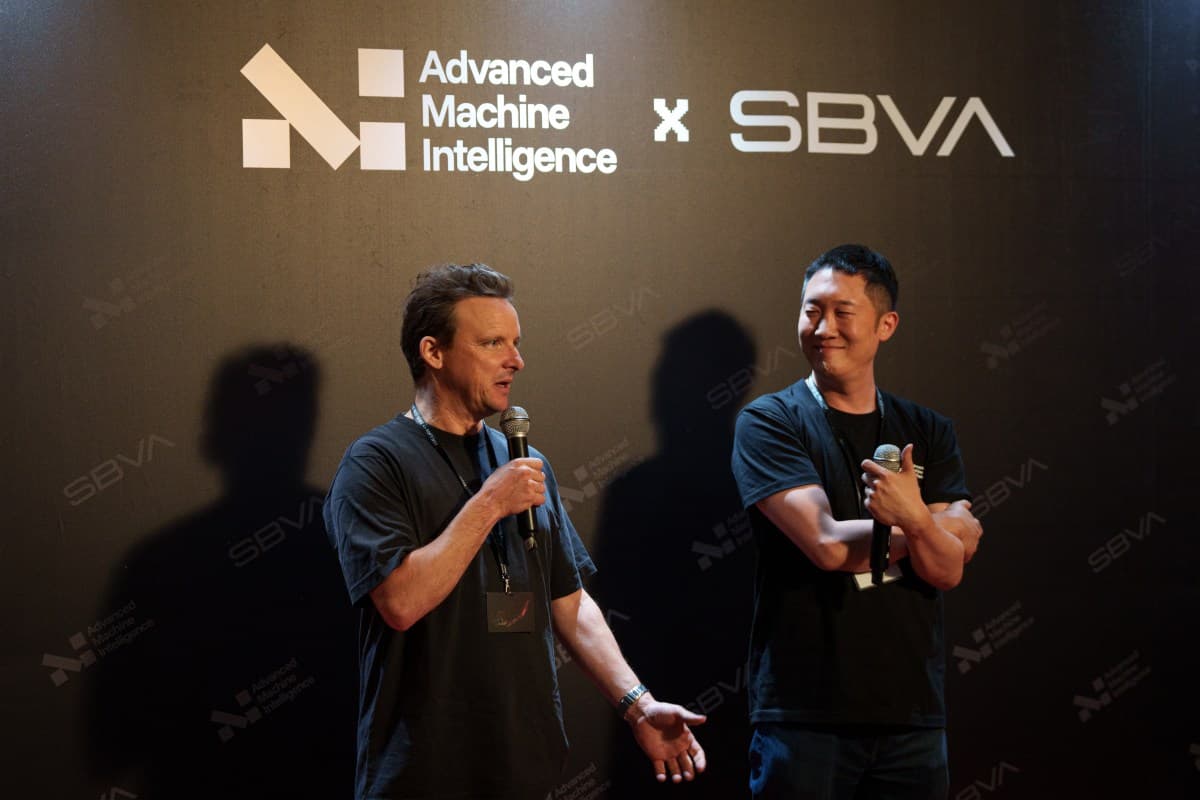
Image: TechCrunch
AMI Labs is steering clear of the AI industry’s favorite labels. In an interview with TechCrunch, CEO Alexandre LeBrun said the company does not use terms like “AGI” or “superintelligence” at all.
“We never used the word AGI. And I just noticed that nobody is using it anymore; they switched to superintelligence. Next time we’ll switch to something else.” “There’s no good definition. What is superintelligence? I don’t know. It’s not a very useful word.”
LeBrun made the comments while in Seoul last week for The International Conference on Machine Learning, where he was meeting potential industrial partners, global companies, and researchers. AMI Labs is still pre-product, but it is already targeting companies in robotics, manufacturing, and electronics.
The pitch centers on world models — systems that incorporate physics to predict and act in the real world. LeBrun described them as complementary to large language models, not replacements. If an LLM predicts the next word, a world model predicts the next state of the world, such as a glass tipping and spilling after being nudged off a table.
That matters most in robotics, where LeBrun argues current systems remain “completely static” and AI is still “really dumb in the physical world.” He said even basic contextual awareness would be a major step forward, especially for safety in open environments like homes and streets.
Why AMI Labs is looking to South Korea
LeBrun said AMI needs real-world access and close partnerships to train its models outside the lab. That is part of what draws the company to Asia, and especially South Korea, where he sees strength in robotics, semiconductors, and manufacturing.
Recommended reading
Hassabis says STEM makes you 10x better at AI
He also pointed to Korea’s pace of adoption. According to LeBrun, the country combines a deep industrial base with a willingness to move quickly on AI, making it a place where AMI wants to be involved “from day one.”
JP Lee, CEO of SBVA and one of AMI’s Asian backers, told TechCrunch he has been urging the startup to come to Korea. He praised government support for local sovereign LLMs, but said Korea should keep investing in physical AI as well, pointing to Seoul’s June plan to mobilize some $880 billion for chips, AI data centers and physical AI.
For now, AMI Labs has no product and no launch timeline. The startup, co-founded by Turing Award winner Yann LeCun after he left Meta, raised $1.03 billion in March at a $3.5 billion pre-money valuation. As LeBrun put it: “We’ll make a surprise when we’re ready.”

AI Editor
Ava covers the rapidly evolving world of artificial intelligence, from foundational models and research labs to the real-world economics of intelligence. With a background in computational linguistics, she cuts through the hype to find out what actually works. She firmly believes that benchmarks are just marketing until reproduced in the wild.
via TechCrunch