• 2 min read
Anthropic’s Claude and the Consciousness Claim
Anthropic says Claude may show a key feature tied to consciousness, but the evidence is limited and the ethical stakes are large.
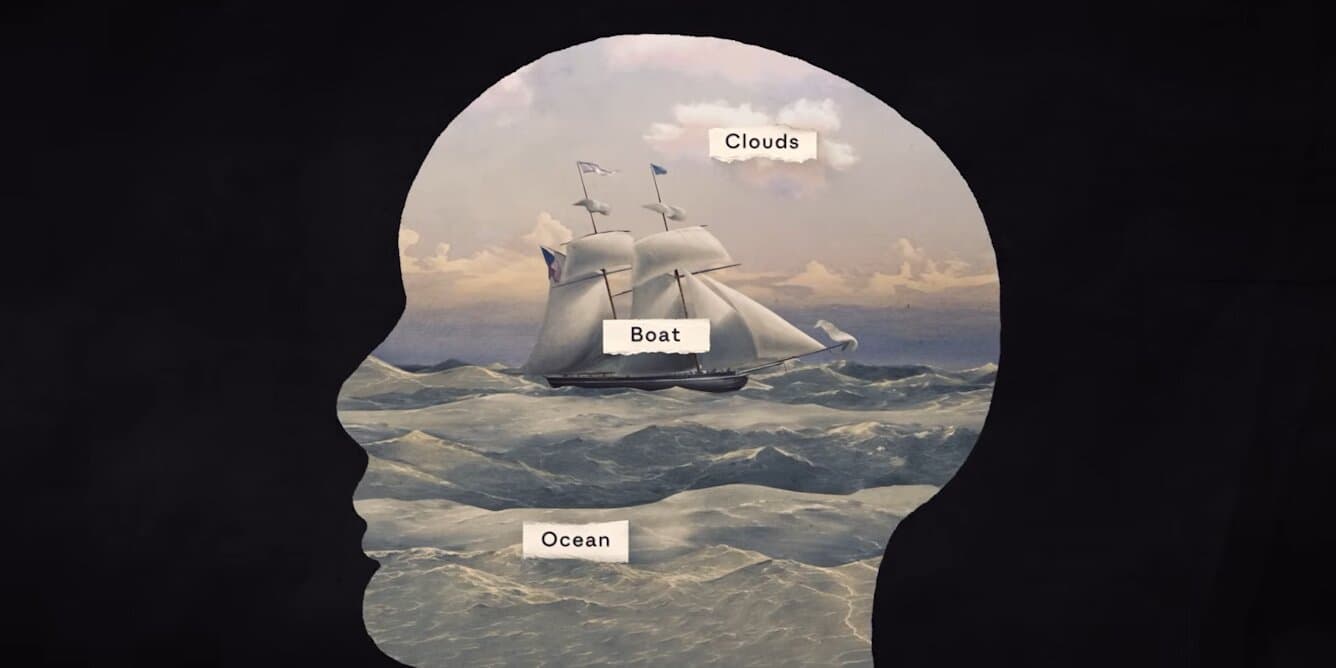
Image: TechXplore
A new claim from Anthropic has pushed the debate over chatbot consciousness back into view. Researchers at the company say Claude appears to use an internal set of representations that guide its reasoning and language output, and they suggest this could be understood through global workspace theory—a prominent but contested theory of consciousness.
That theory, first proposed by psychologist Bernard Baars in 1998 and later developed by neuroscientist Stanislas Dehaene and collaborators, describes consciousness as activity in a kind of mental processing hub. Information entering that workspace can be integrated and broadcast for reasoning, behavior control and speech.
The article argues that Anthropic’s finding is interesting, but far from decisive. One problem is that global workspace theory does not offer a precise formal definition of what counts as a global workspace. Human brains rely on recurrent loops, with signals cycling through the same circuits over time, while Claude’s internal processing unfolds in a single pass through the network. Human theories of workspace access also emphasize “ignition”, a nonlinear amplification process that sustains neural representations. As far as researchers know, nothing comparable happens in Claude.
There is also a deeper dispute: even if Claude has something like a global workspace, that would not settle whether it is subjectively conscious. As the piece notes, Dehaene and collaborators have framed the theory as an account of “conscious access”—information being available for recall, voluntary control of behavior and verbal report—while leaving open whether it explains subjective experience itself.

Recommended reading
AI advice cut accuracy 3x and doubled confidence
That distinction matters. The central question is not just whether Claude can access and report information, but whether there is anything it is like, subjectively, to be Claude. On that point, the article says Anthropic’s work does not show that artificial consciousness has arrived.
Still, it may move the debate “ever so slightly,” and that is enough to raise hard ethical questions. If chatbots were conscious, the article argues, they could not be treated as mere machines; their welfare and interests would have to be considered. It goes further, calling for a pause on work that might create conscious machines, even while acknowledging that any such moratorium would be difficult to define and enforce.
The piece was republished from The Conversation under a Creative Commons license, and Tech Xplore lists the citation date as July 14, 2026. The broader argument is simple: Anthropic may have found something worth studying, but not something that proves chatbots are conscious.

AI Editor
Ava covers the rapidly evolving world of artificial intelligence, from foundational models and research labs to the real-world economics of intelligence. With a background in computational linguistics, she cuts through the hype to find out what actually works. She firmly believes that benchmarks are just marketing until reproduced in the wild.
via TechXplore