• 2 min read
Bacterial cellulose could boost supercapacitor electrodes
A review of 49 studies finds bacterial cellulose-derived carbon shows promise for fast-charging supercapacitors, but scaling and standardization remain unresolved.
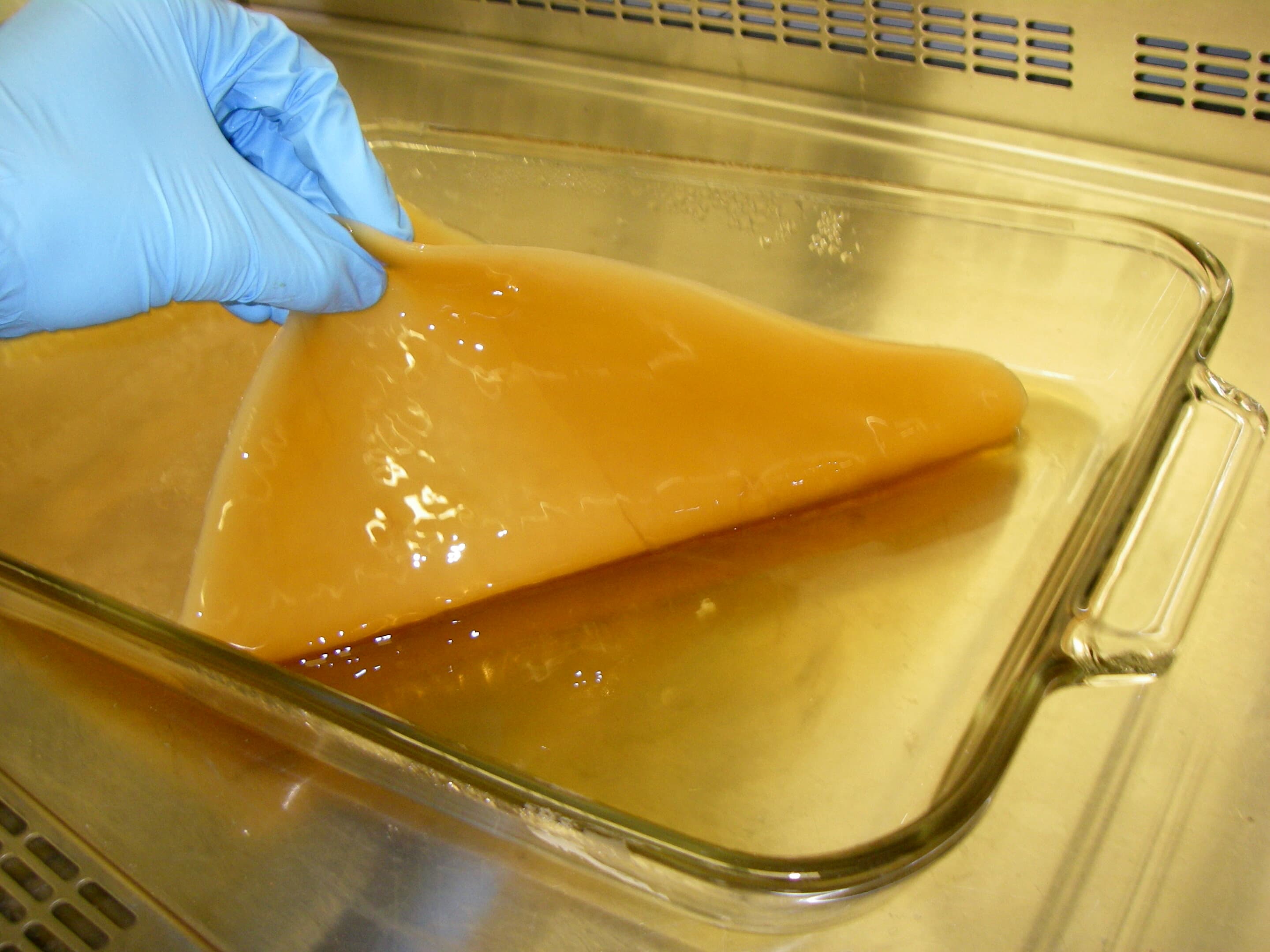
Image: TechXplore
A Hasanuddin University review argues that bacterial cellulose-derived carbon (BCC) could become a more sustainable electrode material for next-generation supercapacitors, which are valued for fast charging, high power density, and long cycle life. The paper, published in the Journal of Energy Storage, looks at how researchers are turning the naturally pure, nanofiber-rich material into porous carbon for energy storage applications spanning portable electronics, wearable devices, and electric vehicles.
To cut through inconsistent results across the field, Professor Dahlang Tahir and his team systematically reviewed 49 journal articles from the Scopus database. They compared several fabrication approaches, including direct carbonization, chemical activation, heteroatom doping, and composite formation, while also separating three-electrode lab tests from two-electrode devices that better reflect practical supercapacitors.
One of the clearest findings was that preserving bacterial cellulose’s original nanofiber network before carbonization matters. The review says freeze-drying was the most common pre-carbonization method because it helps prevent the wet structure from collapsing, which in turn preserves the pore architecture that drives performance.

Recommended reading
Satellite startups pull $8.1B in half a year
Across the literature, pristine BCC delivered modest but sometimes competitive capacitance. Activation and heteroatom doping generally improved results by increasing surface area and adding active sites, while composite electrodes often posted the highest capacitance, especially when paired with pseudocapacitive materials.
The review also found major gaps: inconsistent reporting standards, uneven experimental protocols, and limited mechanistic work. Tahir said the next decade should focus on predictive design, data-driven structure-performance models, scalable carbonization, and devices that resist deformation and humidity.
“In the longer term, over the next 10 years, the field should move toward predictive design of BCC electrodes, data-driven models for structure–performance relationships, scalable carbonization protocols, deformation- and humidity-resistant devices, and prototype demonstrations in flexible, lightweight, or structural supercapacitor systems.”
Tahir added that while most BCC electrodes remain at the proof-of-concept stage, the review suggests they may outperform commercial activated carbon under comparable conditions—if those gains can be reproduced and scaled in real operating environments. The paper is “Bacterial cellulose-derived carbon electrodes for supercapacitors: Fabrication strategies, electrochemical performance, and mechanical properties—A review” with DOI 10.1016/j.est.2026.123044.

Frontier Editor
Dan is our resident futurist, covering electric mobility, space exploration, and the smart home. He's interested in atoms just as much as bits. Whether it's a new battery chemistry, a reusable rocket, or a protocol that finally makes IoT devices talk to each other, Dan breaks down the engineering that pushes humanity forward.
via TechXplore