• 2 min read
Webb spots hidden planet in Beta Pictoris system
NASA’s James Webb Space Telescope helped identify Beta Pictoris d, a long-predicted giant planet 63 light-years away, by its atmospheric spectrum.
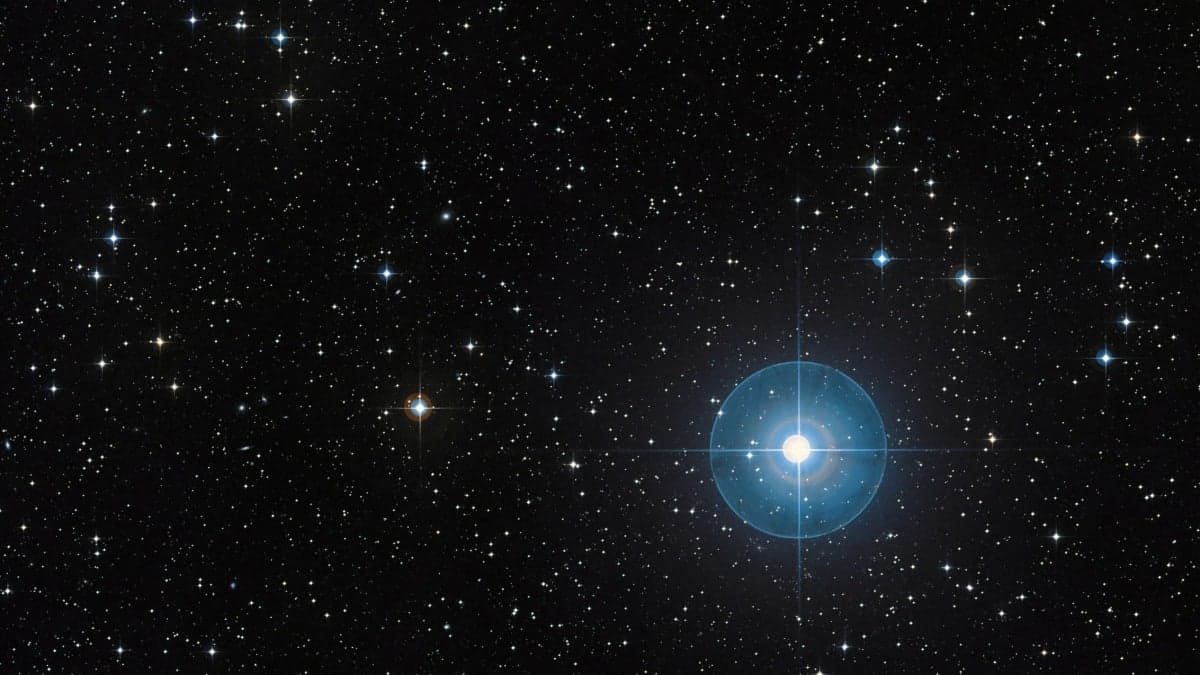
Image: Mashable
Astronomers have found the long-missing giant planet thought to be shaping the Beta Pictoris system, a young stellar system 63 light-years from Earth. The newly identified exoplanet, Beta Pictoris d, appears to be the hidden object theorists had predicted was carving a sharp inner edge into the star’s debris disk of dust, rock, ice, and gas.
What makes the discovery stand out is how it was made. Instead of relying on a direct image alone, researchers identified the planet through the chemistry of its atmosphere. Using data from NASA’s James Webb Space Telescope, the team split the star’s light into thousands of wavelengths and looked for the spectral fingerprints of gases including methane, carbon monoxide, and water vapor.
“There was an unexpected bright source of light within the Integral Field Unit imaging, but we’ve learned not to trust bright blobs in [space] images. By obtaining a spectrum at the same time as the image, we were able to quickly confirm our suspicions.”
The Webb team found the signal while trying to study another planet in the same system. Aidan Gibbs, lead author of the paper published in The Astrophysical Journal Letters, said the team was not searching for a new world when the spectral signature appeared.
At roughly the same time, a separate team led by Ben Sutlieff of the University of Edinburgh and Markus Bonse of the European Southern Observatory also detected the planet using the Very Large Telescope in Chile. They describe it as the faintest exoplanet ever imaged from a ground observatory, aided by a specialized infrared filter.
Researchers estimate Beta Pictoris d is perhaps about double Jupiter’s mass and orbits its star at roughly a Neptune-like distance. Follow-up Webb observations at longer wavelengths helped constrain the planet’s relatively cool temperature and distant orbit. The finding also strengthens earlier ideas that a single hidden giant was disturbing the disk and producing a bright clump of carbon monoxide gas.

Recommended reading
NASA starts building SLS for Artemis III crewed mission
The system is now unusually rare: among the thousands of known exoplanets, only a handful of planetary systems have more than one planet directly imaged, and until now only HR 8799 had more than two confirmed. As Gibbs put it, Beta Pictoris remains a key laboratory for studying how planetary systems form and evolve.

Frontier Editor
Dan is our resident futurist, covering electric mobility, space exploration, and the smart home. He's interested in atoms just as much as bits. Whether it's a new battery chemistry, a reusable rocket, or a protocol that finally makes IoT devices talk to each other, Dan breaks down the engineering that pushes humanity forward.
via Mashable