• 2 min read
NASA starts building SLS for Artemis III crewed mission
NASA has begun assembling the SLS rocket for Artemis III, with booster work underway and Orion prep continuing ahead of a planned launch next year.
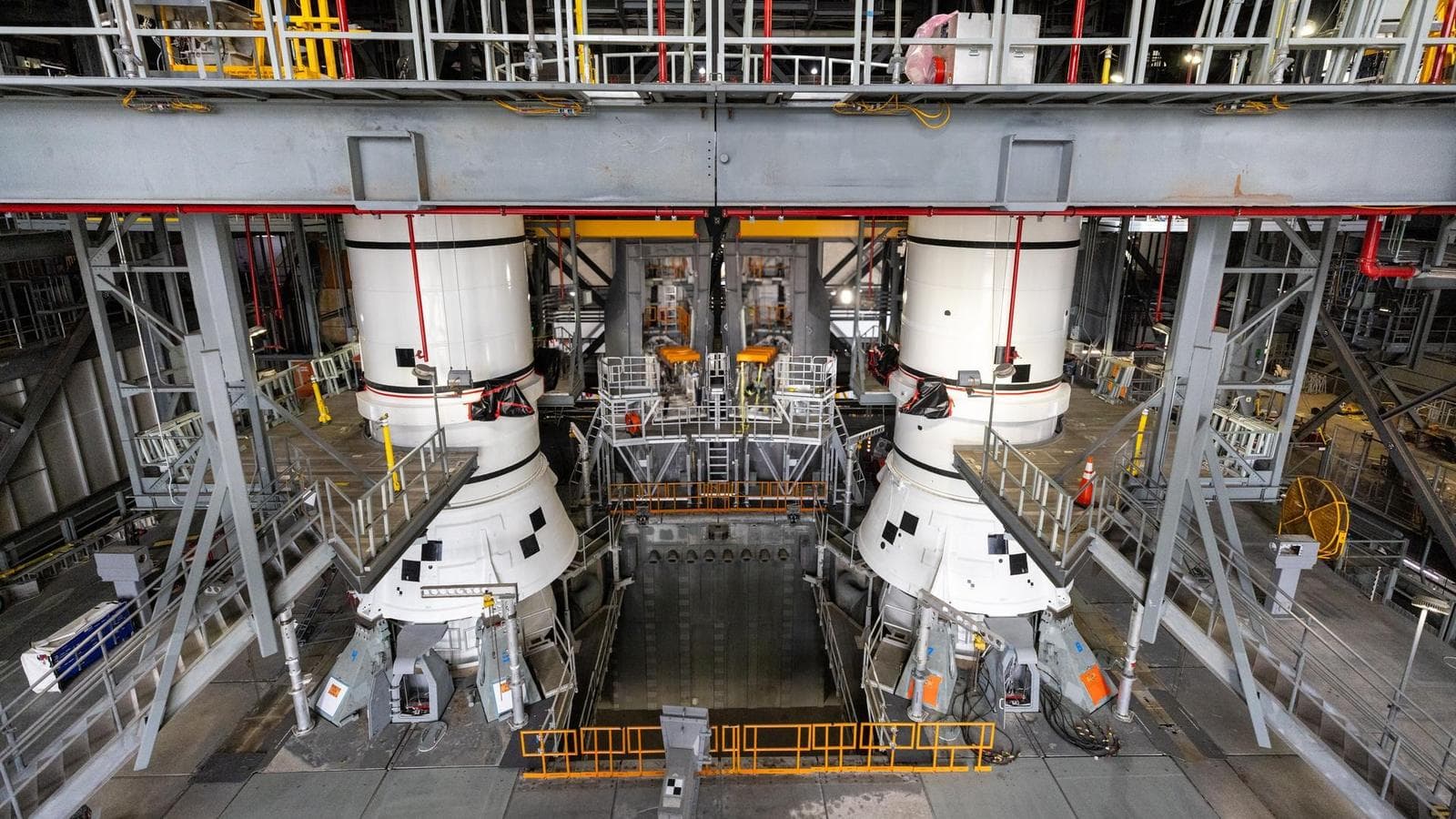
Image: iXBT
Less than three months after the Artemis II crew returned successfully, NASA has started assembling the Space Launch System (SLS) rocket for the crewed Artemis III mission at Kennedy Space Center.
In July, engineers began installing the first segments of the left solid rocket booster inside the Vehicle Assembly Building (VAB). The remaining booster elements arrived by rail in June and are now being inspected, processed, and coated for protection. NASA will then move them one by one into the VAB for installation on the mobile launcher, which was upgraded after preparations for Artemis II.
Work is also continuing on the rocket’s core stage. In May, teams joined the main tank to the engine section, and in June the first two RS-25 engines were delivered to the VAB. Once the other two engines arrive, NASA will install them to complete core-stage assembly before integrating the stage with the rest of the rocket and moving into testing.
Preparation is also underway at the Rocco Petrone Launch Control Center, where teams have been running full countdown rehearsals every month since May. Those exercises cover propellant loading and the final 10 minutes before liftoff, helping refine procedures before the real launch campaign begins.

Recommended reading
Webb spots hidden planet in Beta Pictoris system
In the nearby Operations and Checkout Building, specialists have finished installing Orion’s heat shield. It uses 186 blocks of Avcoat ablative material, with each block inspected individually. NASA said the heat shield design was updated after a detailed review of its performance during the uncrewed Artemis I mission, with the goal of making the material’s properties more uniform across the surface.
The Orion service module has also completed acoustic testing to simulate launch loads. During those baseline tests, the spacecraft is exposed to powerful acoustic systems while engineers monitor its response using microphones, strain gauges, and accelerometers. With the heat shield installed, teams are now moving on to joining Orion’s crew and service modules.
Under NASA’s current plan, Artemis III is set to fly next year. During the mission, the crew aboard Orion, launched by SLS, will perform a rendezvous and docking test in low Earth orbit with test versions of commercial lunar landers. NASA says those technologies are needed to prepare for Artemis IV, which is planned to land astronauts on the Moon in 2028.

Frontier Editor
Dan is our resident futurist, covering electric mobility, space exploration, and the smart home. He's interested in atoms just as much as bits. Whether it's a new battery chemistry, a reusable rocket, or a protocol that finally makes IoT devices talk to each other, Dan breaks down the engineering that pushes humanity forward.
via iXBT