• 3 min read
Climate Threatens Data Centers' Cheapest Cooling Method
A new study says hotter, more humid weather is making direct air free cooling less reliable for data centers, especially in the tropics and the southeastern US.
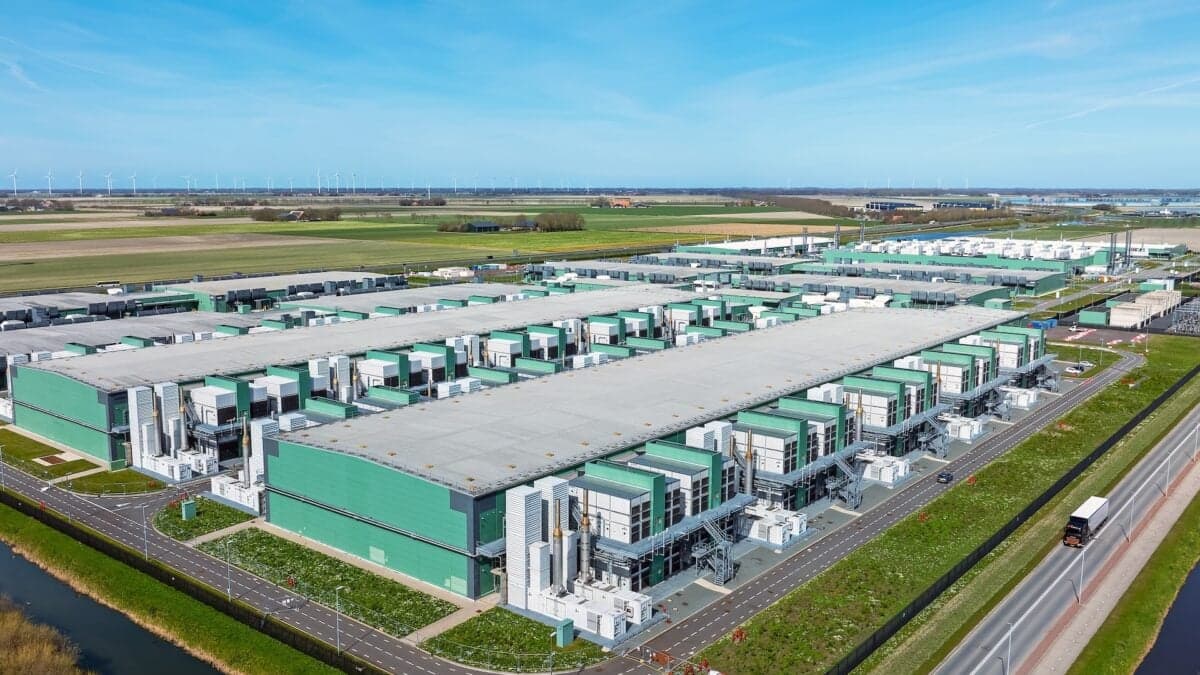
Image: Gizmodo
Data centers now underpin healthcare, banking, government services, and the broader AI boom. But new research suggests one of the industry’s cheapest and most efficient cooling approaches may become far less useful as the planet warms.
A study published Monday in Scientific Reports found that rising temperature and humidity are eroding the viability of direct air free cooling, a waterless method that pulls outdoor air into facilities to cool servers. Over the past 45 years, weather conditions that exceed the recommended limits for this technique have become much more common, especially in the tropics and the southeastern United States.
“We found that periods of time when temperature and humidity exceed recommended operating thresholds for direct air free cooling are becoming more frequent and lasting longer in many regions.”
For direct air free cooling, the American Society of Heating, Refrigerating and Air-Conditioning Engineers recommends air entering a data center stay between 64 and 81 degrees Fahrenheit (18 and 27 degrees Celsius), with 10% to 70% relative humidity and a dew point below 59 degrees F (15 degrees C). Hotter, wetter air cools less effectively and can corrode metal components.

Recommended reading
COMAC Lands First Foreign C909 Order in Cambodia
Using high-resolution hourly weather observations, climate model simulations, and global records of data center locations, the researchers measured how often these limits were exceeded in recent decades and under future climate scenarios. They found not just more exceedance events, but longer ones. Even places with relatively modest long-term warming are seeing longer daily periods when direct air cooling is constrained.
What the study says about 2050
By 2050, under high greenhouse gas emissions scenarios, the number of hours exceeding direct air free cooling limits is projected to rise further. In most regions, the average time each day when this strategy is constrained increases by more than two hours per day.
The study also found that the hottest and most humid days are intensifying faster than average days, concentrating the biggest risks into rarer but more disruptive events.
“From an operational perspective, those worst-day conditions often drive contingency planning, system overrides, redundancy requirements, and reliability decisions.”
The trade-offs of alternative cooling
The paper notes that data centers can also worsen local conditions by releasing large amounts of heat. Prior research has shown they can create heat islands within a 6-mile radius, an effect not included in this study, meaning its estimates may be conservative.
The authors do not argue that direct air free cooling is impossible in warm, humid regions. But they say the feasible window is shrinking. Alternatives such as indirect evaporative cooling, liquid cooling, and hybrid architectures can help, though each brings trade-offs in water use, system complexity, and operational design.
If operators are pushed toward more energy- and water-intensive systems, that could add pressure to electric grids and water resources already under strain from climate change.

Frontier Editor
Dan is our resident futurist, covering electric mobility, space exploration, and the smart home. He's interested in atoms just as much as bits. Whether it's a new battery chemistry, a reusable rocket, or a protocol that finally makes IoT devices talk to each other, Dan breaks down the engineering that pushes humanity forward.
via Gizmodo