• 2 min read
Student-Built Drone OS Seeks Registry Status in Russia
Dronecam has applied to register a student-built drone OS in Russia, pitching GPS-free navigation, onboard mission execution, and natural-language control.
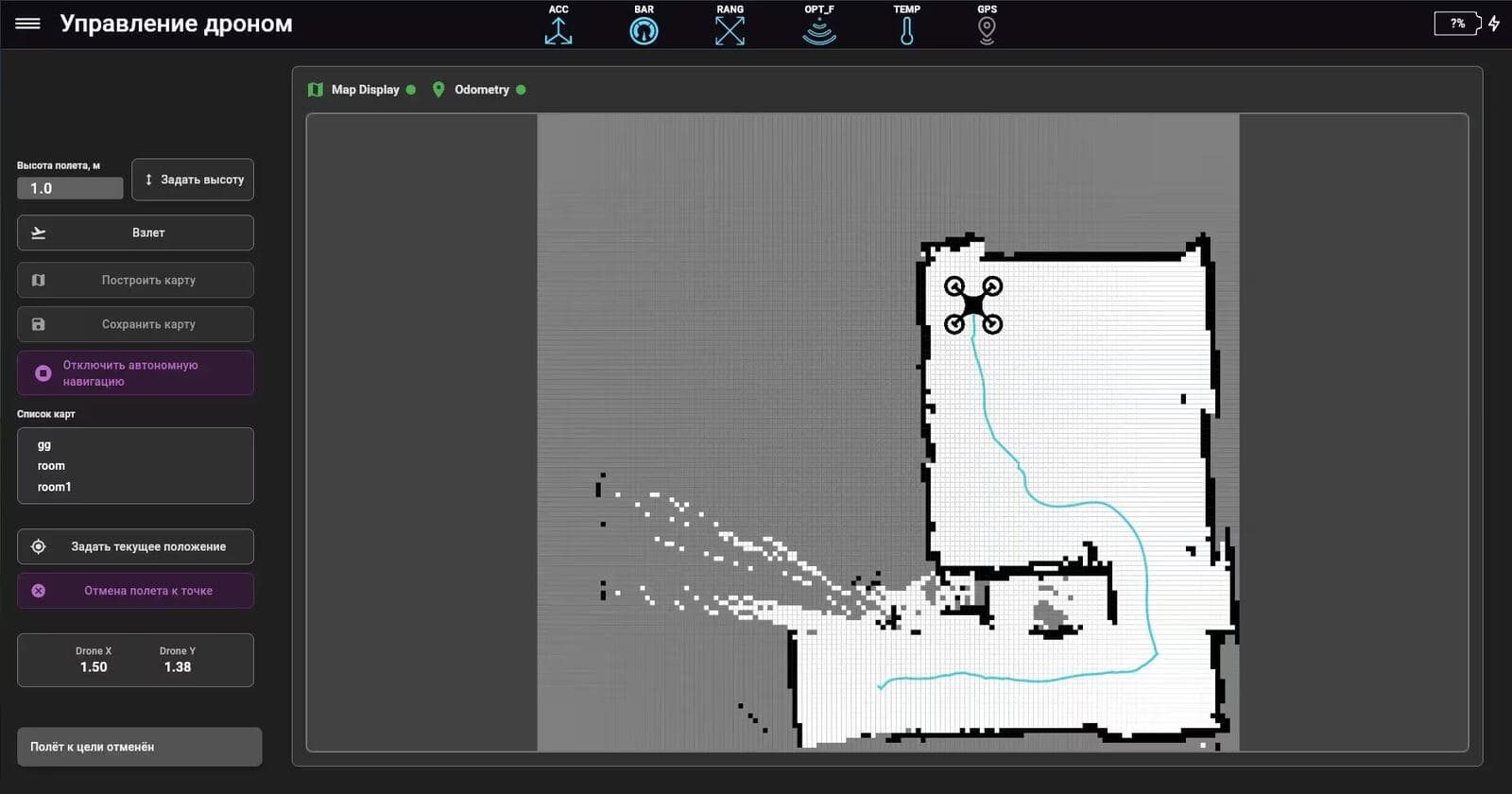
Image: ITzine
Russian company Dronecam has filed an application with the Ministry of Digital Development to add its operating system for multirotor UAVs to the country’s registry of domestic software. The platform, developed by students at technical universities, is designed to work without GPS, accept commands in natural language, and execute flight tasks directly on the drone.
That registry status carries practical benefits: access to government procurement, tax breaks, and formal recognition as Russian-made software. But for the drone market, the more immediate selling point is autonomy in places where satellite signals are weak, jammed, or unavailable.
According to Dronecam, the system can take off and land by coordinates, recognize ArUco markers, build an indoor map, and operate without satellite navigation. Compute tasks run on an Orange Pi single-board computer based on the Rockchip RK3588S, while the chip’s neural processor handles recognition and onboard task processing.
The core idea is to move as much logic as possible onto the drone itself. That reduces dependence on a constant connection to an external server and helps missions continue even if navigation signals degrade or are blocked. The company says this matters most inside buildings, at industrial sites, and in urban environments, where GPS is often unreliable and systems instead depend on lidars, computer vision, and a local spatial map.
Dronecam is also betting on natural-language control. The goal is to let operators issue commands without a complex scripting interface, which could lower the barrier for new users and reduce training time.
Recommended reading
PsiQuantum bets on light for a 100-cabinet quantum computer
If the application is approved, Dronecam could compete not only for state contracts but also in the market for autonomous UAVs, where GPS independence and simpler control are increasingly valued in areas such as inspection and aerologistics.

Computing Editor
Tomas lives in the terminal. He covers chips, laptops, and operating systems with a focus on performance and efficiency. He reads kernel changelogs the way other people read fiction, and he's always on the hunt for the perfect mechanical keyboard switch. If it processes data, Tomas has an opinion on it.
via ITzine