• 2 min read
Google Maps' 3D Android Auto view fixes tricky turns
Google Maps' new Immersive Navigation is rolling out to Android Auto, adding 3D buildings, lane markings, and clearer freeway guidance.
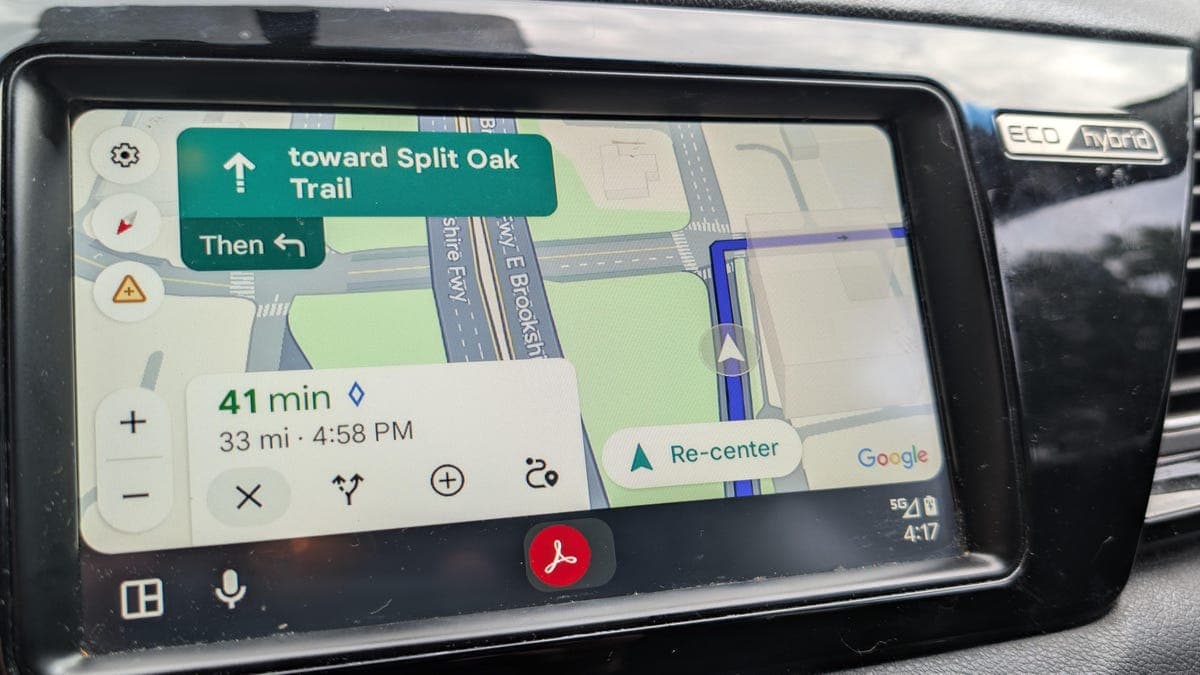
Image: ZDNET
Google Maps has started bringing its new Immersive Navigation mode to Android Auto, and the upgrade looks substantial even if the core navigation features stay the same. According to ZDNET, it is the biggest visual overhaul to Maps in more than a decade, adding a more detailed 3D view with buildings, lane markings, trees, and clearer road geometry.
ZDNET said the change was not obvious at first in a rural area, where there are fewer buildings and road details to render. But in denser areas, the update became much clearer: Maps now shows translucent, true-to-life building outlines, visible overpasses and underpasses, and some individual tree markers to make the surroundings easier to read at a glance.
The publication tested the feature while driving around uptown Charlotte, N.C. and found that it helped with one of the most common navigation problems in cities: understanding quick, closely spaced turns before they happen. Because buildings appear where they actually are, but remain transparent, drivers can better anticipate what comes next. ZDNET also noted that Maps now highlights entrances and parking lots for some buildings, which can be more useful than relying on a street address alone.
Recommended reading
Boeing 787 engine hits 50 million hours
In some areas, especially cities, the new interface also adds lane markings, making it easier to line up for exits and entrances. On complicated freeway splits and multi-lane junctions, the Maps camera can zoom in automatically to give a clearer view of where to go.
Google said the new imagery is powered by a recent Gemini integration that analyzes Street View and aerial photos to build a more accurate representation of landmarks and medians along a route. ZDNET also reported updated voice guidance, with directions phrased more conversationally, such as telling drivers to pass one exit and take the next, instead of relying only on distance.
Google says the rollout is happening slowly. The update has been arriving on Android over the past few months and is now starting to appear on Android Auto dashboards.

Frontier Editor
Dan is our resident futurist, covering electric mobility, space exploration, and the smart home. He's interested in atoms just as much as bits. Whether it's a new battery chemistry, a reusable rocket, or a protocol that finally makes IoT devices talk to each other, Dan breaks down the engineering that pushes humanity forward.
via ZDNET