• 3 min read
Gemini Nano 4 pushes Android AI onto the phone itself
Google has unveiled Gemini Nano 4, the latest version of its on-device AI model for Android, and the pitch is straightforward: do more on the phone, send less to the cloud. The update is set for a wider rollout throughou
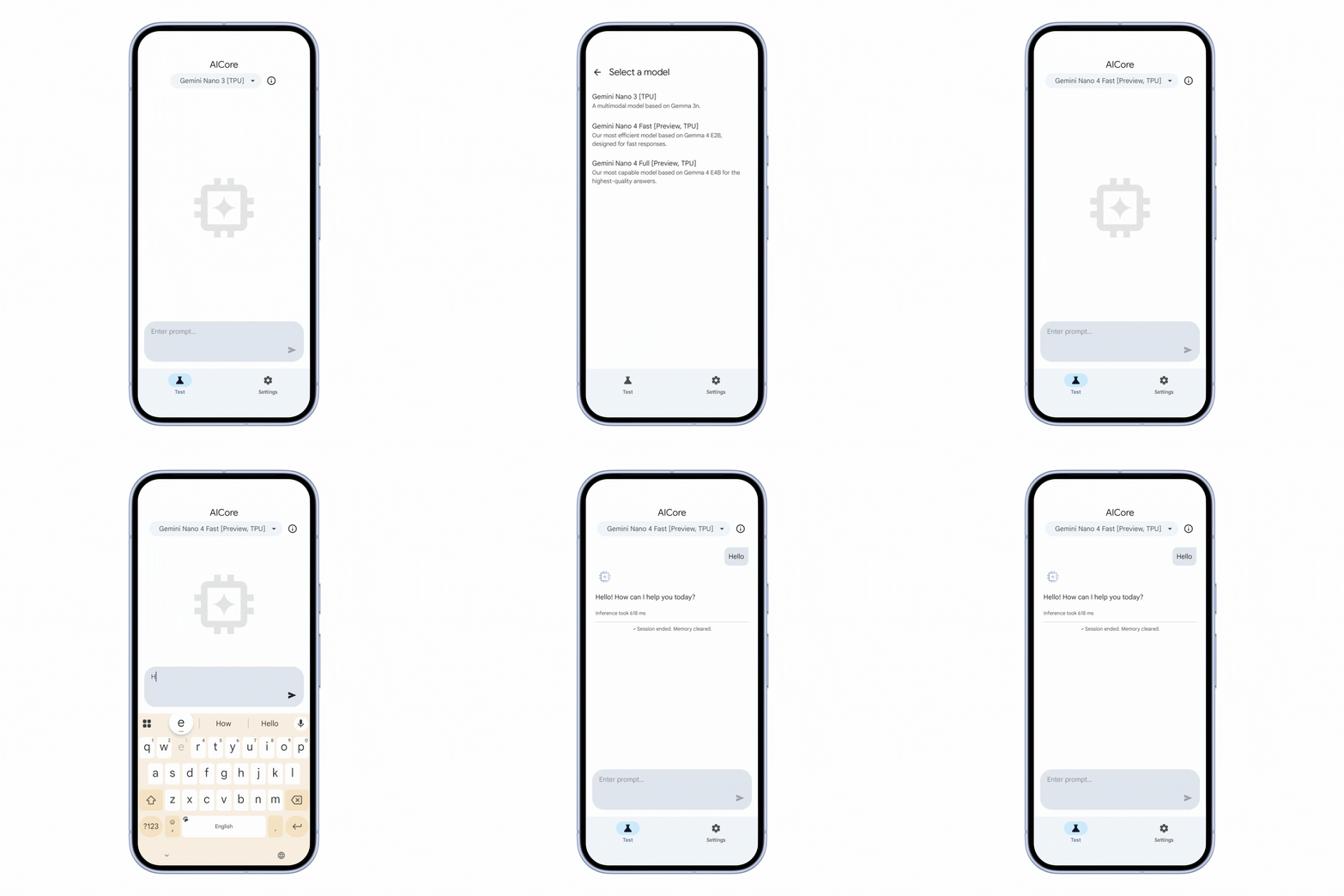
Image: ubergizmo.com
Google has unveiled Gemini Nano 4, the latest version of its on-device AI model for Android, and the pitch is straightforward: do more on the phone, send less to the cloud. The update is set for a wider rollout throughout 2026, with flagship Android devices getting the first taste later this year. That puts Google squarely in the race to make local AI feel less like a demo and more like a default feature.
The timing makes sense. Apple, Qualcomm, and other phone makers have been leaning hard into on-device AI, because speed, privacy, and battery life are the three things users actually notice. Cloud-backed assistants can be clever, but they also add lag and dependency; local processing is the cleaner sales pitch.
What Gemini Nano 4 is built to do
Google says Gemini Nano 4 is designed to work with AICore and handle complex AI tasks directly on device hardware. In practice, that should mean faster responses, less battery drain, and fewer moments where your phone politely asks a server somewhere to think for it.
The model is also being tuned for multimodal work, which is the fancy way of saying it can juggle different kinds of input at once. Google points to four areas in particular: reading text from images, understanding charts and graphs, recognizing handwriting, and answering more complex reasoning and math queries.
- Visual recognition: better text reading and chart interpretation
- Handwriting: improved note digitization
- Reasoning: stronger handling of conditional and chain-of-thought commands
- Mathematics: more accurate answers to complex queries
Why local AI is the real prize
There’s a reason every phone maker is suddenly obsessed with local AI: it is easier to sell “instant” than “eventually,” and far easier to sell privacy than “trust us, the cloud is fine.” Keeping more processing on the handset reduces the amount of personal data sent elsewhere, which also cuts down the number of places that data can be intercepted.

Recommended reading
Hassabis says STEM makes you 10x better at AI
It also changes the economics of mobile AI. If Gemini Nano 4 can do more without leaning on remote servers, Google gets a tighter grip on the Android experience while handset makers get a better excuse to call next year’s phones “premium.” The catch, of course, is that this only matters if users can actually feel the difference.
Flagship Android phones get Gemini Nano 4 first
Google says Gemini Nano 4 will arrive on flagship Android devices later this year, with a broader rollout throughout 2026. No specific date is set yet, which is very on-brand for big AI launches: the future is here, just not on your phone today.
The bigger question is whether Gemini Nano 4 becomes a real feature people use every day, or just another spec-sheet line that sounds impressive in a keynote. If Google gets the integration right, Android could gain one of its strongest arguments yet for keeping AI local instead of renting intelligence from the cloud.

AI Editor
Ava covers the rapidly evolving world of artificial intelligence, from foundational models and research labs to the real-world economics of intelligence. With a background in computational linguistics, she cuts through the hype to find out what actually works. She firmly believes that benchmarks are just marketing until reproduced in the wild.
via ubergizmo.com