• 2 min read
India puts its first hydrogen train on the rails
India has launched its first hydrogen-powered train, a 10-coach service in Haryana with a 1,200-kilowatt fuel cell system.
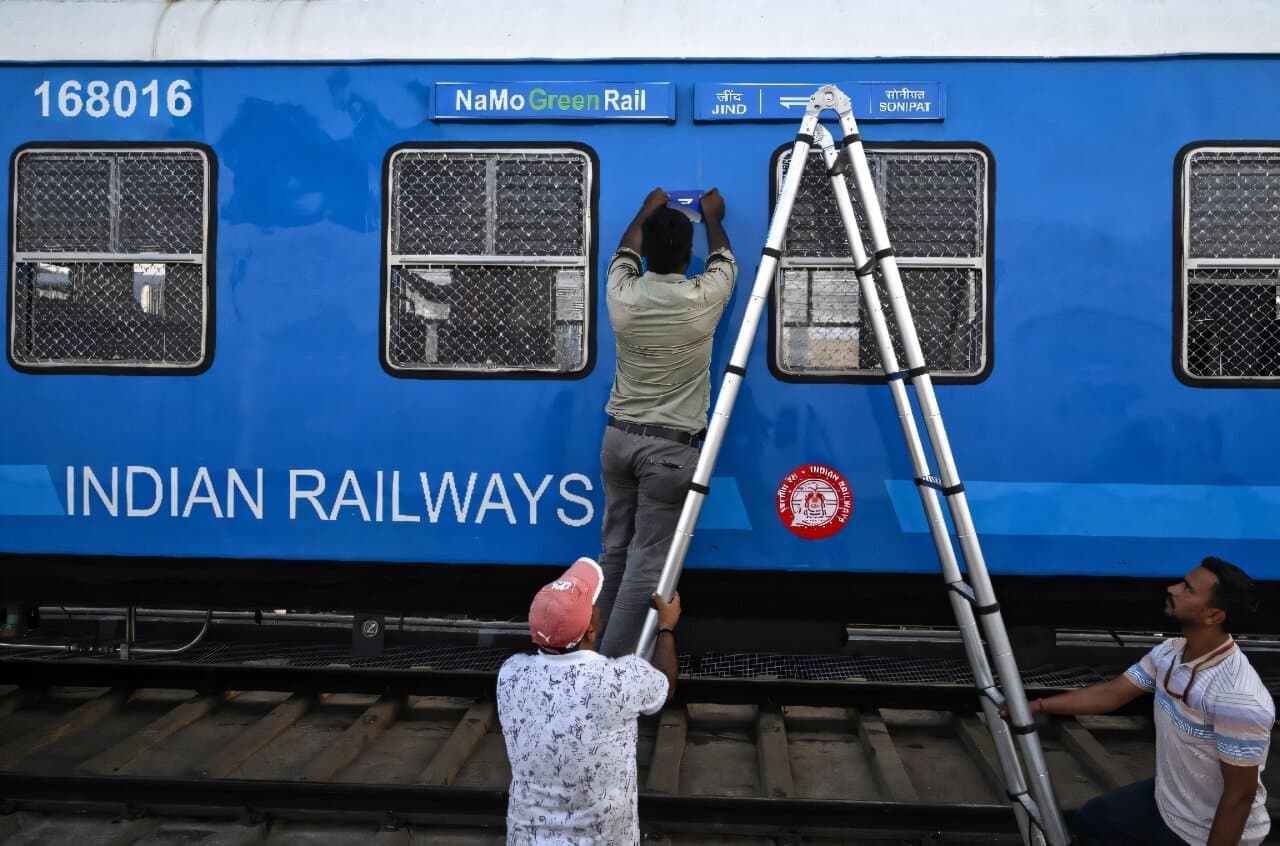
Image: TechXplore
India on Friday launched its first hydrogen-powered train, joining a small group of countries testing the technology to cut rail emissions and reduce reliance on fossil fuels.
The 10-coach train operates on an 89-kilometer (55-mile) route between Jind and Sonipat in Haryana. It uses a 1,200-kilowatt hydrogen fuel cell propulsion system, which officials described as the world’s most powerful for a train. Hydrogen trains generate electricity by combining hydrogen and oxygen in fuel cells, producing only water and steam at the point of use.
Prime Minister Narendra Modi, who flagged off the inaugural run, called it a major step in a social media post.
“This is a very significant day in the direction of self-reliant India and sustainable development,”
The railway ministry said the train was “developed entirely in India,” though senior officials told reporters that some key parts, including the fuel cells, were imported. The ministry also opened what it described as India’s largest railway hydrogen storage and refueling facility in Jind, with capacity for about 3,000 kilograms, to support hydrogen train operations.

Recommended reading
Last 1.7-liter Niva Legend leaves AvtoVAZ line
The pilot project cost about $12 million, according to a senior railway official, who said it was significantly more expensive than a comparable conventional service. He added that costs are expected to come down as the technology matures.
With the launch, India joins Germany, Japan, China, and the United States in testing or operating hydrogen-powered trains. The move is part of a broader overhaul of India’s rail system, which carried 7.41 billion passengers and 1.67 billion tonnes of freight last year.
India has also rolled out its domestically designed Vande Bharat trains, which can reach 180 kilometers (112 miles) per hour. At the same time, the country is building its first high-speed rail line using Japanese Shinkansen technology, with officials expecting the first section of the 320 kph bullet train to enter service in 2027.

Frontier Editor
Dan is our resident futurist, covering electric mobility, space exploration, and the smart home. He's interested in atoms just as much as bits. Whether it's a new battery chemistry, a reusable rocket, or a protocol that finally makes IoT devices talk to each other, Dan breaks down the engineering that pushes humanity forward.
via TechXplore