• 3 min read
iOS 27 Siri Crushes Old Siri in CarPlay Test
A side-by-side CarPlay test found Siri AI in iOS 27 handled follow-ups, multi-step tasks, and richer answers far better than iOS 26 Siri.
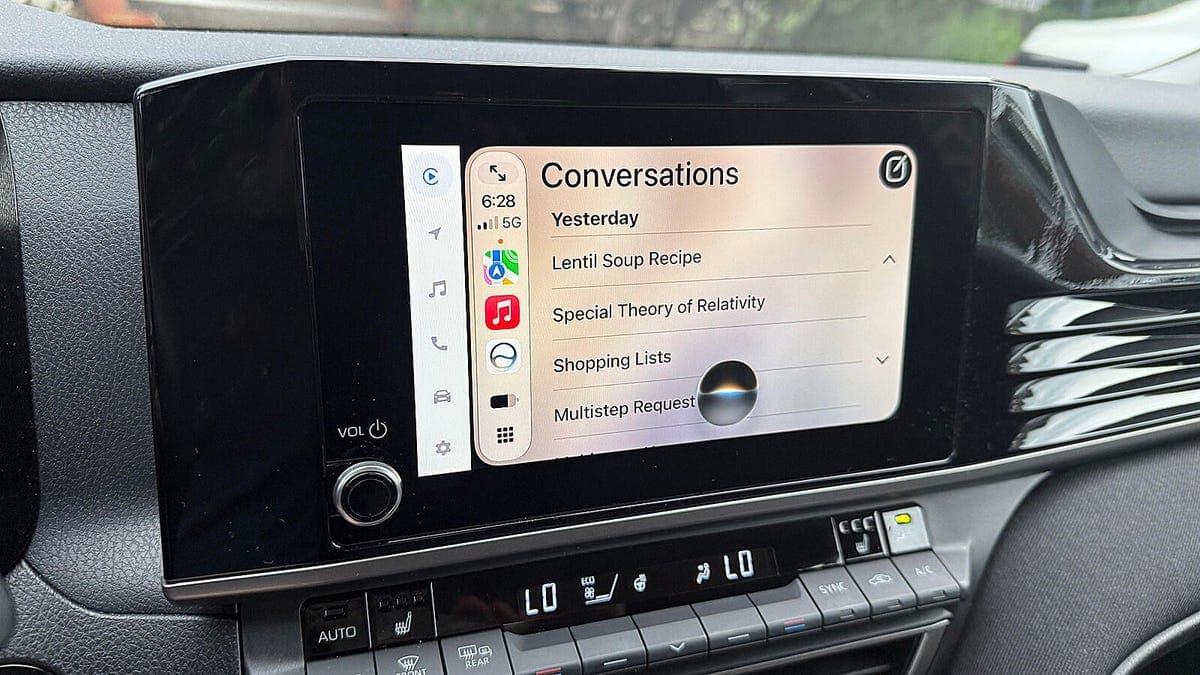
Image: ZDNET
Apple’s upcoming Siri AI, due to officially ship in September with iOS 27, easily outperformed the current iOS 26 Siri in a real-world CarPlay test from ZDNET. The biggest gap showed up not on simple commands, but on anything requiring context, follow-up questions, or multiple steps.
ZDNET’s Lance Whitney tested two iPhones in the car: one running iOS 26, the other the iOS 27 public beta. For basic tasks such as directions to a specific address, calling or texting someone, checking a calendar, or adding a reminder, the two versions were roughly comparable. Once the requests became more nuanced, the newer assistant consistently pulled ahead.
To try the beta, Whitney says users need an iPhone that supports Apple Intelligence and Siri AI: iPhone 15 Pro, iPhone 15 Pro Max, any iPhone 16 model, or any iPhone 17 model. He also advises against installing the beta on a primary phone. The public beta no longer requires a waitlist, and the iPhone must be set up with Apple CarPlay.

Recommended reading
Apple may end iPhone Upgrade Program next week
Where Siri AI pulled ahead
In one test, Whitney asked Siri to navigate to a doctor saved in his contacts by saying, “take me to Dr. [person’s last name].” Regular Siri returned a web list of doctors that did not match the contact. Siri AI checked contacts and provided directions to the correct doctor.
Follow-up handling was another clear win. After asking for directions, Whitney told both versions to avoid toll roads. Siri AI updated the existing route, while the older Siri offered only generic information about avoiding tolls.
The same pattern showed up elsewhere:
- For restaurant searches, both found nearby options by cuisine, but only Siri AI reliably gave ratings and reviews for the restaurants already on screen.
- Asked for something interesting about the town he was driving through, old Siri suggested a later web search, while Siri AI provided facts about the current location.
- When asked to play Beatles music, old Siri defaulted to Sirius XM even after being told to use the user’s own library; Siri AI pulled music from the library automatically.
- Siri AI also handled a multi-part request that old Siri could not: finding a lentil soup recipe online, creating a shopping list from the ingredients, and texting that list.
Better answers, but still beta
Whitney found Siri AI stronger on broader information requests too. When asked to explain Einstein’s special theory of relativity, the older Siri gave a short answer from a single web source. Siri AI delivered a more detailed explanation compiled from multiple sources and suggested follow-up subtopics.
The newer assistant also proved more capable for lightweight conversational tasks. It told a more creative story, including one about Mr. Giggles the cat traveling to the moon, while regular Siri refused that request in the car. For games, Siri AI could at least offer basics like flipping a coin, drawing a card, rolling dice, or Rock, Paper, and Scissors, though it would not run an American history trivia game. On language learning, regular Siri again deferred to a later web search, while Siri AI began a simple Italian lesson with phrases and explanations.
Whitney says Siri AI did not get everything right. At times it cut him off before he finished speaking, especially during multi-part requests, and sometimes it failed to respond before timing out. But in ZDNET’s test, the gap was still decisive: for complex in-car requests, it wasn’t close.

Gadgets Editor
Eli is obsessed with the tangible future. He reviews phones, wearables, and everything with a battery. Known for his rigorous testing protocols and unabashed teardowns, Eli has broken more review units than he cares to admit, all in the name of discovering the truth about durability and repairability.
via ZDNET