• 2 min read
Korea’s AI stocks now move global markets first
South Korea’s Kospi has become an early signal for global AI trades, with SK Hynix and Samsung increasingly shaping sentiment from Seoul to Wall Street.
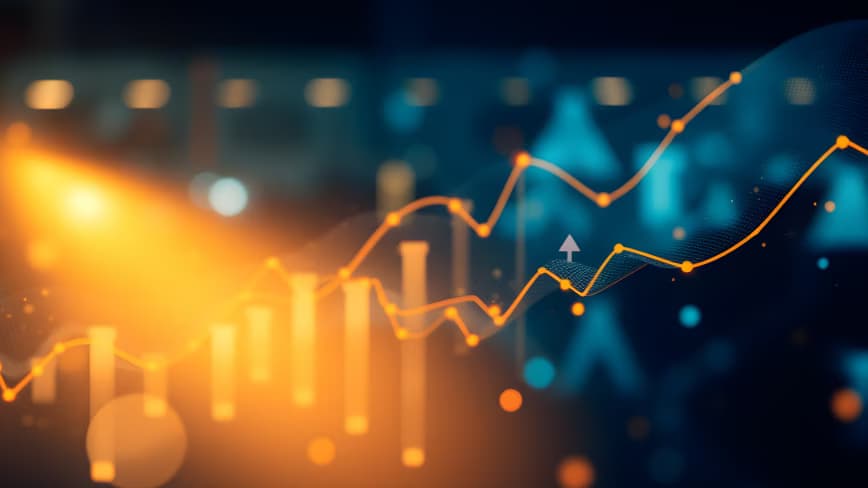
Image: TNW
South Korea’s stock market has become the first read of global AI investor sentiment, as moves in SK Hynix and Samsung increasingly ripple through chip stocks worldwide.
Fund managers in London, New York, and Tokyo now start their day by checking Korean stocks. As Hani Redha, a London-based portfolio manager at PineBridge Investments, put it:
“We are all Korean investors now.”
The market data backs that up. The 60-day correlation between the Kospi and the Nasdaq 100 has climbed to 0.46 — near its highest level in two years and almost triple its five-year average of 0.16. During selloffs, the link is even tighter: the Nasdaq 100's sensitivity to the Kospi during periods of Korean market weakness reached its highest level since 1990 on July 7.

Recommended reading
AliExpress hit with €550 million EU DSA fine
Earlier this year, SK Hynix joined the trillion-dollar club, and its US-listed shares now extend Korea’s influence into Wall Street hours. Redha said he tracks Seoul, then SK Hynix ADRs, then Korea-focused ETFs in New York.
“It’s like almost 24-hour tracking.”
That influence also brings more volatility. The Kospi has become one of the world’s most volatile major benchmarks, with leveraged single-stock products amplifying moves. A Monday selloff driven by skepticism about AI demand sent the Kospi down nearly 9%, spilling into Wall Street and dragging SK Hynix’s US shares down 9.3%. Since its June peak, the Kospi has fallen 25%, erasing $1 trillion in value. South Korea has temporarily halted new listings of single-stock leveraged ETFs to curb speculation.
Even so, the benchmark remains up 62% for the year. South Korea has committed $880 billion over a decade to chips, AI data centres, and robots, while Samsung and SK Hynix control most of the global memory chip supply.
According to Chisa Kobayashi at UBS, that dynamic is unlikely to fade soon.
“This is the new normal investors have to accept, as long as the AI rally continues.”
As long as the memory supply bottleneck remains in place, sentiment in Seoul may keep setting the tone for AI stocks everywhere else.
Enterprise Editor
Marcus follows the money. He covers enterprise software, cloud architecture, and the tectonic shifts in Big Tech strategy. He translates dense earnings calls and complex M&A activity into actionable insights about where the industry is actually heading. If a tech giant makes a silent pivot, Marcus is usually the first to notice.
via TNW