• 2 min read
Light-tuned switch stores its threshold for 10 hours
Researchers built a liquid-crystal switch whose trigger threshold can be rewritten with light or heat, then held for about 10 hours without power.
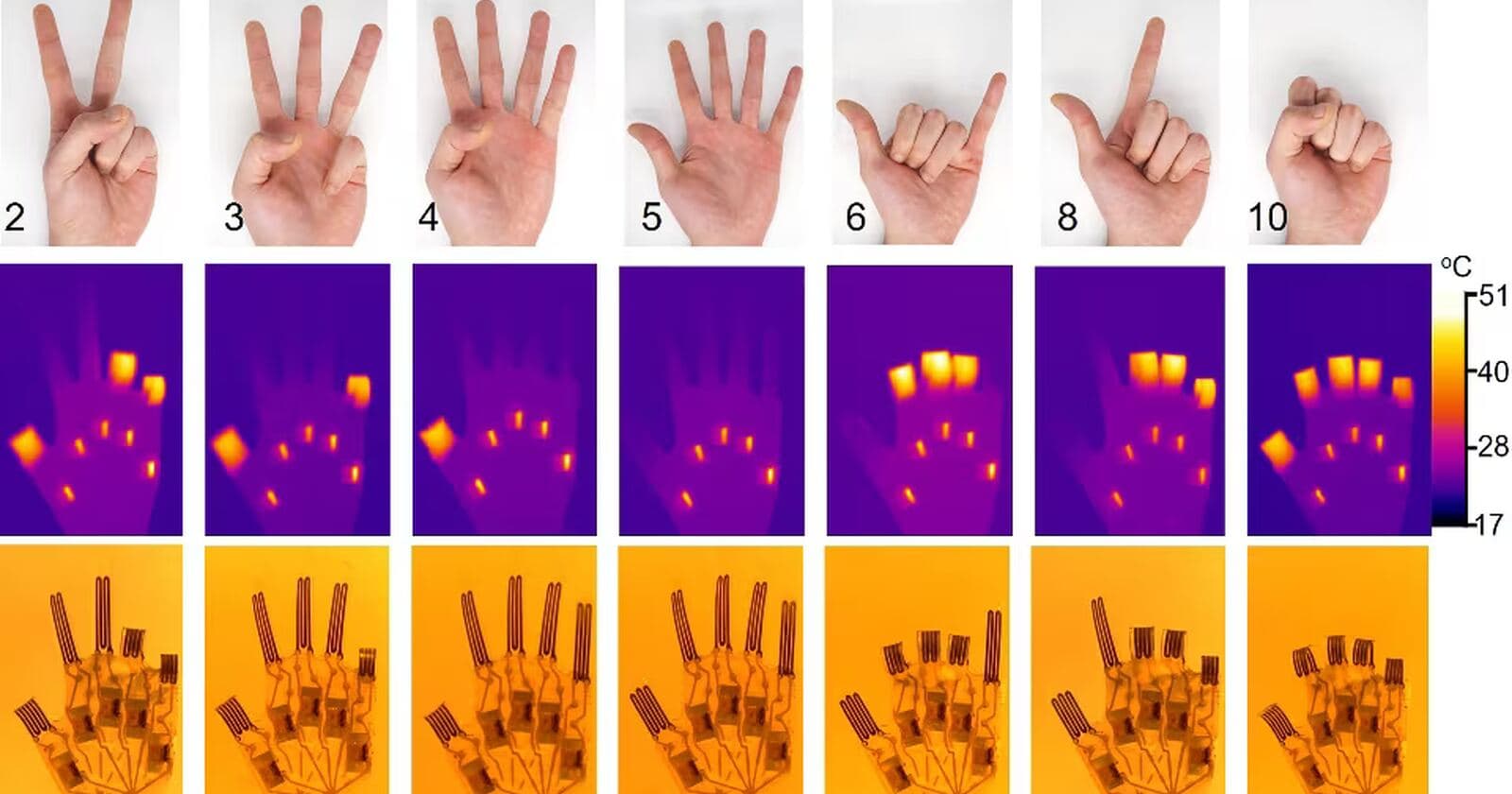
Image: ITzine
Dutch and Canadian materials scientists have built a liquid-crystal switch whose activation threshold can be rewritten with light. The device, described in Science Advances, uses a liquid-crystal polymer with azobenzene and holds its programmed state without external power and without separate memory.
The team showed that the threshold can be adjusted in two ways — heating and light exposure — and then used like a conventional switch. By changing the duration and intensity of ultraviolet irradiation, the researchers controlled the share of the cis isomer, which changed the size of the gap inside the device. That, in turn, shifted the minimum power on the heating electrode needed for the switch to close the circuit.
In practice, that means the same component can be retrained to trigger earlier or later without changing the surrounding circuit. The material does have a limit, though: according to the authors, the stored threshold gradually fades after about 10 hours in complete darkness. For electronics, that is less long-term storage than a usable operating window, but it still means the settings can persist without continuous power.
A standard thermal relay is simpler. It usually relies on a bimetallic strip that bends when heated because two metals expand at different rates. That approach is reliable, but its threshold is largely fixed by design. The new switch works differently: its response can be rewritten with light and then used without extra calibration until the recorded state disappears.
The researchers also tested the idea beyond a basic materials demo. First, they used the switch as a simple binary classification system, tuning it with ultraviolet and blue-light pulses so it would sort incoming signals into one of two classes. Then they built a control system for the fingers of a robotic hand using five of the switches. Each finger was assigned its own threshold — the power level at which it should bend — allowing the team to reproduce different gestures, including single-finger movements and combinations.
Recommended reading
This drone spins itself nearly out of sight
That could make the approach useful for soft robotics, where lightweight, flexible components are often a better fit than heavy sensors and complex electronics. The remaining question is durability: how long these elements last in real devices, how they behave after many heating and illumination cycles, and how stable their programmed thresholds remain will have to be answered in more demanding robotic tests.

Frontier Editor
Dan is our resident futurist, covering electric mobility, space exploration, and the smart home. He's interested in atoms just as much as bits. Whether it's a new battery chemistry, a reusable rocket, or a protocol that finally makes IoT devices talk to each other, Dan breaks down the engineering that pushes humanity forward.
via ITzine