• 2 min read
LINK recovers in orbit ahead of Swift servicing attempt
Katalyst Space says LINK is halfway through commissioning after an in-flight software fix, clearing the way for a rendezvous with NASA’s Swift telescope.
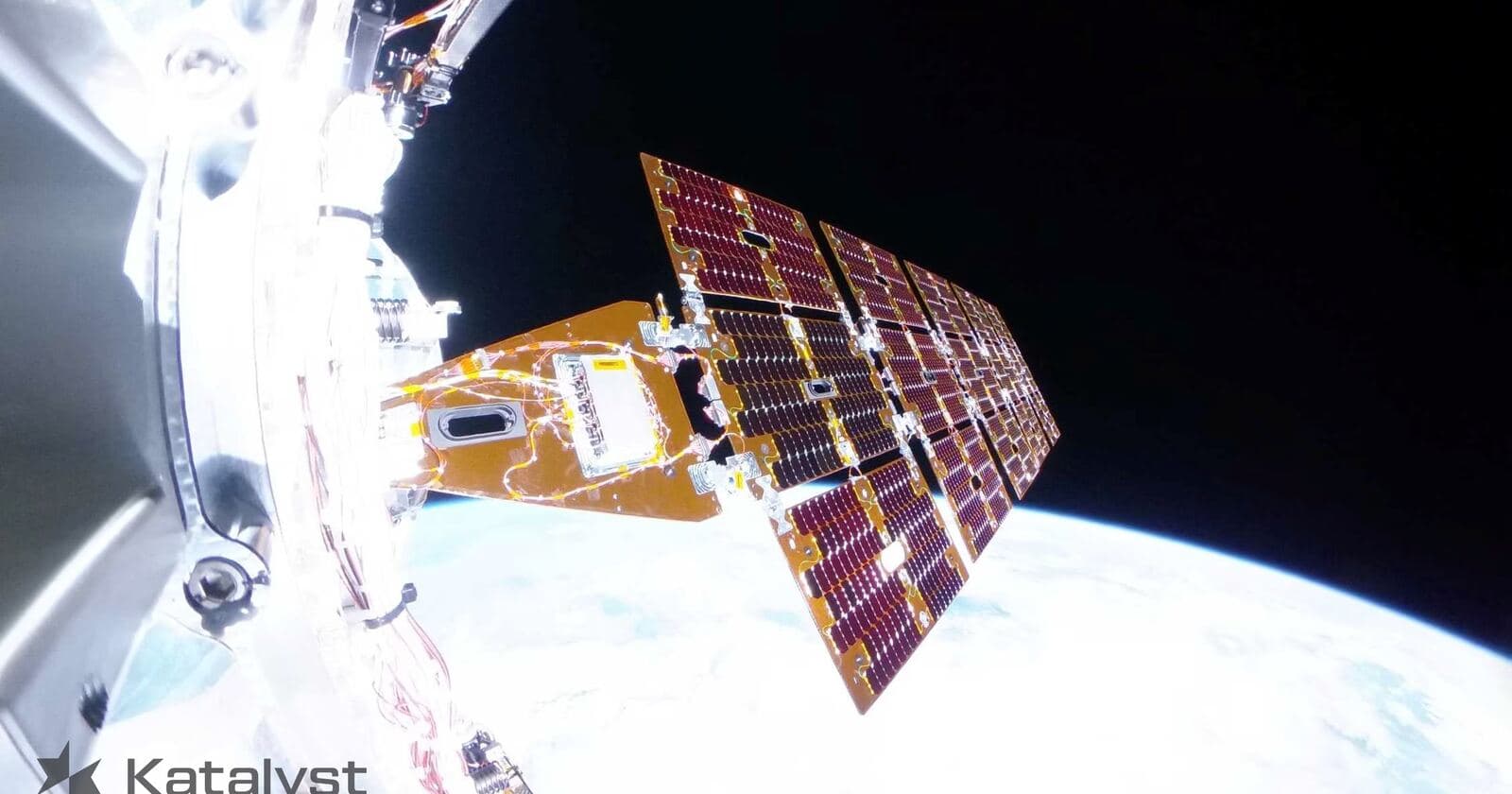
Image: ITzine
Katalyst Space says its LINK servicing spacecraft has completed roughly half of its commissioning program and is preparing to approach NASA’s Neil Gehrels Swift Observatory. The mission is unusual for a science satellite: rather than repairing the telescope itself, LINK is meant to raise Swift to a higher orbit and extend its working life.
That plan nearly hit trouble in the mission’s opening days. LINK launched on July 3 and, after reaching orbit, deployed its solar panels, established contact with Earth, and completed initial checks of its power, electronics, and propulsion systems. Katalyst also switched on the spacecraft’s xenon electric thrusters for the first time, the engines needed for the slow approach to Swift and the months-long orbit-raising phase that would follow.
Early on, the team ran into communications dropouts, attitude-control issues, and a problem with one of the spacecraft’s three reaction wheels, which handle precise pointing without burning fuel. Engineers responded by issuing an emergency onboard software update during flight and adjusting the control algorithms. According to the company, that made communications stable and restored steady orientation control.
If the next tests go as planned, LINK will move on to its rendezvous with Swift. For NASA, the mission carries real weight. Swift launched in 2004, and its primary mission was originally expected to last about two years. Instead, the observatory has operated for more than two decades and remains one of NASA’s key tools for studying gamma-ray bursts and other fast-changing cosmic events.
Orbital servicing has picked up in recent years, but mostly around commercial satellites. Northrop Grumman has already docked its MEV vehicles with Intelsat telecom satellites, while Astroscale and others are testing inspection, refueling, and deorbiting services. What sets LINK apart is the target: a NASA science observatory. If the orbit raise works, it could become an important precedent for extending the lives of expensive research spacecraft without launching a replacement that could cost hundreds of millions of dollars.

Recommended reading
Satellite startups pull $8.1B in half a year

Frontier Editor
Dan is our resident futurist, covering electric mobility, space exploration, and the smart home. He's interested in atoms just as much as bits. Whether it's a new battery chemistry, a reusable rocket, or a protocol that finally makes IoT devices talk to each other, Dan breaks down the engineering that pushes humanity forward.
via ITzine