• 2 min read
Northwestern’s drone hides in plain sight by spinning at 1,500 rpm
Northwestern researchers built Phantom Twist, a one-propeller drone that becomes hard to see by spinning 25 times per second.
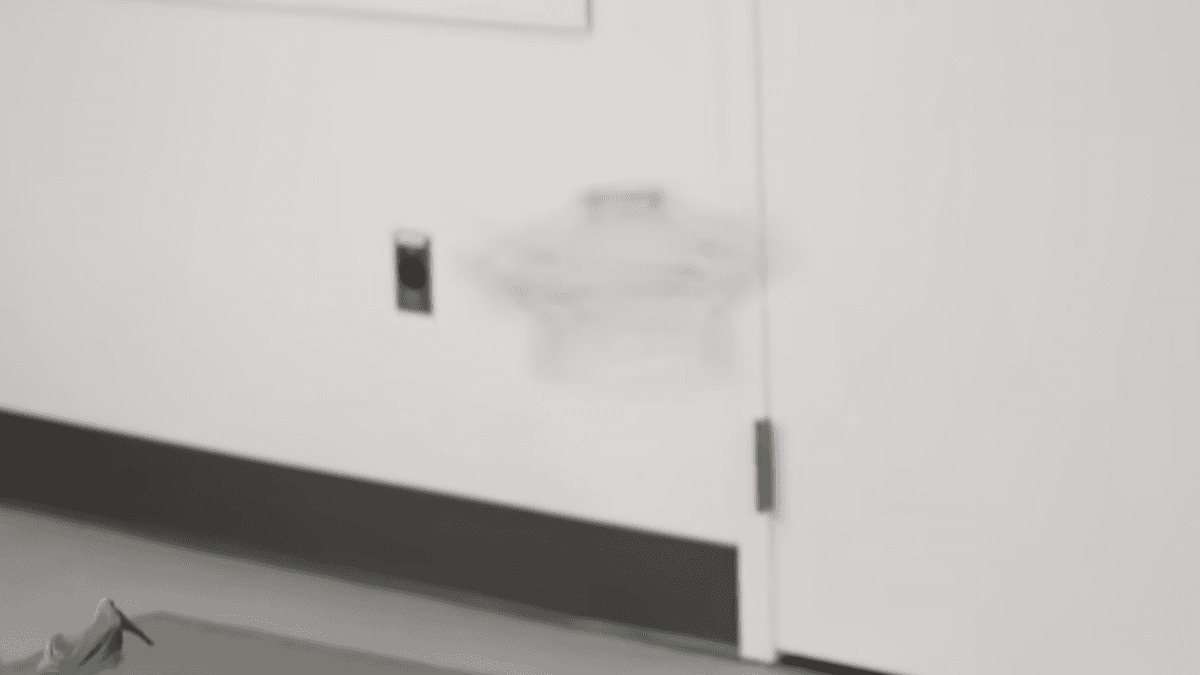
Image: Gizmodo
A Northwestern University research team has built a drone that becomes almost invisible not through cloaking, but by spinning at 25 times per second, or 1,500 rpm. The design, called Phantom Twist, blurs into what the team described in a news release as a “ghostly smudge,” much like a fast-moving fan blade that the human eye can no longer track clearly.
The effect comes with a tradeoff: noise. In video released by the team, the drone gives off a high-pitched whine that rises as the spin rate increases.
Phantom Twist works differently from a standard quadcopter. According to the press release, it uses one motor and one propeller rather than four separate rotors.
“Unlike a typical quadcopter with four separate rotors, Phantom Twist has one motor and one propeller. The propeller spins in one direction, and the rest of the drone spins in the opposite direction.”
The researchers also said the drone’s design process was fully automated. They used AI and optimization algorithms to repeatedly rearrange major components, including the motor, propeller, circuit board, counterweight, and batteries. Those configurations were then tested with a perception model that approximates human vision to judge how noticeable each version appeared.
The best-performing designs were fed back into the optimization process again. The final layout spread opaque parts such as the batteries and motor around the frame so that, when the craft spins, it appears as “a faint, semi-transparent cloud rather than a distinct shape.”
Recommended reading
KAIST’s XR comics put webtoons into your room
That leaves Phantom Twist as a striking example of a machine that doesn’t disappear completely, but can make itself much harder for humans to see simply by moving too fast to follow.

Design & UX Editor
Yuki believes that a great product is defined by how it feels. She critiques software interfaces, hardware ergonomics, and the philosophy of design in tech. With a background in industrial design, she analyzes the subtle decisions that make tools intuitive or infuriating. She advocates for accessible, human-centric technology.
via Gizmodo