• 2 min read
OpenAI’s first device is a $230 Codex keyboard
OpenAI has launched its first hardware product, the Codex Micro keyboard, built with Work Louder for Codex users on Windows and macOS.
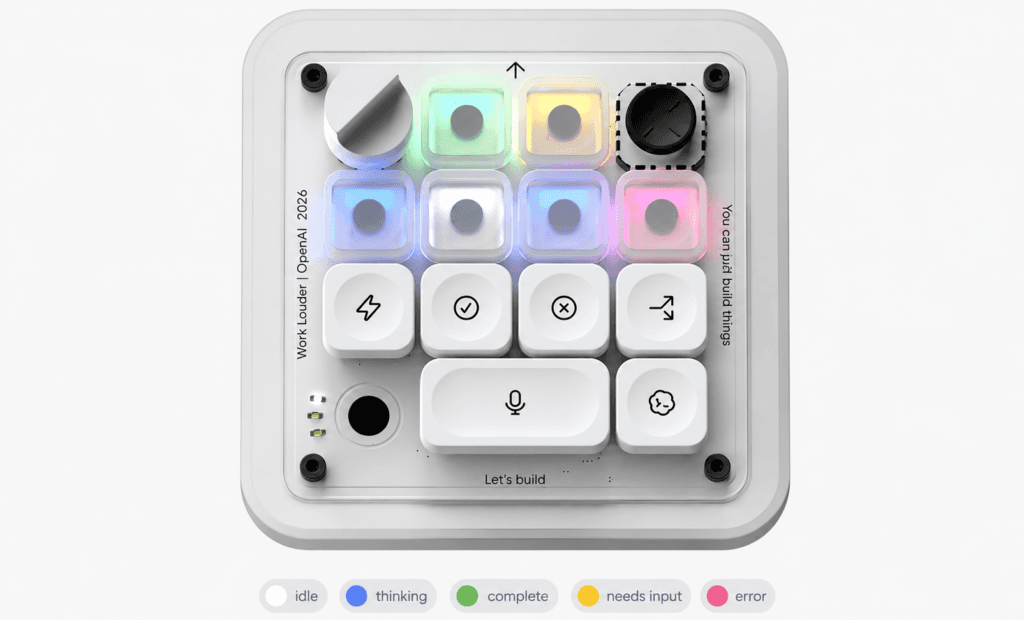
Image: iXBT
OpenAI has entered hardware at last, but not with the screenless AI companion rumored in recent months. Instead, the company unveiled Codex Micro, a compact programmable keyboard for developers using its Codex AI coding platform.
Built with keyboard maker Work Louder, the accessory is already available for preorder. It features 13 mechanical keys, including six backlit keys that show the status of active AI agents in different colors. Users can assign keys to actions such as accepting or rejecting code suggestions, starting new chats, using voice input, or switching between tasks.
The keyboard also includes a rotary dial for adjusting Codex computing power and a joystick that can be mapped to common workflows such as debugging or code refactoring.
Recommended reading
Samsung 990 SSD hits 7,250 MB/s with a 2TB option
Codex Micro ships with 32 interchangeable keycaps, giving users more flexibility to customize shortcuts around their workflow. It supports Bluetooth and USB-C connectivity and works with Windows and macOS.
OpenAI says the device is aimed at people who spend significant time working with Codex, especially after the company expanded the platform beyond programming into a broader AI productivity tool.
According to the source, Codex Micro costs $230 and is currently being sold in limited quantities through OpenAI and Work Louder.
Bloomberg reports that OpenAI is still developing a screenless portable AI device with startup io Products, founded by former Apple chief designer Jony Ive. That product is expected to arrive later with conversational AI, smart home controls, media playback, and other features.

Computing Editor
Tomas lives in the terminal. He covers chips, laptops, and operating systems with a focus on performance and efficiency. He reads kernel changelogs the way other people read fiction, and he's always on the hunt for the perfect mechanical keyboard switch. If it processes data, Tomas has an opinion on it.
via iXBT