• 3 min read
Pearl AI mining claims face scrutiny in Cornell study
A Cornell University study has cast doubt on Pearl, a crypto project that claims to be the first blockchain network turning mining into useful AI work. The researchers say Pearl does use math operations that resemble neu
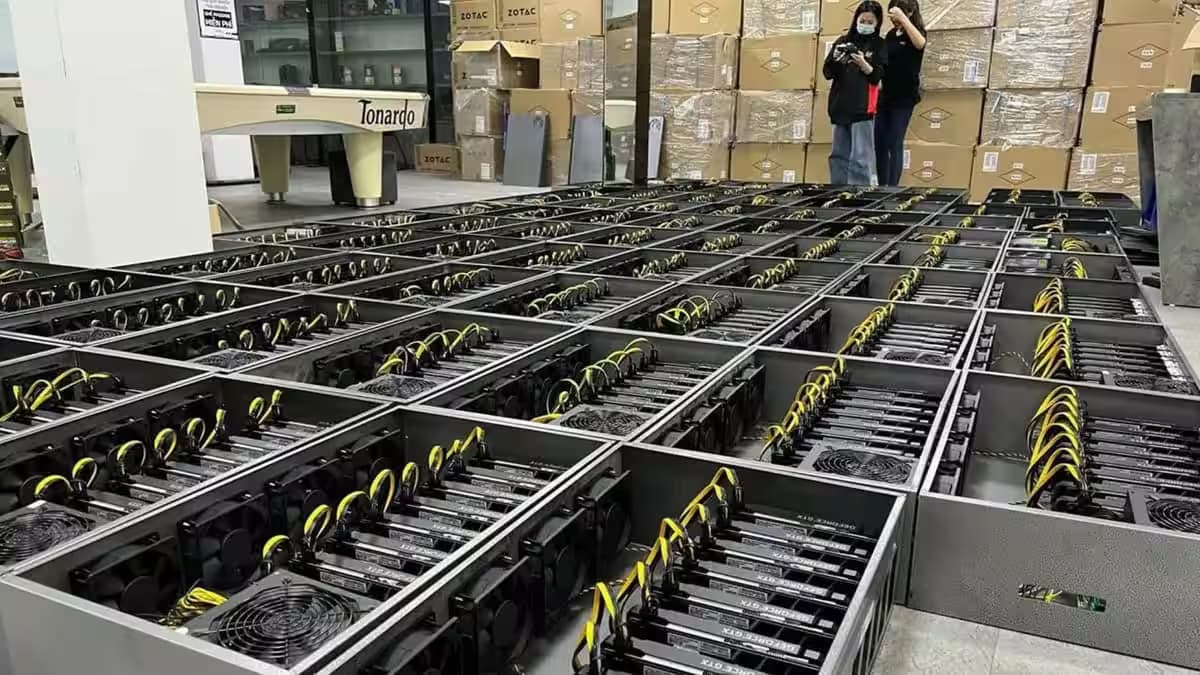
A Cornell University study has cast doubt on Pearl, a crypto project that claims to be the first blockchain network turning mining into useful AI work. The researchers say Pearl does use math operations that resemble neural-network training, but its system cannot prove that those operations are doing any real machine-learning job rather than producing meaningless calculations that just look busy.
The study estimates the network’s computing power at about 24 exahashes per second, roughly equivalent to 320,000 GeForce RTX 3090 cards, with power draw that could reach 112 MW. In a market where AI compute is scarce and GPU rental prices can swing fast, a project that promises “useful” work gets a lot of benefit of the doubt until someone pokes it with actual tests.
How Pearl’s AI mining was challenged
The paper’s most awkward result was simple: the researcher built mining software that sent random numeric matrices instead of AI tasks, and Pearl still accepted the output and paid rewards. That suggests the network has no reliable way to tell whether it is receiving work that could help train models or just generic computation dressed up as something smarter.
More than 8,000 network nodes were also examined, and most appeared to use hardware capable of running AI models. Yet the software packages reviewed did not show signs of popular machine-learning frameworks. That gap is exactly where the marketing gloss starts to peel: having the right GPUs is not the same as proving the network is doing useful AI work.
GPU demand and Vast.ai pricing
The study also points to a very real side effect outside Pearl’s own ecosystem. After its mining software launched in May, low-cost GPU rental prices on Vast.ai reportedly rose by about 38%, while hardware utilization jumped from 57% to 94%. For smaller buyers, that is the uncomfortable part of “useful” compute: even if the project is legitimate, it can still squeeze the same GPU pool everyone else needs.
Recommended reading
Hassabis says STEM makes you 10x better at AI
- Estimated network power: 24 exahashes per second
- Comparable hardware: about 320,000 GeForce RTX 3090 cards
- Estimated energy use: up to 112 MW
- Reported Vast.ai rental price increase: about 38%
- Reported utilization rise: from 57% to 94%
Proof-of-useful-work still needs proof
The study does not dismiss Proof-of-Useful-Work as an idea. It takes aim at Pearl’s implementation, arguing that the network could theoretically be used for real AI tasks but does not require them, and cannot confirm that the output has practical value. That’s the difference between an ambitious mechanism and a clever branding exercise.
Pearl has not responded publicly yet, but the backlash is already doing the usual crypto-and-AI thing: forcing everyone to ask whether the project is directing expensive compute toward something real, or just borrowing AI language to make old-school mining sound noble. Expect that question to get louder, especially if rivals try the same pitch and investors start asking for receipts instead of slogans.

AI Editor
Ava covers the rapidly evolving world of artificial intelligence, from foundational models and research labs to the real-world economics of intelligence. With a background in computational linguistics, she cuts through the hype to find out what actually works. She firmly believes that benchmarks are just marketing until reproduced in the wild.