• 2 min read
Keyboard input drives holograms on new metasurface
University of Stuttgart researchers built a programmable metasurface that turns keyboard and controller input into dynamic holograms in milliseconds.
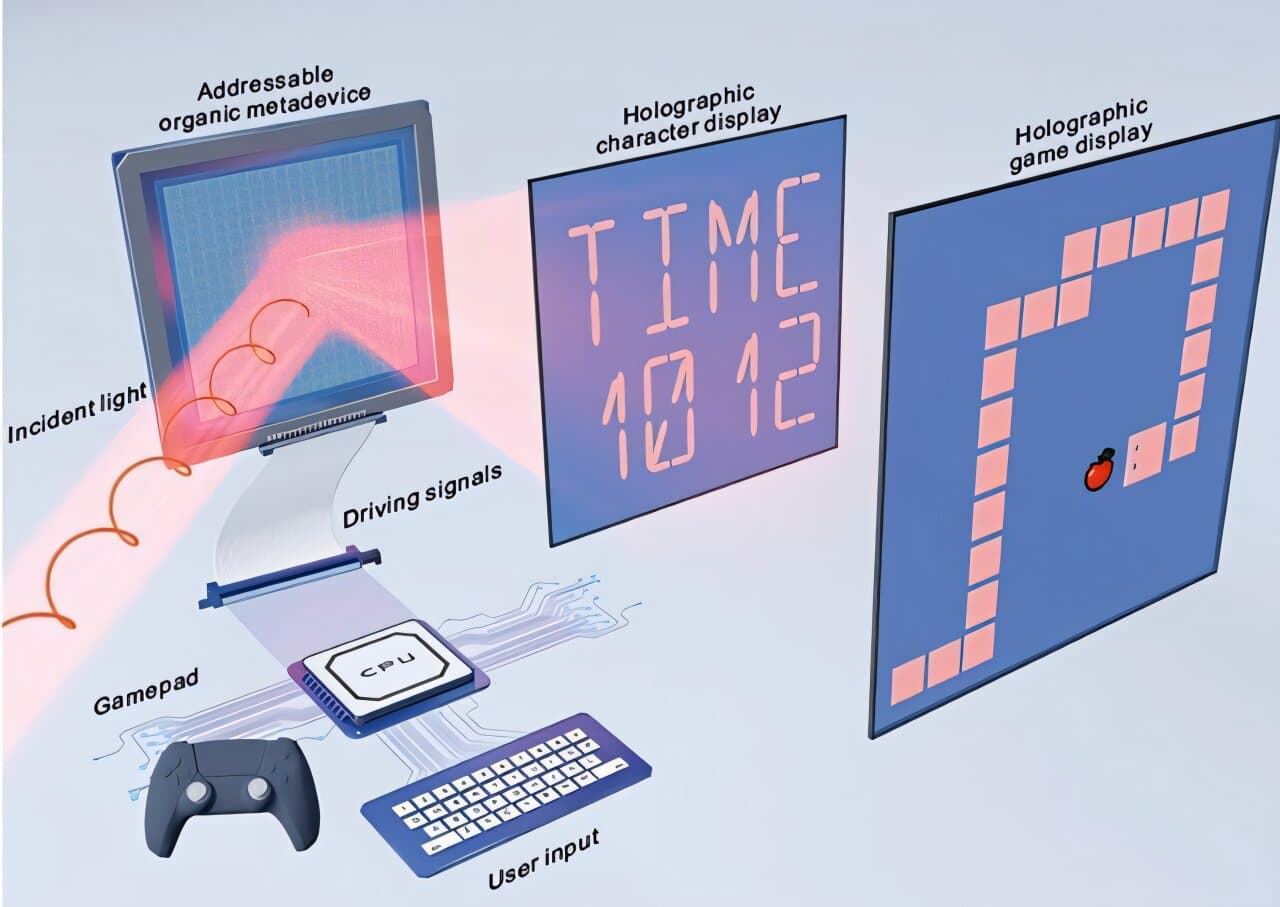
Image: TechXplore
A team at the University of Stuttgart has built a programmable metasurface that can turn keyboard commands directly into dynamic holograms in milliseconds. The device electronically controls each optical pixel independently, pushing active metasurfaces beyond fixed functions and toward real-time, software-driven optics.
Metasurfaces are ultrathin optical components made from arrays of nanoscale structures that manipulate light on a flat surface, rather than relying on the shape and thickness of conventional lenses or other optics. According to Professor Laura Na Liu, director of the 2nd Physics Institute at the University of Stuttgart, the field now needs precise control over individual pixels at visible wavelengths to unlock truly dynamic behavior.
The Stuttgart researchers addressed that by combining plasmonic gold nanoantennas with ultrathin electrochemically active conducting polymers. Using a planar electronic fan-out architecture, they were able to switch each metasurface pixel independently with sub-volt electrical signals, while achieving millisecond response times and negligible electrical crosstalk. The results were published in Nature Communications.
“Independent addressability is the foundation of every programmable technology. Future metasurfaces will follow the same principle. By giving every optical pixel its own electronic address, we transform metasurfaces from predefined optical components into programmable photonic platforms capable of adapting their functionality in real time.”
To show what the platform can do, the team connected the metadevice to a full electronic control system. In one demo, letters and numbers typed on a computer keyboard were immediately projected as holograms. In another, a handheld game controller was used to play holographic versions of Snake and a Tetris-inspired block-falling game, with the scene changing continuously in response to user input.
Recommended reading
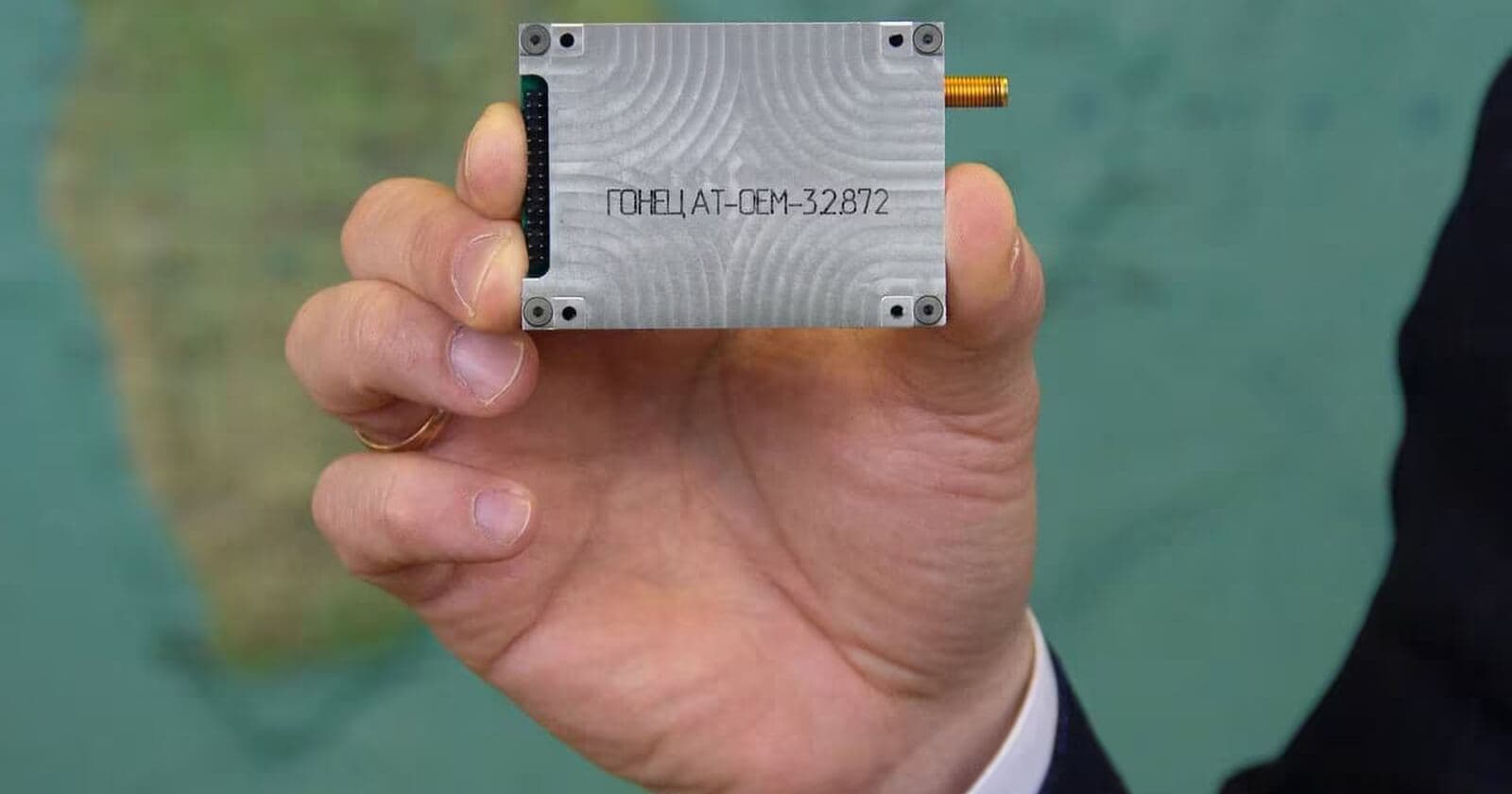
Roscosmos tests AT-Gonets modem that keeps data after power loss
“Each pixel had to switch rapidly while remaining electrically isolated from its neighbors. Seeing holographic images respond instantly to user input was an exciting moment because it demonstrated that individually addressable metasurfaces can become genuinely interactive optical devices.”
Because the same device can perform different optical tasks by changing its driving signals, the researchers say the concept could extend to imaging, communication, sensing, and wearable photonics as larger pixel arrays, better conducting polymers, and more advanced control systems become available.
The paper is “Interactively addressable organic metadevices” by Xiangyu Huang et al, published in Nature Communications (2026). DOI: 10.1038/s41467-026-75757-4

Frontier Editor
Dan is our resident futurist, covering electric mobility, space exploration, and the smart home. He's interested in atoms just as much as bits. Whether it's a new battery chemistry, a reusable rocket, or a protocol that finally makes IoT devices talk to each other, Dan breaks down the engineering that pushes humanity forward.
via TechXplore