• 3 min read
After 2,300 Hours, This Reactor Seal Held Up
University of Michigan engineers ran a commercial graphite shaft seal for 2,300 hours in molten salt conditions with no significant degradation.
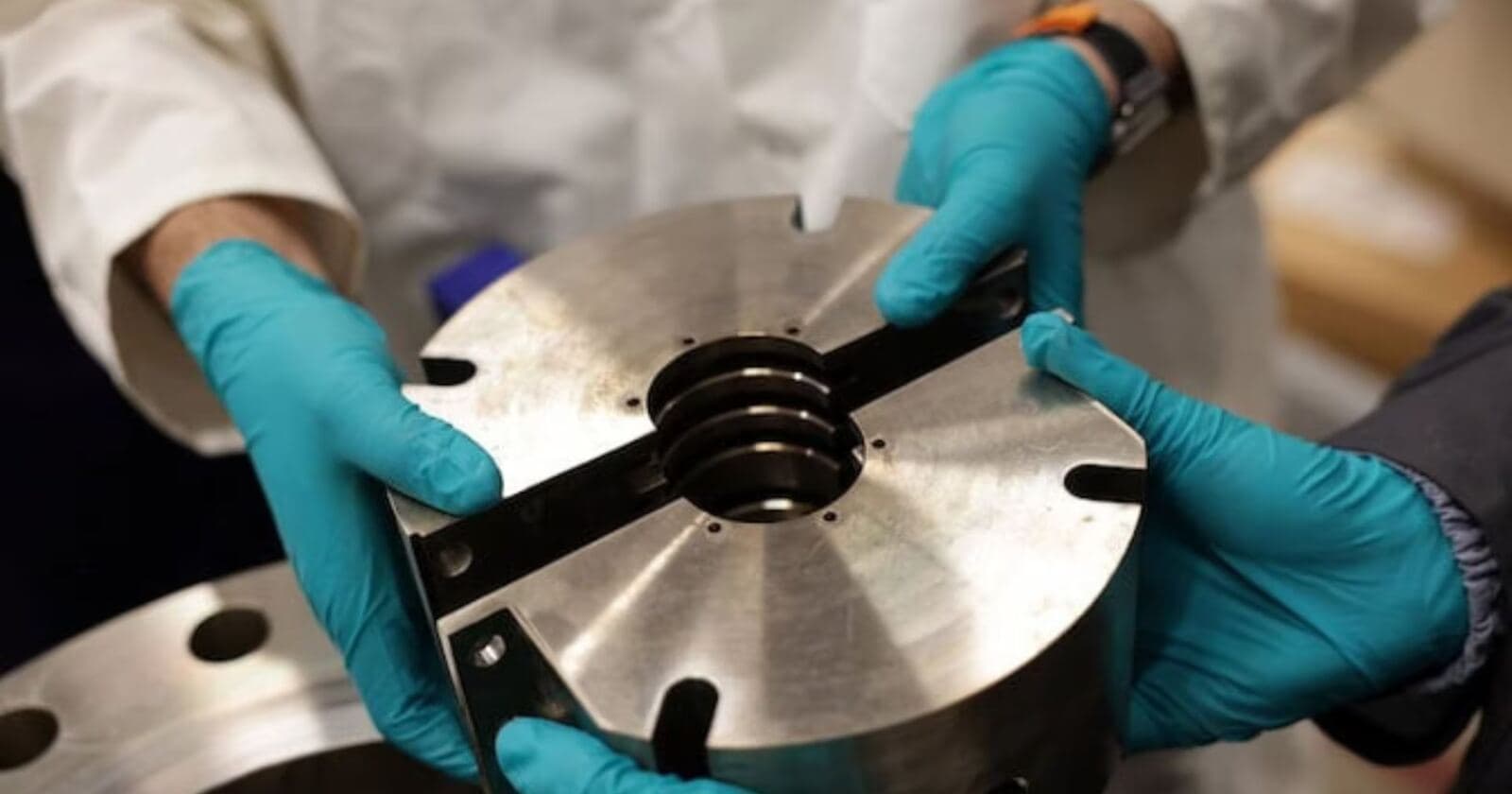
Image: ITzine
Engineers at the University of Michigan have put a standard commercial graphite shaft seal through 2,300 hours of testing in conditions designed to closely mimic a molten salt reactor. The result: no significant degradation, a practical finding for a field where extreme heat and chemically aggressive environments usually define the hardest engineering problems.
The test ran on the Shaft Seal Test Facility, a rig built specifically to evaluate seals for rotating pump components. In these systems, the seal has to do two jobs at once: keep the molten material inside the loop and prevent aggressive vapors and toxic gases, including hydrogen fluoride, from escaping.
The setup was straightforward. Researchers connected two stainless steel tanks with piping and filled the lower tank with 32 kg of FLiNaK salt, a mixture of lithium, sodium, and potassium fluorides. FLiNaK is often used as a close stand-in for molten salts used in nuclear power systems, though it contains no radioactive components. A motor-driven shaft spun at 1,500 rpm while the seal operated under high temperature, vapor exposure, and different cover gases.

Recommended reading
COMAC Lands First Foreign C909 Order in Cambodia
The first phase was effectively a break-in period. The seal took about 10 days to reach stable operation as friction created a micro-gap and system pressure equalized. After that, the team could observe how the assembly behaved under steadier conditions and compare its response to changing operating parameters.
What stood out was not just the runtime but the condition of the seal at the end. After 2,300 hours, the researchers saw no noticeable corrosion and no breakdown of the graphite seal. Changes in temperature and shaft speed had little effect on the overall picture. The strongest factor was the composition of the protective gas: argon performed best, producing higher tank pressure at the same flow rate than helium and nitrogen.
That matters because, in a real system, even the composition of an inert atmosphere can materially affect how the entire loop behaves.
According to the researchers, fewer than 10 facilities worldwide have carried out tests using more than 10 kg of high-temperature fluoride salts for longer than 100 hours. Against that backdrop, a 2,300-hour run is more than a routine bench test. It is a substantial demonstration that MSR components can be validated in hardware, not just modeled on paper.
Molten salt reactors have long been discussed as an alternative to conventional nuclear designs because they combine high operating temperatures with low pressure. But their chemically reactive environment raises difficult questions about how long seals, valves, and pump assemblies can survive, and whether they can be trusted in commercial systems. The authors say the data should help with the design and scaling of not only molten salt reactor systems, but also other energy installations that need durable sealing components in harsh conditions. The next bottleneck is likely to be larger test rigs and components built for even longer maintenance-free operation.

Frontier Editor
Dan is our resident futurist, covering electric mobility, space exploration, and the smart home. He's interested in atoms just as much as bits. Whether it's a new battery chemistry, a reusable rocket, or a protocol that finally makes IoT devices talk to each other, Dan breaks down the engineering that pushes humanity forward.
via ITzine