• 2 min read
Russia awards 992.85m rubles for chip tool replacement
RFNC-VNIIEF has won a 992.85 million ruble contract to develop Russian wafer bonding and debonding equipment by October 30, 2029.
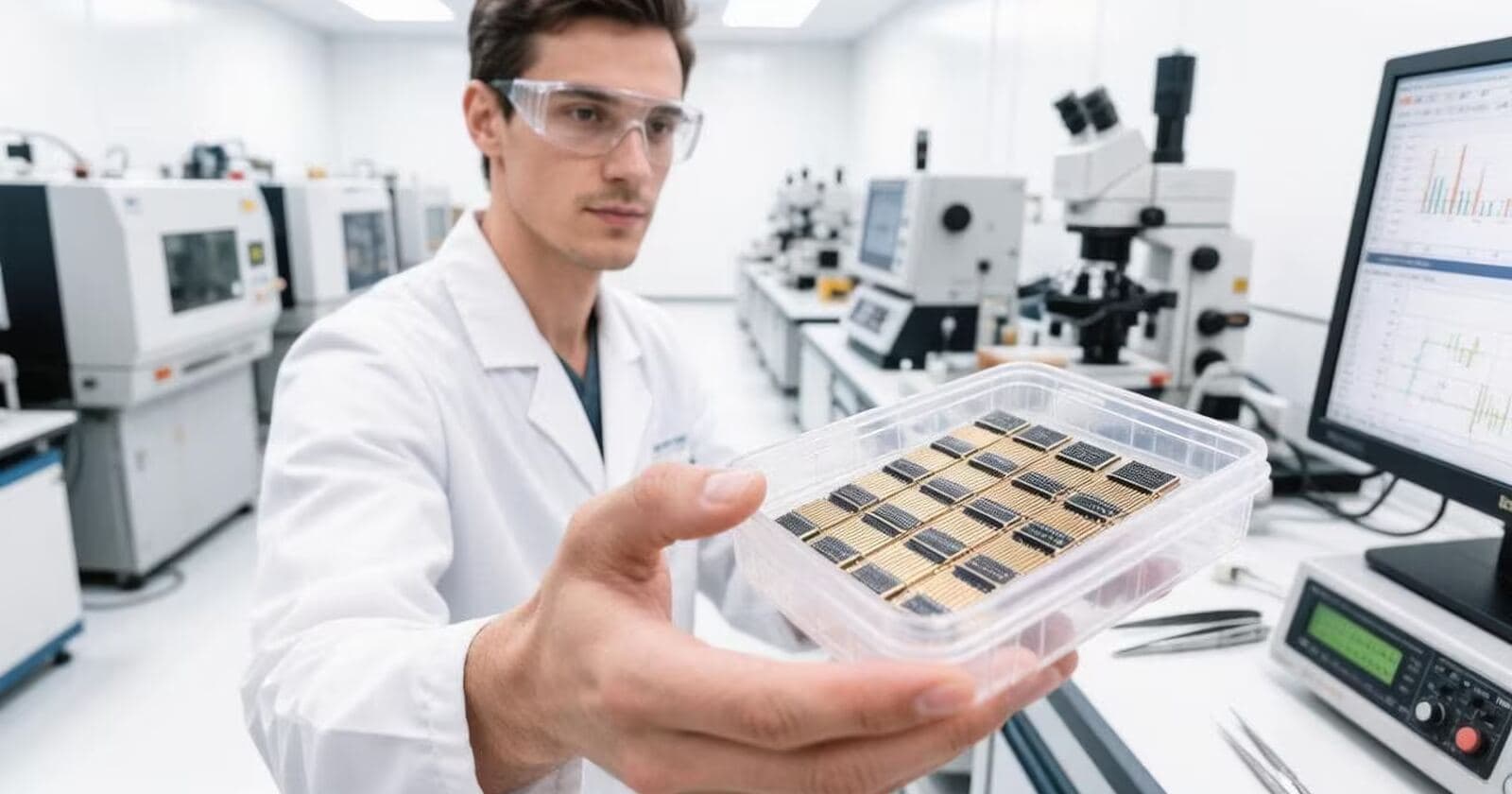
Image: ITzine
Russia’s Sarov nuclear center has received a state contract worth 992.85 million rubles to develop semiconductor manufacturing equipment intended to replace German and Austrian systems as the country pushes to localize microelectronics production.
According to CNews, the state R&D contract, code-named “Dentist,” was signed on July 6, 2026. The customer expects the finished equipment by October 30, 2029. The contractor is RFNC-VNIIEF, a center better known for nuclear work but also recognized for expertise in high-precision mechanics, vacuum technologies, and complex engineering assembly.
The project is meant to cover two chipmaking steps at once:
Recommended reading
PsiQuantum bets on light for a 100-cabinet quantum computer
- Bonding — the temporary joining of semiconductor wafers to carrier wafers
- Debonding — the later separation and cleaning of those wafers
The planned systems are expected to support:
- 100 mm wafers
- 150 mm wafers
- Equipment for 200 mm wafers
- Domestic controllers, control boards, vacuum systems, and software
The key requirement from the Ministry of Industry and Trade tender is maximum localization. The tools must use Russian components throughout, including controllers based on domestic microprocessors, control boards, vacuum systems, and software.
Foreign suppliers currently dominate this segment of the Russian market, especially EV Group and SUSS MicroTec. Their tools are used for processes that are essential for advanced chip production and packaging, while a full domestic substitute has been much harder to build.
For RFNC-VNIIEF, this is not its first move beyond defense-related work. Founded in 1946, the center remains one of Russia’s most prominent scientific institutions. It developed the first Soviet atomic bomb and later the hydrogen bomb. Now that engineering base is being redirected toward microelectronics, where Russia still lacks domestic equipment for critical manufacturing steps.
Whether the Sarov project becomes a practical replacement for imported bonding and debonding tools — or another expensive prototype — should be clear by autumn 2029.

Computing Editor
Tomas lives in the terminal. He covers chips, laptops, and operating systems with a focus on performance and efficiency. He reads kernel changelogs the way other people read fiction, and he's always on the hunt for the perfect mechanical keyboard switch. If it processes data, Tomas has an opinion on it.
via ITzine