• 2 min read
Russia sets August launch for SKIF synchrotron
Russia plans to launch the SKIF synchrotron in late August after several delays, with the first experiment scheduled for autumn 2026.
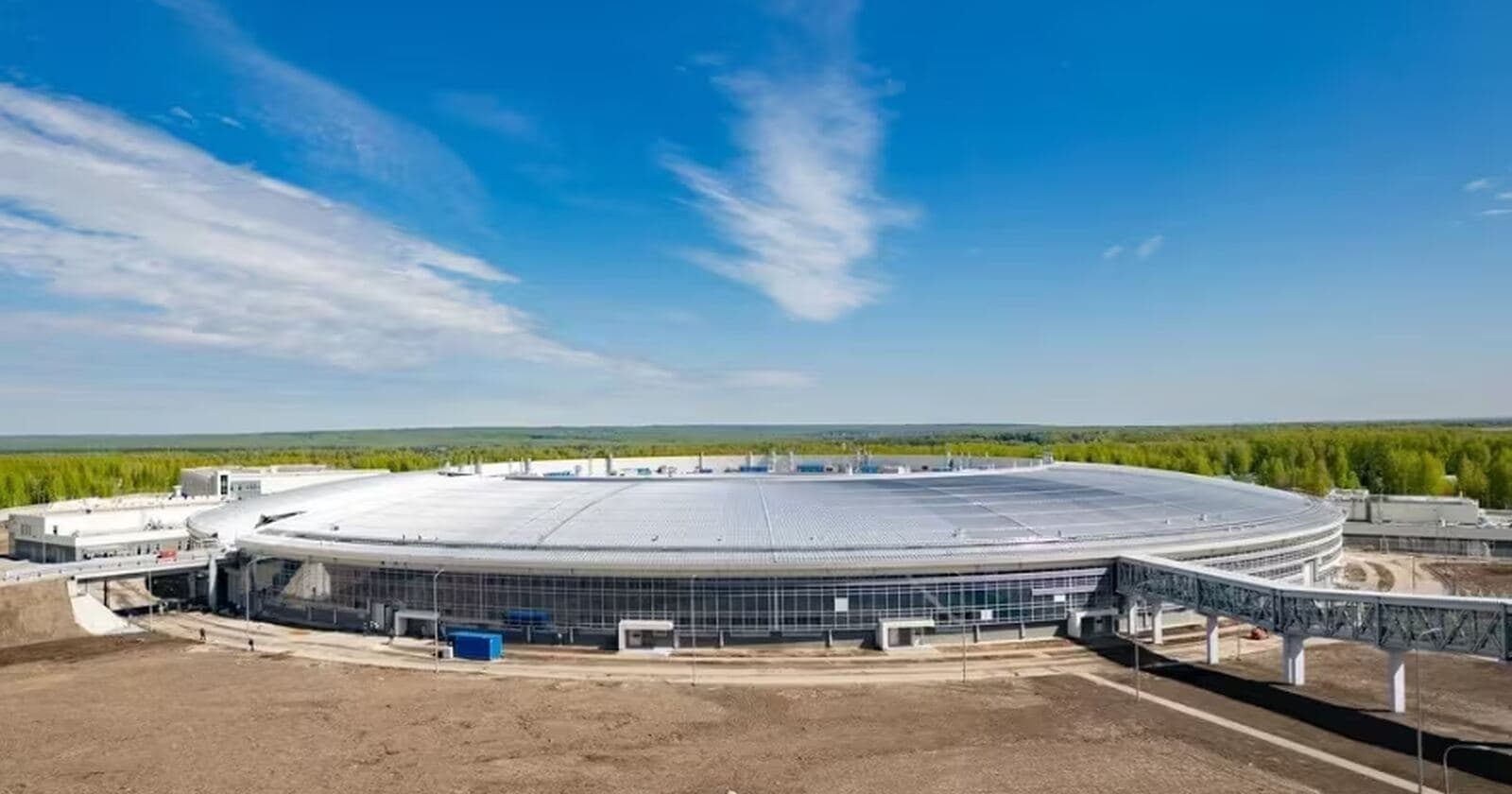
Image: ITzine
Russia’s SKIF synchrotron is now scheduled to launch in late August, after several delays, with the ceremony tied to Technoprom-2026 in the Novosibirsk region.
The facility is described as the most powerful photon source of its class built in Russia, and one of the more prominent synchrotron projects globally. The first experiment is planned for autumn 2026.
According to the source, the launch timing was announced by Novosibirsk Region Governor Andrey Travnikov. Deputy Governor Irina Manuylova said the ceremony will take place in the science town of Koltsovo and will be one of the forum’s main events. The project reaches this stage after multiple schedule shifts.
Earlier, Rostekhnadzor completed inspections at the launch facilities of the SKIF Collective Use Center and confirmed that construction had been completed. The focus has now shifted from building the site to putting it into operation.
Recommended reading
Too Much Power Could Make Electricity Prices Go Negative
The complex covers 30 hectares, while the perimeter of its main accelerator ring is 476 meters. At its core is a 3 GeV synchrotron radiation source designed to produce a particularly bright and controllable beam of X-ray photons for studying the structure of matter at the atomic level.
That gives SKIF potential uses well beyond physics, including research on materials, proteins, catalysts, and samples for pharmaceuticals, chemistry, and medicine. Russia has previously trailed European facilities such as ESRF in France, SLS in Switzerland, and Diamond Light Source in the UK. SKIF is intended to narrow that gap in both capability and the range of work that can be handled at a single site.
If the schedule holds this time, the project should deliver its first practical result in autumn 2026.

Frontier Editor
Dan is our resident futurist, covering electric mobility, space exploration, and the smart home. He's interested in atoms just as much as bits. Whether it's a new battery chemistry, a reusable rocket, or a protocol that finally makes IoT devices talk to each other, Dan breaks down the engineering that pushes humanity forward.
via ITzine