• 2 min read
Russian nanosat update boosts links to 100 Mbps
Russian developers say a software-only orbital update raised nanosatellite downlink speeds to 100 Mbps without changing hardware.
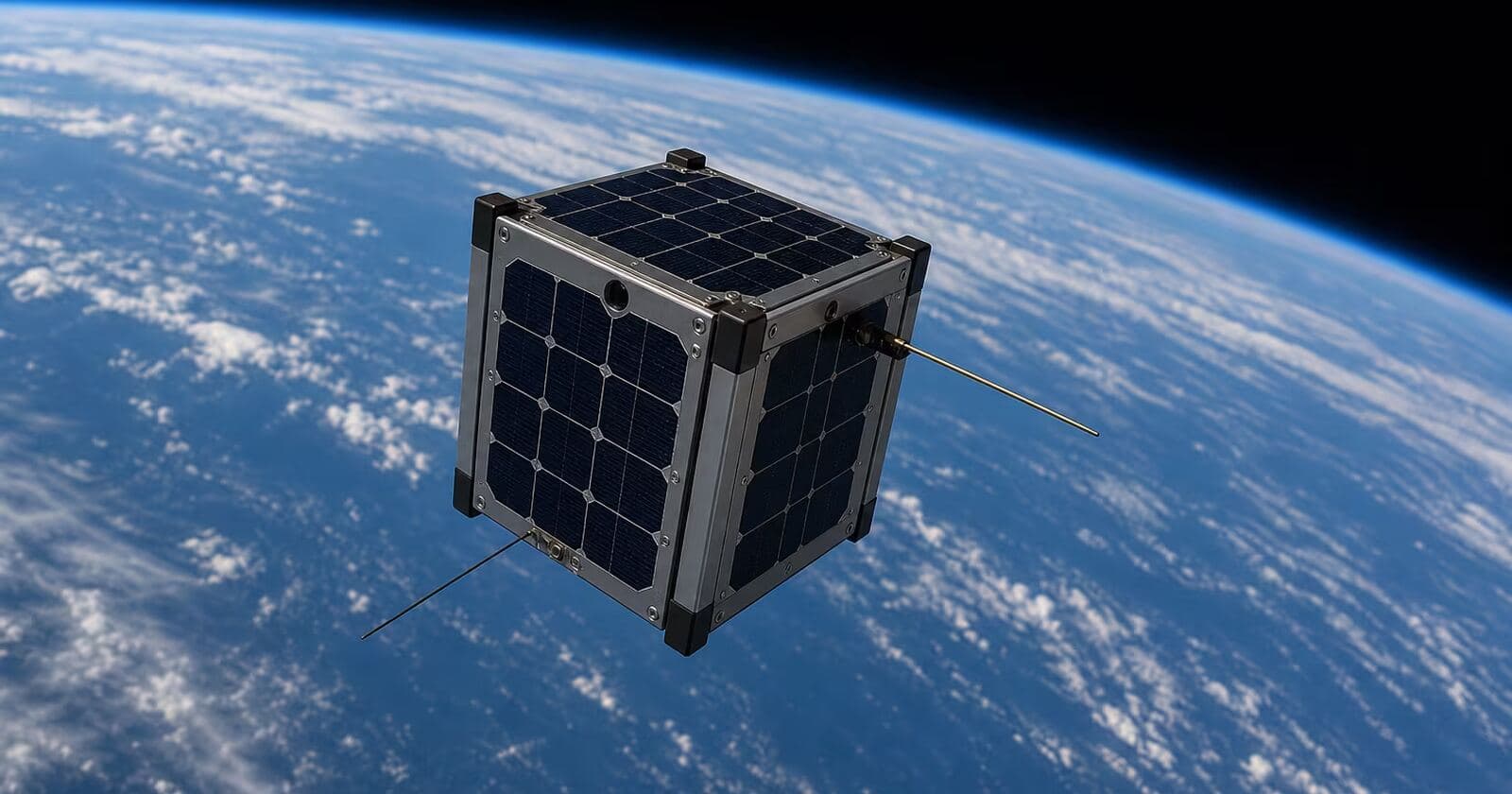
Image: ITzine
Russian developers say they have verified an orbital software update that increased nanosatellite data transmission speeds to 100 Mbps—a 10x jump achieved without replacing hardware.
The test was carried out on an already operational spacecraft. According to the developers, the connection remained stable during the experiment and the main parameters matched their calculations. That matters for nanosatellites, which operate under tight limits on mass, power consumption, and payload volume. Any increase in bandwidth can immediately expand the range of missions they can handle.
The update is designed for CubeSat 3U and 6U platforms. Those formats are used in both scientific missions and educational projects, and compatibility with already deployed Sputniks devices lowers the cost of the upgrade. Operators do not need to wait for another launch or redesign onboard electronics.
For small satellites, 100 Mbps is a significant step up. CubeSats typically send limited amounts of data back to Earth, and the main bottleneck is often not the sensor itself but how quickly data can be offloaded to the ground segment. Higher throughput means faster delivery of:

Recommended reading
NASA’s 100PB climate archive now sits by a Swiss supercomputer
- images
- telemetry
- experiment results
For scientific missions, that translates into a denser stream of data. For practical applications, it means less delay between imaging and receiving results on Earth. The source argues that, in satellite constellations, communications often slows progress more than the number of spacecraft available.
The report also points to BUREAU 1440, which recently announced the launch of the second batch of satellites for its own constellation. That project has a different goal: providing internet access at up to 1 Gbps anywhere in the world. The contrast is clear—one effort upgrades the capabilities of already flying nanosatellites, while the other is building a new orbital communications infrastructure from scratch.
If further orbital tests continue to confirm the calculated parameters, software-led upgrades like this could become routine for small satellites.

Frontier Editor
Dan is our resident futurist, covering electric mobility, space exploration, and the smart home. He's interested in atoms just as much as bits. Whether it's a new battery chemistry, a reusable rocket, or a protocol that finally makes IoT devices talk to each other, Dan breaks down the engineering that pushes humanity forward.
via ITzine