• 2 min read
Earth model suggests AI isn’t humanity’s only endgame
A 1,000-year simulation of 10 Earth futures found civilizations can collapse and recover repeatedly, with resource use and recovery capacity shaping survival.
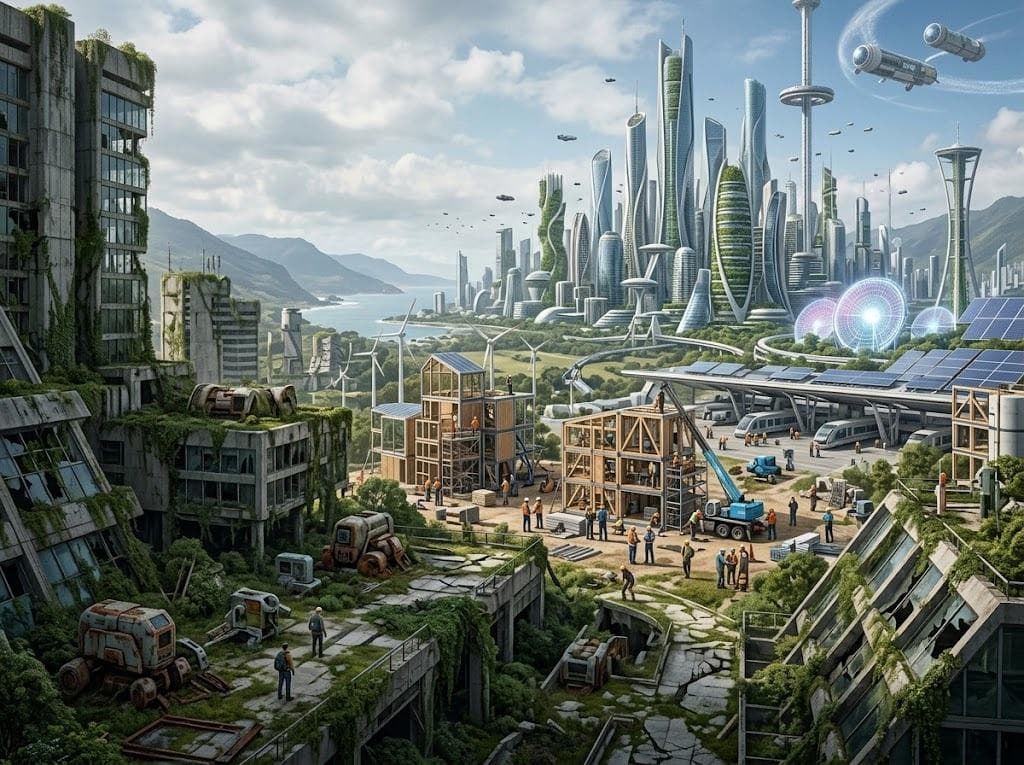
Image: iXBT
A 1,000-year simulation of 10 possible futures for Earth suggests technological civilization does not have to follow a single path toward permanent decline or replacement. Instead, researchers found that societies may persist continuously or cycle through repeated periods of collapse and recovery, depending largely on how they manage resources, governance, and post-crisis rebuilding.
The scientists used a hybrid large-scale model that combined deterministic calculations with random parameter changes to track how a technological civilization might evolve after major disruptions. Each scenario factored in technology level, resource availability, crisis probability, and the ability to recover after downturns.
The key metric was the “activity fraction” — the share of time during which a civilization maintains a high technological level. Across the scenarios, that figure ranged from 0.38 to 1.00. Some runs showed nearly uninterrupted development with no collapses, while others produced frequent losses of technological capacity followed by later recovery.
According to the analysis, the two strongest drivers of long-term stability were the rate of resource depletion and the share of recovery after a crisis. The authors say that moderate resource consumption may matter as much for preserving civilization as preventing global threats.
The team also connects the model to the search for extraterrestrial civilizations. They argue that researchers should consider not just how long a technological civilization exists, but how long it remains detectable through technological markers — signs of technological activity visible from space. If civilizations regularly switch between active and inactive states, then the absence of signals would not necessarily mean the absence of intelligent life.
Recommended reading
Green hydrogen study finds hidden pH losses in PEC cells
The authors stress that the results do not predict a specific future for humanity. Instead, the model highlights a pattern: long-term survival depends not only on external shocks, but also on whether a civilization can control resource use and recover after crises.

Frontier Editor
Dan is our resident futurist, covering electric mobility, space exploration, and the smart home. He's interested in atoms just as much as bits. Whether it's a new battery chemistry, a reusable rocket, or a protocol that finally makes IoT devices talk to each other, Dan breaks down the engineering that pushes humanity forward.
via iXBT