• 2 min read
SpaceX rocket debris may hit the Moon on August 5
NASA says a Falcon 9 upper stage left after a January 2025 launch could strike the Moon on August 5, though the impact would pose no risk to Earth.
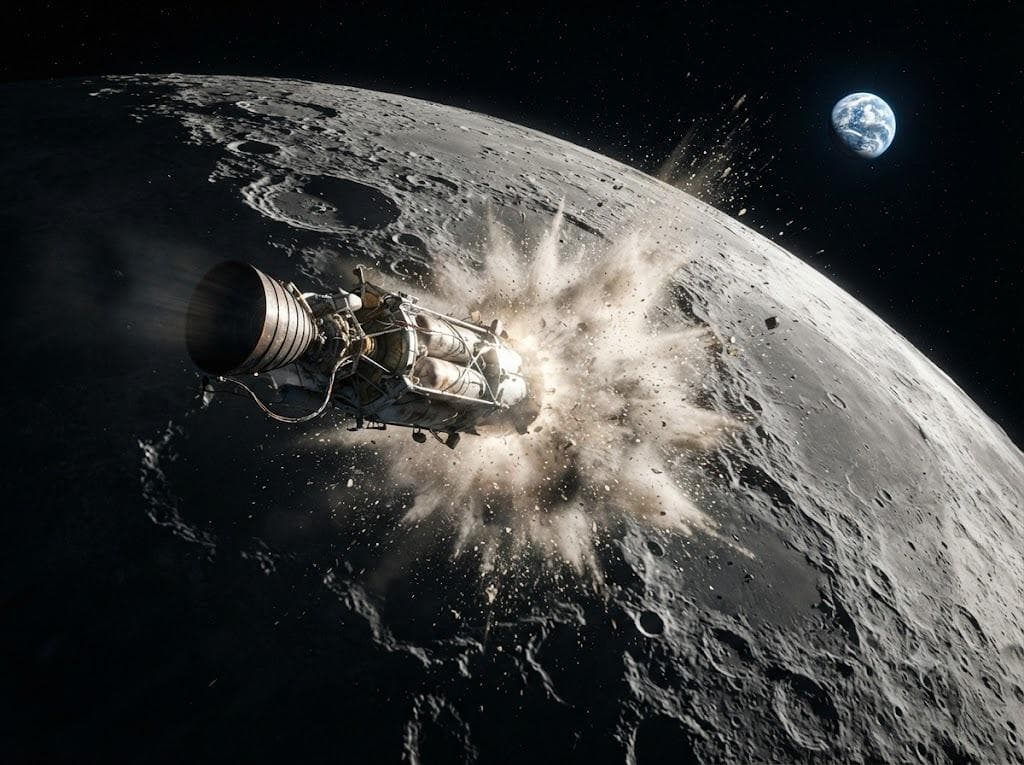
Image: iXBT
A SpaceX Falcon 9 upper stage could collide with the Moon on August 5, according to NASA. The impact was not planned: the stage was left in space after the launch of two lunar landers in January 2025.
The possible trajectory was first published last September by astronomer Bill Gray, creator of the Guide software used to track near-Earth objects. By his calculations, the roughly 4-ton stage is traveling at more than 2 km/s and could reach the lunar surface on August 5. Earlier estimates had allowed for a possible collision as early as March, but the forecast was later refined.
In early July, experts discussed the event at a meeting organized by NASA’s Solar System Exploration Research Virtual Institute (SSERVI). According to lunar observer Brian, the Moon’s surface is constantly changing under natural impacts, making an event like this scientifically interesting to watch.
Recommended reading
This drone spins itself nearly out of sight
Preliminary estimates suggest the stage could hit near the edge of the Moon’s Earth-facing disk. If the impact creates a dust plume lit by the Sun, it could theoretically be visible from Earth, but NASA considers that unlikely.
“Seeing the collision will be extremely difficult, if possible at all.”
The expected impact poses no danger to Earth. Still, researchers say unplanned events like this may become more common as space debris accumulates. Four years ago, NASA’s Lunar Reconnaissance Orbiter recorded a fresh crater caused by debris striking the Moon. At the time, NASA suggested the source was part of an old Chinese rocket, a claim China rejected.
SpaceX has not commented on the forecast. Unlike deliberate lunar impacts carried out for research, this would be a fully accidental collision.

Frontier Editor
Dan is our resident futurist, covering electric mobility, space exploration, and the smart home. He's interested in atoms just as much as bits. Whether it's a new battery chemistry, a reusable rocket, or a protocol that finally makes IoT devices talk to each other, Dan breaks down the engineering that pushes humanity forward.
via iXBT