• 3 min read
SpaceX deorbited 260 Starlinks in 6 months — that’s routine
SpaceX brought down 260 Starlink satellites from December 2025 to May 2026, a normal pace for a constellation now topping 9,500 active spacecraft.
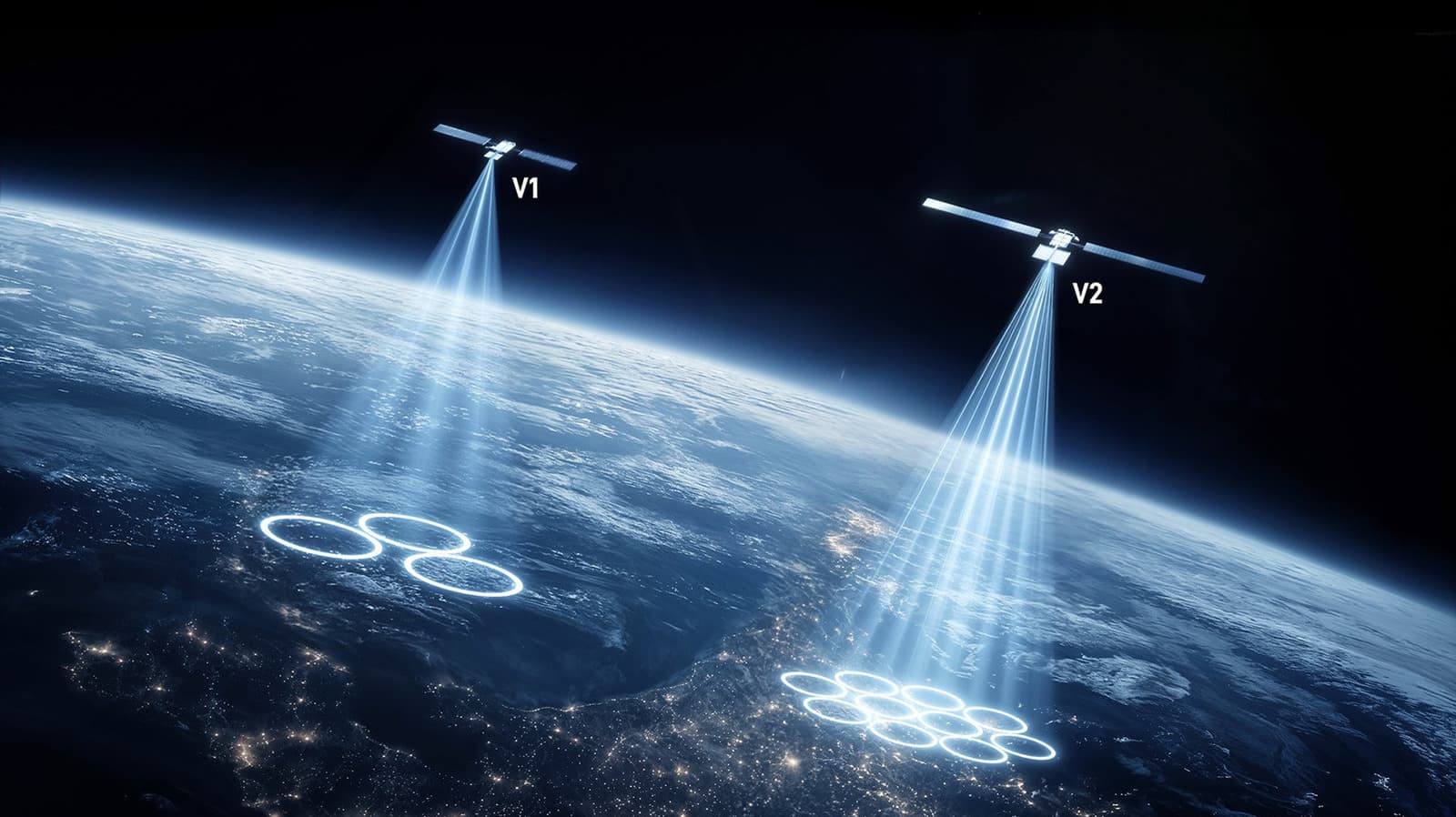
Image: Engadget
SpaceX deorbited 260 Starlink satellites between December 2025 and May 2026, according to its latest semi-annual filing with the Federal Communications Commission. That included 176 first-generation satellites and 84 larger second-generation spacecraft.
The figure sounds high, but it is not unusual for Starlink. In 2024, SpaceX said it had found a common issue affecting a small number of version-one satellites that could raise the probability of failure. It deorbited 406 satellites in response, then followed with nearly 500 more from December 2024 to May 2025.
SpaceX designs Starlink satellites to burn up during reentry. To reduce risk, it typically targets reentry over open oceans and away from populated islands and areas with heavy air or maritime traffic. The company says it maintains attitude control down to about 125 km, allowing it to guide satellites to specific reentry locations.
Not every component is guaranteed to fully disintegrate. SpaceX says some parts with high melting points may survive reentry, including silicon from the solar cells on Starlink V2 Mini satellites. Even so, the company estimates only about 5 percent of a satellite’s mass could survive, and that any remaining material would fall in very small fragments with negligible impact energy.

Recommended reading
Satellite startups pull $8.1B in half a year
Why Starlink deorbits happen so often
SpaceX says controlled deorbits are safer than waiting for satellites to fail naturally.
“Controlled, propulsive deorbit is much shorter and safer than a comparable uncontrolled, ballistic deorbit from an equivalent altitude and allows all Starlink satellites to maintain maneuverability and collision avoidance capabilities during the descent.”
With more than 9,500 active Starlink satellites currently in orbit, according to Orbital Radar, routine deorbits are part of operating a constellation at that scale. SpaceX has also said its satellites fly below 600 kilometers, where atmospheric drag should naturally bring them down within five years. That aligns with an FCC rule adopted in 2022 requiring Low Earth Orbit operators to deorbit satellites within five years of mission completion.
Earlier this year, Michael Nicolls, VP for Starlink Engineering at SpaceX, said the company would lower all satellites flying at around 550 kilometers to 480 kilometers throughout 2026. He said debris levels and planned constellations are “significantly lower below 500 kilometers,” reducing collision risk and speeding up deorbits. Elon Musk added that the lower orbit would also let Starlink serve a higher density of customers.
The environmental questions are still open
The safety case for controlled reentry is clearer than the environmental one. Scientists are still studying what repeated satellite burnups could do to the atmosphere as US and Chinese operators expand mega-constellations. In the US, Amazon is also building out its own LEO broadband network.
As Harvard Climate Brief has noted, burning organic satellite materials such as carbon-fiber composites can release black carbon, or soot. Researchers are also concerned that the aluminum used in satellites may become aluminum oxide particles during reentry, potentially affecting atmospheric chemistry.
“Chlorine is one of the key actors in the ozone hole. And so if you add a new surface that converts existing chlorine into reactive and free radical forms, that will also promote ozone loss.”
For now, Dykema said it is not an immediate cause for alarm. But if aluminum oxide keeps accumulating as satellite reentries become more frequent, it could slow the ozone layer’s recovery after chlorofluorocarbons began to be phased out in 1987.

Frontier Editor
Dan is our resident futurist, covering electric mobility, space exploration, and the smart home. He's interested in atoms just as much as bits. Whether it's a new battery chemistry, a reusable rocket, or a protocol that finally makes IoT devices talk to each other, Dan breaks down the engineering that pushes humanity forward.
via Engadget