• 2 min read
Sputniks boosts nanosatellite links 10x to 100 Mbps
Sputniks updated software for its SXC-XTX-01 transmitter, raising orbital data speeds to 100 Mbps without changing hardware.
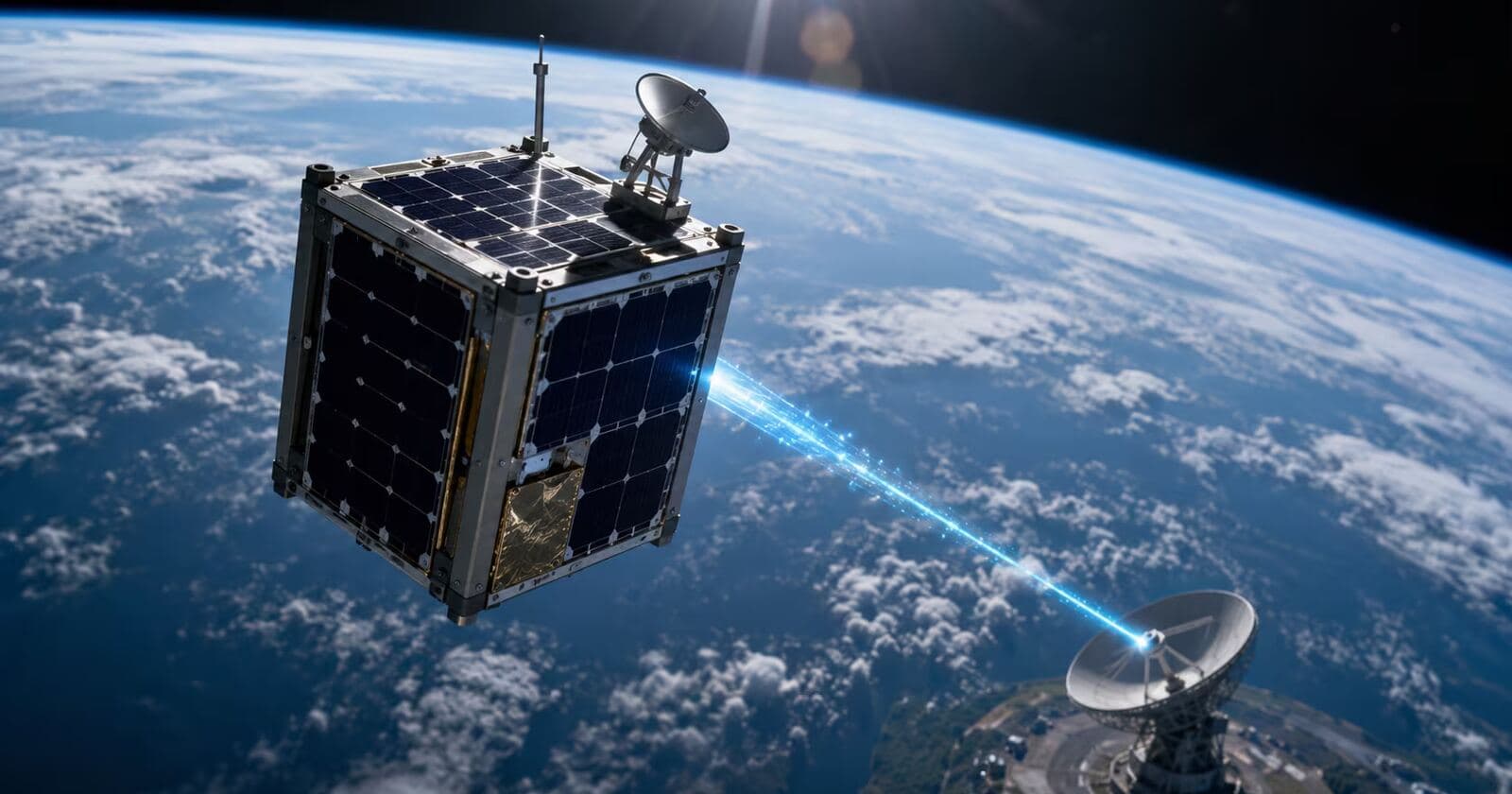
Image: ITzine
Sputniks says it has increased data transmission speeds from orbit by 10x after updating the software on transmitters used in its nanosatellites. In testing, the system reached up to 100 Mbps without any hardware replacement.
That matters for small spacecraft, where even minor additions in weight or extra modules can strain both budgets and launch schedules. The update was built for the SXC-XTX-01 transmitter and is intended for satellites already in orbit as well as new spacecraft.
It is particularly relevant for CubeSat 3U and 6U platforms, which are commonly used in scientific, educational, and AIS projects. Those missions are generating more data, and the company is positioning the software update as a way to expand capacity without redesigning the satellite bus.

Recommended reading
German team speeds PFAS breakdown in water
Key details from the announcement:
- Speed after the update: up to 100 Mbps
- Increase versus the previous version: 10x
- Compatibility: SXC-XTX-01 transmitter
- Support: Sputniks satellites already in orbit and new spacecraft
- Supported formats: CubeSat 3U and 6U
According to the source, the system performed stably during tests and successfully transmitted data from a test spacecraft.
The move extends Sputniks' existing communications lineup rather than replacing its higher-end platforms. The company already operates the Zorkiy-2M constellation, where link speeds reach 1 Gbps and daily data downlink volume is up to 100 GB. Against that backdrop, the new software looks aimed at bringing the mass-market smallsat segment to a more usable level.

Frontier Editor
Dan is our resident futurist, covering electric mobility, space exploration, and the smart home. He's interested in atoms just as much as bits. Whether it's a new battery chemistry, a reusable rocket, or a protocol that finally makes IoT devices talk to each other, Dan breaks down the engineering that pushes humanity forward.
via ITzine