• 2 min read
Starship launch scrubbed after four engines failed to ignite
SpaceX halted Starship’s 13th full-scale test flight at liftoff after multiple Super Heavy engines did not start. A new attempt may slip to early next week.
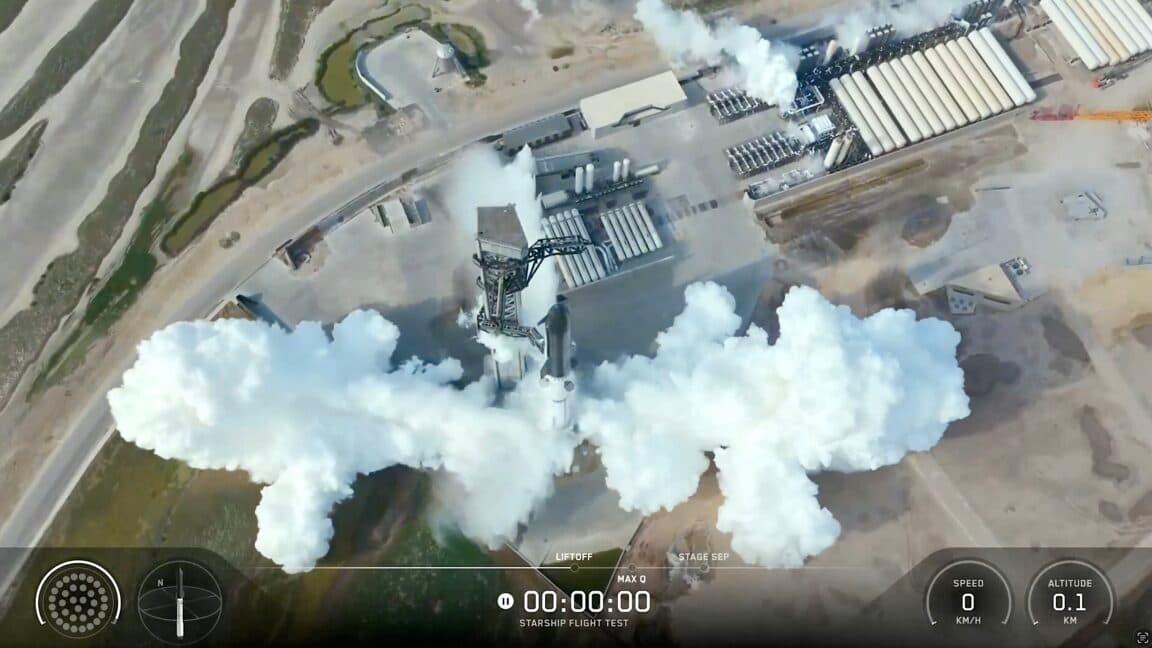
Image: Ars Technica
SpaceX scrubbed a test flight of its Starship rocket and Super Heavy booster at T-0 on Thursday after some of the booster’s engines failed to ignite at the company’s Starbase, Texas launch site near the US-Mexico border.
The more than 400-foot-tall rocket had been scheduled to lift off at 5:45 pm local time (6:45 pm EDT; 22:45 UTC). The countdown appeared to go smoothly through the day, including the loading of more than 11.5 million pounds of liquid methane and liquid oxygen into the two-stage vehicle. But during Super Heavy’s engine startup sequence, the countdown software triggered an automatic abort.
SpaceX then called off the attempt and began draining propellant from the rocket. The company did not immediately give a new launch date.

Recommended reading
Satellite startups pull $8.1B in half a year
According to Elon Musk, the issue was tied directly to the booster’s engines.
“Some of the engines didn’t start, triggering an automatic launch abort. Now offloading propellant. Next launch attempt hopefully in a few days.”
Later on Thursday, Musk said teams at Starbase would replace two Raptor engines on the Super Heavy booster, adding that the most probable launch timing is early next week.
The Super Heavy booster uses 33 methane-fueled Raptor engines, each producing more than half a million pounds of thrust. They are designed to ignite in a staggered sequence after the launch pad’s water-cooled flame diverter is activated, helping shield the pad from the heat and vibration generated by what SpaceX calls the world’s most powerful rocket.
SpaceX did not say how many engines failed to start. But an engine-status graphic shown on the company’s live webcast indicated that four of the 33 engines never ignited.
This mission was the 13th full-scale Starship launch and the second flight using the Raptor 3 engine on SpaceX’s upgraded Starship Version 3 rocket.

Frontier Editor
Dan is our resident futurist, covering electric mobility, space exploration, and the smart home. He's interested in atoms just as much as bits. Whether it's a new battery chemistry, a reusable rocket, or a protocol that finally makes IoT devices talk to each other, Dan breaks down the engineering that pushes humanity forward.
via Ars Technica