• 2 min read
Valoi’s Easy35 V2 makes film scanning fast — if you own the gear
The Valoi Easy35 V2 can turn 35mm negatives into quick home scans, but it needs a camera, macro lens, and conversion software.
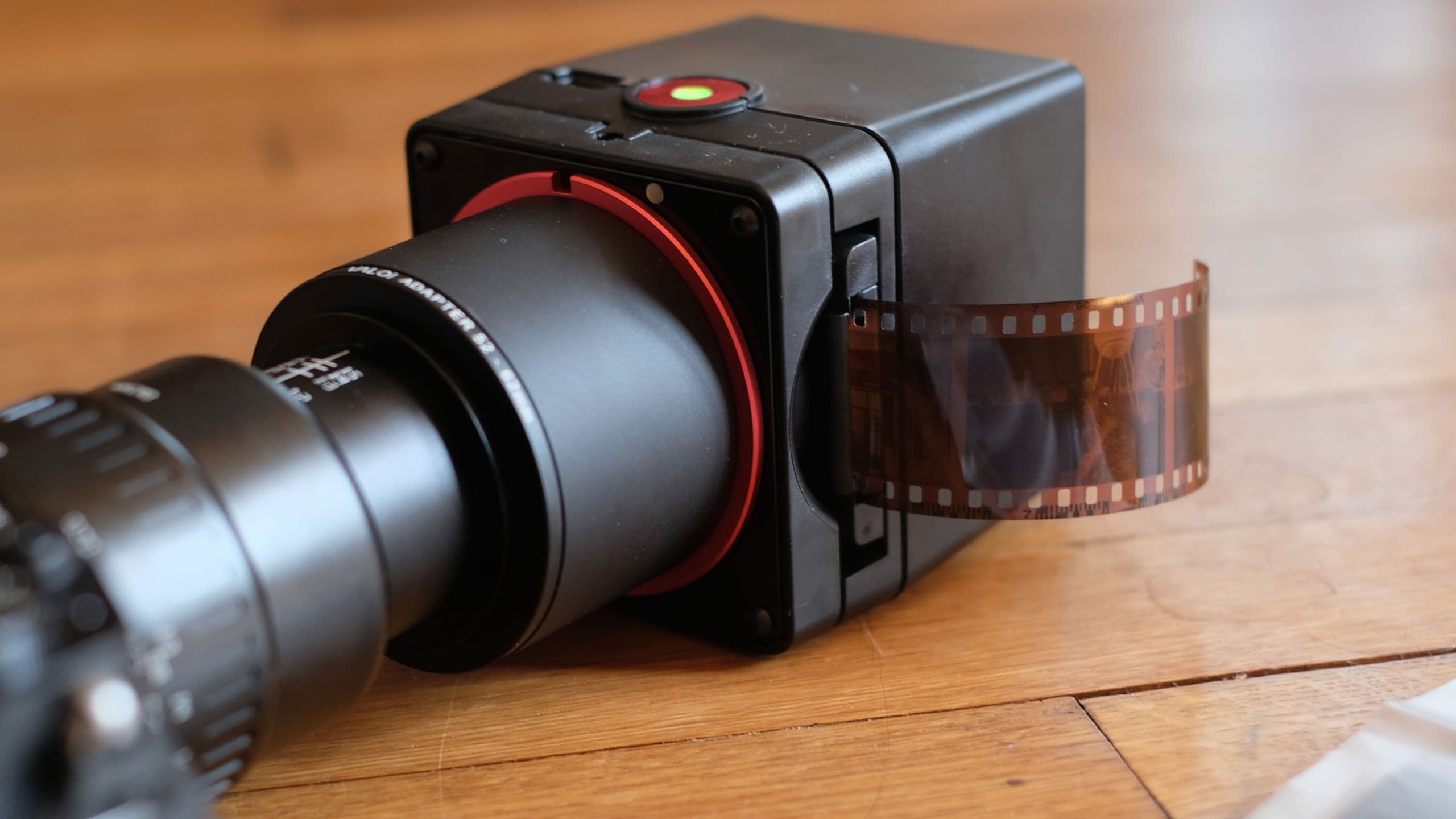
Image: TechRadar
The Valoi easy35 V2 is a compact at-home scanner for digitizing 35mm film negatives, and at $272 / £199 / AU$337 it could cut an expensive recurring cost for film shooters. But despite the name, it is not a standalone scanner.
Instead, the unit connects to a digital camera and a 1:1 macro lens, and you will also need negative conversion software to turn RAW captures into usable images. That makes it a more demanding setup than cheap self-contained options such as Kodak’s Slide N Scan, which the source says delivers poor image quality.
Its main advantage is size. TechRadar describes the scanner as a small cube with a desk footprint similar to a large coffee mug, making it easier to store and transport than a flatbed film scanner.
The kit includes the scanner with a built-in light, extension tubes, and step-up adapters for different filter thread sizes. Valoi says the distance between the negative and the front of the lens must be under 230mm. Recommended focal lengths are:
- 55mm to 105mm for full-frame
- 40mm to 70mm for APS-C
- 35mm to 60mm for Micro Four Thirds
TechRadar tested the setup with a Fujifilm X-T5 and a TTArtisan 40mm F2.8 macro lens. Assembly was straightforward, the source says, and the battery-powered light switches on with a single button and recharges over USB-C.
Recommended reading
XElectron’s $70 projector packs Netflix and Wi-Fi 6
Once aligned, the workflow is simple: feed in a strip of negatives, capture each frame, and repeat. TechRadar says entire rolls can be scanned in minutes, though some early scans came out slightly crooked.
The next step is conversion. TechRadar recommends Adobe Lightroom Classic with Negative Lab Pro, which offers a free trial of 24 conversions and then costs a one-time $99. Other options mentioned include Darktable and Lomography’s free online tool, though the source found them either too complicated or too limited.
For photographers who already own the right camera and macro lens, the easy35 V2 looks like a practical way to scan film at home quickly. For everyone else, the hardware requirements mean it is less an entry-level scanner than a niche tool for committed film shooters.
TechRadar’s Jon Stapley ultimately came away impressed by the scanning experience, even if the setup felt improvised at times. The payoff, he suggests, is clear: a fast, enjoyable workflow that could mean never paying for negative scans again.

Computing Editor
Tomas lives in the terminal. He covers chips, laptops, and operating systems with a focus on performance and efficiency. He reads kernel changelogs the way other people read fiction, and he's always on the hunt for the perfect mechanical keyboard switch. If it processes data, Tomas has an opinion on it.
via TechRadar