• 3 min read
Agility opens Fremont robot hub near Tesla’s Optimus push
Agility Robotics is opening a 60,000-square-foot Fremont facility as it scales Digit deployments and prepares a public market debut.
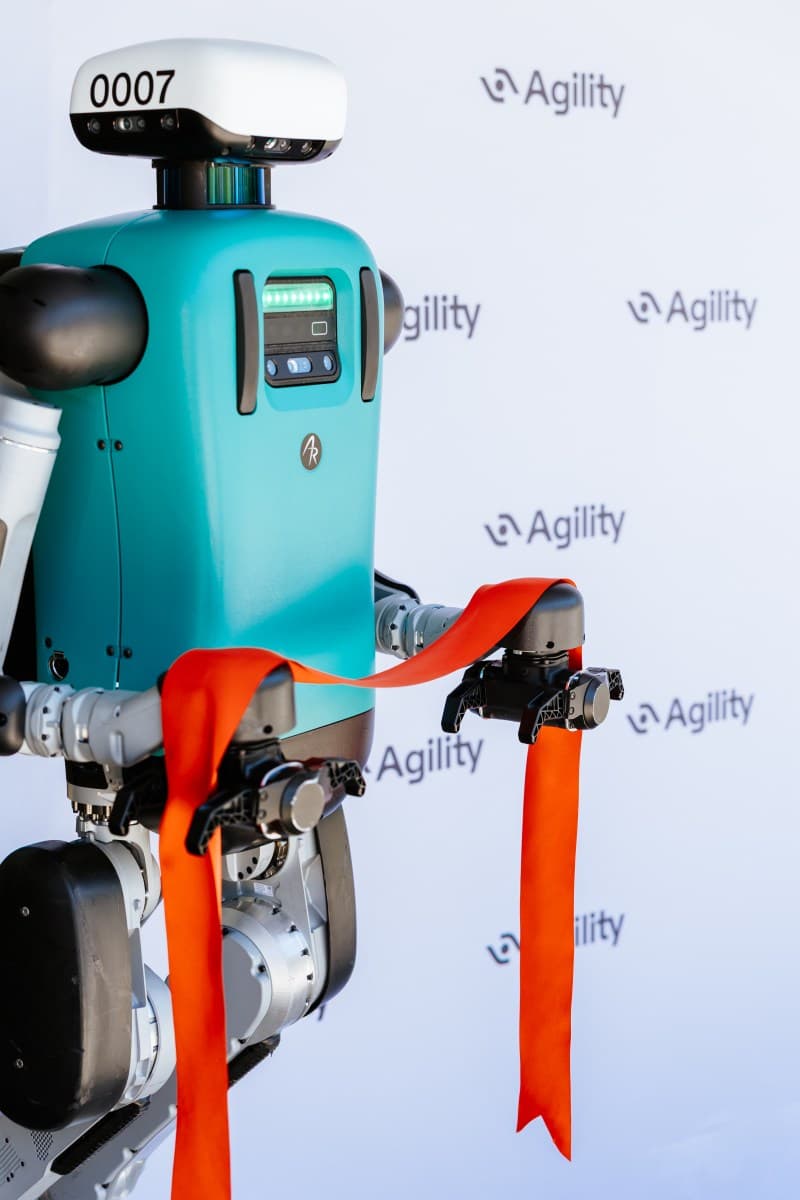
Image: TechCrunch
Agility Robotics is opening a 60,000-square-foot training facility in Fremont, California, close to the factory where Tesla is expected to begin manufacturing Optimus this year. The timing underscores a growing divide in humanoid robotics: Tesla is betting big on future scale, while Agility says its Digit robot is already doing paid work.
According to the company, Digit is generating revenue today by carrying totes and bins in manufacturing and warehouse environments for customers including Amazon, GXO, Schaeffler, and Toyota Motor Manufacturing Canada. Agility says it has secured $300 million in contract orders.
“It’s great to have [Tesla] in the same area as us, because really, for a long time Agility was out there alone, and it’s good to have others in the humanoid space.”
Johnson told TechCrunch that Agility’s edge is commercial experience: meeting safety and regulatory requirements, integrating with IT systems, and connecting to warehouse management software. The company has not disclosed how many Digits it has built or deployed, though outside observers estimate dozens have been used in pilots or revenue-generating work. Agility has previously said Digits moved 100,000 totes at a GXO logistics facility.
Digit deployments and Agility’s practical AI strategy
Agility, founded in 2015 by researchers who developed techniques for safe bipedal walking, is trying to hold its lead over newer humanoid startups such as Figure, 1X, the Bot Company, and Sunday Robotics. Johnson is also leading the company through a reverse merger expected to make it the first pure-play humanoid robot company on the public markets later this year.
Co-founder and chairman Damion Shelton said Agility is taking a cautious approach to autonomy. He argued that core safety systems should not be governed by generative AI, drawing a comparison to anti-lock braking in self-driving cars.

Recommended reading
Meta bots hit 9 billion requests with no publisher traffic
“You don’t want to get creative with your safety stack.”
At the same time, Shelton said generative AI could solve a major scaling problem: programming enough tasks for robots to perform in the real world.
The new Fremont site is meant to speed up deployment by training the six-foot-tall Digit in environments that resemble customer facilities. Johnson said more than 30 customers are in talks with Agility about deployments.
Version 5 and the next warehouse tasks
Agility is not planning to sell in-home humanoid robots anytime soon, a stance that aligns with many independent robotics experts who say current systems are not safe enough for consumer use. For now, Digit works in human-free spaces, but version 5, expected this fall, will be able to sense humans and operate without being confined to robot-only zones.
Co-founder and chief robot officer Jonathan Hurst said manufacturing and logistics alone offer plenty of room to grow.
“Let’s start with the bins and the totes, and then let’s do the picking and the kitting.”

Enterprise Editor
Marcus follows the money. He covers enterprise software, cloud architecture, and the tectonic shifts in Big Tech strategy. He translates dense earnings calls and complex M&A activity into actionable insights about where the industry is actually heading. If a tech giant makes a silent pivot, Marcus is usually the first to notice.
via TechCrunch