• 2 min read
Why Android Auto wireless needs Bluetooth and Wi-Fi
Wireless Android Auto relies on Bluetooth for pairing and calls, then switches to 5GHz Wi-Fi Direct for maps, audio, and touch data.
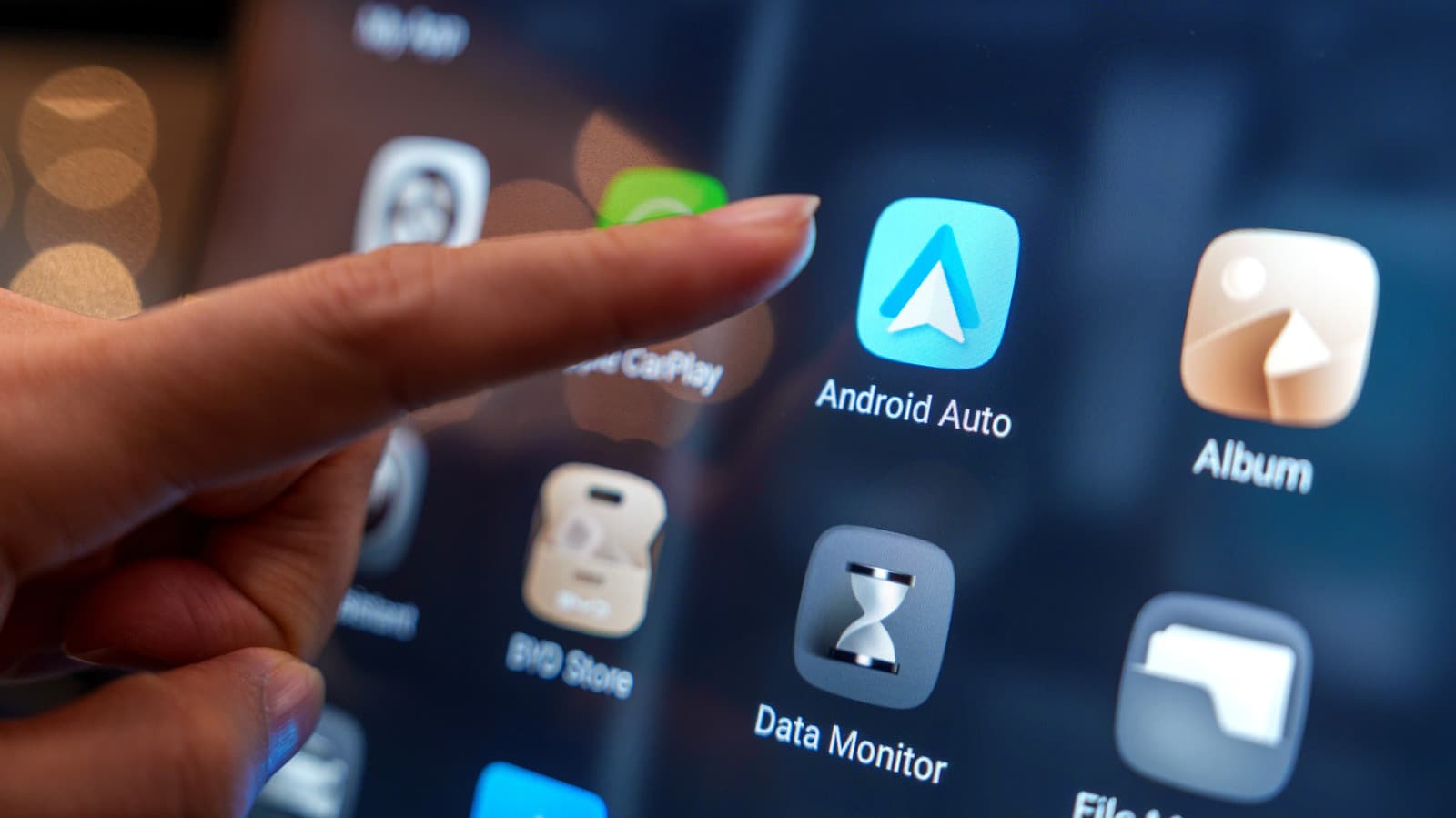
Image: Engadget
Wireless Android Auto feels simple: start the car and your phone connects automatically. Under the hood, though, it depends on two wireless links at once — Bluetooth and Wi‑Fi — because neither can handle the full job alone.
Bluetooth does the initial setup work. It runs the low-power background scan, pairs the phone with the car, and exchanges the credentials needed to bring up a Wi‑Fi connection. It also continues handling hands-free calling through the car using the Hands-Free Protocol. Turn Bluetooth off during a drive, and the connection drops.
Wi‑Fi takes over because Bluetooth’s throughput of roughly 2-3 Mbps isn’t enough for the rest of Android Auto. Streaming the interface, audio, touch input, and other data needs far more bandwidth.
Why 5GHz Wi-Fi Direct is required
After the Bluetooth handshake, the phone connects to a local peer-to-peer 5GHz Wi‑Fi Direct network. That’s the connection carrying the dashboard interface, streaming audio, and data such as GPS details, odometer, touch inputs, voice commands, and ambient light.
Recommended reading
Evolute i-Sky slips to fall 2026 launch
According to Google’s Android Auto developer documentation, the 5GHz requirement is strict because standard Bluetooth can’t support continuous video projection. That’s also why older phones without 5GHz Wi‑Fi support can’t run wireless Android Auto.
If a car only supports wired Android Auto, dongles such as Carlinkit, AAWireless, and Motorola MA1 can add wireless support. They plug into the car’s USB port, pair with the phone over Bluetooth, then shift the data connection to 5GHz Wi‑Fi Direct and translate that stream back into a USB signal so the car sees a normal wired connection.
The tradeoffs of going wireless
The convenience comes with a few drawbacks:
- Both Bluetooth and Wi‑Fi must stay enabled
- A live 5GHz Wi‑Fi link, plus GPS and Bluetooth, can drain battery
- Dongles can introduce connection delay
- Wireless Android Auto requires a phone with 5G capabilities running Android 11 or newer
That split setup is exactly why wireless Android Auto works as well as it does: Bluetooth handles discovery and calls, while Wi‑Fi carries the heavy data load.

Frontier Editor
Dan is our resident futurist, covering electric mobility, space exploration, and the smart home. He's interested in atoms just as much as bits. Whether it's a new battery chemistry, a reusable rocket, or a protocol that finally makes IoT devices talk to each other, Dan breaks down the engineering that pushes humanity forward.
via Engadget