• 3 min read
deltaVision lands €10.2M for in-orbit refuelling parts
Munich’s deltaVision raised €10.2 million to scale spacecraft valves and refuelling hardware as Europe pushes deeper into orbital servicing.
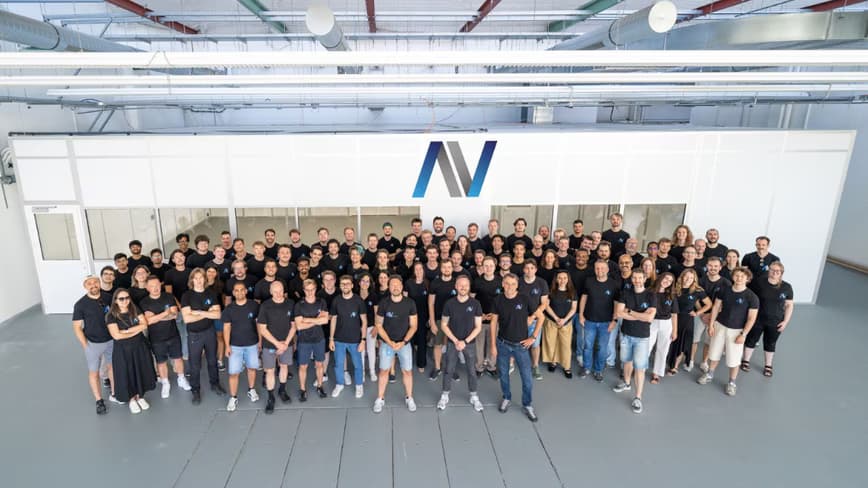
Image: TNW
deltaVision has raised €10.2 million in its first external funding round, with the money set to expand production of the valves, pumps, and pressure regulators used to move propellant around spacecraft.
The Munich-based startup is also positioning itself for the still-emerging in-orbit refuelling market, where satellites would be refuelled in space instead of being retired once their tanks are empty. According to the source, the round included backing from Futury Capital, KT Ventures, and Valemount Capital, with tech.eu reporting that KT Ventures and Valemount Capital led the deal.
In principle, orbital refuelling is straightforward: connect two spacecraft and transfer fuel. In practice, it remains difficult. Satellites typically launch with a fixed amount of propellant, and once it is used up, they are often moved to a graveyard orbit or left drifting even if their onboard electronics still work. The challenge is docking with enough precision to move volatile fluids in a vacuum at orbital speeds.

Recommended reading
Earth model suggests AI isn’t humanity’s only endgame
If that can be solved, operators could extend satellite lifespans, reposition spacecraft, and maintain station for longer. That idea feeds the broader in-space economy thesis, where servicing vehicles, fuel depots, and orbital tugs become a reusable infrastructure layer rather than one-off missions.
What deltaVision is building
deltaVision does not plan to operate refuelling missions itself. Its focus is on components, including fluidic couplers, utility interfaces, and integrated refuelling modules that allow two spacecraft to dock and transfer fluids. It also supplies valves and regulators for launchers, satellites, and landers.
Chief executive and co-founder Alex Plebuch has described the company’s approach as supporting an “open and interoperable” servicing ecosystem rather than a closed proprietary standard. The company says it works with more than 60 customers across four continents, though the source notes that figure comes from tech.eu and was not independently confirmed.
Among its cited programmes is the European Space Agency’s Argonaut lunar lander, for which deltaVision says it is supplying roughly 50 products. The article notes that this detail also relies largely on the company’s own account.
One independently announced sign of commercial traction came in April 2026, when US firm Mott Corp began offering deltaVision’s valve solutions for spacecraft propulsion flow control.
Production plans in Europe and the US
Next, the company wants to scale manufacturing to around 5,000 valves a year, open a French subsidiary, and set up valve production in the United States. That would put deltaVision closer to key customers on both sides of the Atlantic.
The timing fits a broader European push to reduce reliance on SpaceX and build more sovereign launch and servicing capacity. For now, though, the refuelling market remains more promise than business. As the source notes, confirmation beyond tech.eu and company materials is limited, with SpaceWatch.GLOBAL verifying the €10.2 million round and investors but little else.
That makes the immediate story less about satellites being topped up in orbit, and more about a supplier betting that the plumbing behind the in-space economy will be one of the first parts of the market to pay off.

Frontier Editor
Dan is our resident futurist, covering electric mobility, space exploration, and the smart home. He's interested in atoms just as much as bits. Whether it's a new battery chemistry, a reusable rocket, or a protocol that finally makes IoT devices talk to each other, Dan breaks down the engineering that pushes humanity forward.
via TNW