• 2 min read
US Clears First Mirror Satellite to Beam Sunlight at Night
The FCC approved Reflect Orbital’s Eärendil-1, an experimental mirror satellite meant to reflect sunlight onto Earth at night.
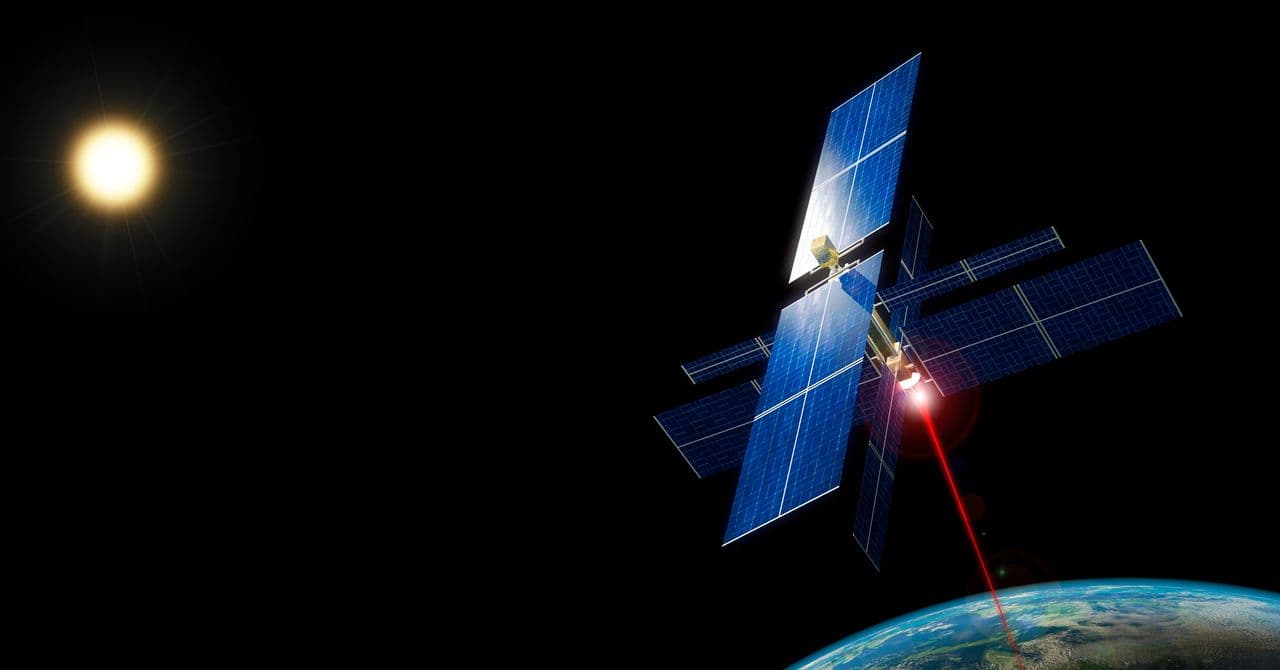
Image: Wired
The US Federal Communications Commission on July 9 authorized Reflect Orbital to build, launch, and operate an experimental mirror satellite designed to reflect sunlight onto parts of Earth at night.
The satellite, Eärendil-1, would fly in low Earth orbit at about 625 kilometers and use an 18-meter reflector to illuminate areas roughly 5 to 6 kilometers in diameter for short periods. The Santa Monica, California startup says the test mission is meant to assess the feasibility of its ultrathin, highly reflective, film-based reflector.
WIRED previously reported on the company in September 2024, when Reflect Orbital pitched the concept as a way to provide a continuous light source for large solar installations so they could keep generating electricity at night. The company now says the technology could also support search-and-rescue operations, critical infrastructure during emergencies, remote construction sites, and other civilian, commercial, and government uses.
Recommended reading
Falcon 9 launch aborted after engines ignited
“We’re grateful to the FCC for granting our application to fly our test mission. This ruling is hugely validating for our company and reflects America’s leadership in testing innovative space technology.”
Concerns over astronomy and light pollution
The approval comes despite sustained criticism from astronomers and environmental groups. During the FCC review, the agency received nearly 2,000 public comments questioning the proposal. Critics included the American Astronomical Society, DarkSky International, and the Royal Astronomical Society.
They argue that even a small number of reflective satellites could worsen light pollution, disrupt nocturnal ecosystems, complicate astronomical observations, and create potential safety risks for aviation. Some researchers have also warned about reflected flashes affecting pilots, drivers, or wildlife that relies on natural light-dark cycles.
“Imagine the sky filled with moons.”
Tyson also questioned whether the satellites can steer reflected light with the precision the startup claims. Ahead of the FCC decision, Betty Kioko, institutional affairs officer for the European Southern Observatory, said the idea posed an existential threat to optical astronomy.
One satellite now, far bigger ambitions later
The FCC said its approval applies only to one experimental satellite, not a commercial network. In the agency’s view, Eärendil-1 is a limited-duration technology demonstration intended to test whether the concept works and to surface technical challenges before any broader deployment.
That caveat matters because Reflect Orbital’s long-term plans are far bigger: the company envisions operating 50,000 satellites by 2035. Any move beyond this single test satellite would require new regulatory approvals.

Frontier Editor
Dan is our resident futurist, covering electric mobility, space exploration, and the smart home. He's interested in atoms just as much as bits. Whether it's a new battery chemistry, a reusable rocket, or a protocol that finally makes IoT devices talk to each other, Dan breaks down the engineering that pushes humanity forward.
via Wired