• 2 min read
FCC clears first sunlight-mirror satellite test
The FCC approved Reflect Orbital’s first mirror satellite for 2026. Astronomers warn a larger rollout could brighten the night sky worldwide.
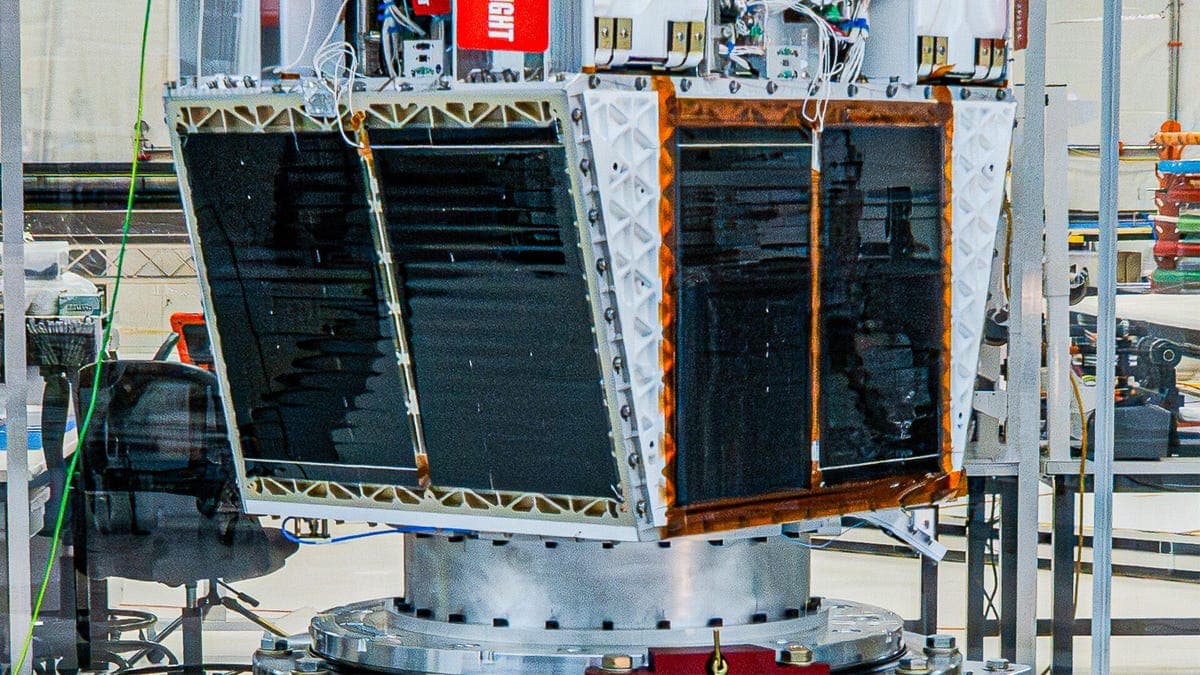
Image: CNET
The FCC has approved Reflect Orbital’s first satellite test, clearing the company to launch Eärendil-1 on a SpaceX Falcon 9 later in 2026. The company’s pitch is unusual: use a giant mirror in orbit to reflect sunlight onto parts of Earth that are in darkness.
Eärendil-1 is a 142-kilogram (313-pound) spacecraft carrying an 18-meter by 18-meter thin-film square mirror, or about 60 feet by 60 feet. Reflect Orbital says it could direct sunlight onto a roughly 3-mile circle on the ground, potentially lighting an entire neighborhood or small town at night. The company argues this could help solar operators meet electricity demand around sunset, when usage rises and utilities often fall back on other sources, including fossil fuels.
That single satellite is only the start of Reflect Orbital’s ambitions. The company says it wants to eventually deploy 50,000 satellites, which would place 16.2 million square meters of mirrors in low Earth orbit. For now, though, only one satellite has FCC approval.

Recommended reading
COMAC Lands First Foreign C909 Order in Cambodia
Astronomers and dark-sky groups object
The proposal drew heavy criticism before approval. According to the source article, the FCC process received more than 1,800 comments, most of them negative. Complaints came from groups including the American Astronomical Society and DarkSky International, which warned that orbiting mirrors would create a new kind of artificial light pollution.
“The concept of illuminating Earth from orbit represents a new category of artificial light at night with global ecological, cultural and regulatory consequences.”
Astronomers say the problem is not limited to a mirror crossing directly in front of a telescope. Olivier Hainaut, an astronomer at the European Southern Observatory outside Munich, Germany, said scattered light in the atmosphere could brighten the whole sky, much as scattered sunlight makes the daytime sky appear blue. The American Astronomical Society said in a complaint to the FCC that “An individual RO satellite like Eärendil-1 is expected to have an optical brightness of at least 2 to 4 times that of the full moon.”
Reflect Orbital says there is “no established regulatory framework for space-based energy and lighting services” and that it is open to regulation and collaboration with scientists. The company also says it will use the test mission to study impacts and try to avoid flashing observatories.
Hainaut said he opposes a full constellation but supports the prototype as a way to gather real measurements. That makes the 2026 launch more than a tech demo — it could become the first real test of whether orbital mirrors can coexist with the night sky.

Frontier Editor
Dan is our resident futurist, covering electric mobility, space exploration, and the smart home. He's interested in atoms just as much as bits. Whether it's a new battery chemistry, a reusable rocket, or a protocol that finally makes IoT devices talk to each other, Dan breaks down the engineering that pushes humanity forward.
via CNET