• 2 min read
Firefighting drones test early wildfire response in California
California and Alaska are testing drones that spray water and retardant, aiming to stop small wildfires before they spread.
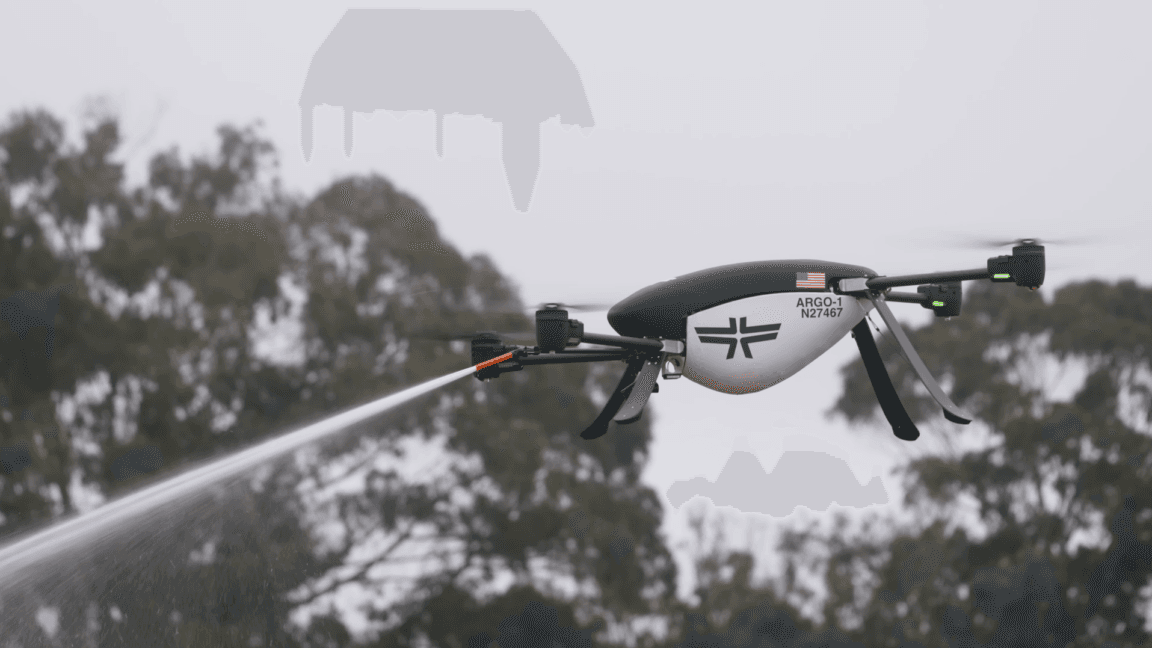
Image: Ars Technica
As wildfires become a near year-round threat across much of the US, firefighting drones are getting real-world tests in California and Alaska as a faster way to attack small fires early.
The idea is not to replace crewed aircraft or large airtankers. Most drones are far smaller, carry much lighter payloads, and cannot reach remote fires with the same range. Instead, companies, fire agencies, and organizers of the $11 million XPRIZE competition are testing whether drones can help crews move faster and extinguish fires before they grow.
In one recent field test, the California Department of Forestry and Fire Protection, or CAL FIRE, used five autonomous drones that worked together to drop a combined 500 to 1,000 gallons of foam on July 15, according to KPMH. The demonstration was organized with help from the nonprofit FireWERX and California-based Seneca, which plans to make the drones commercially available starting in 2026.
Seneca’s Argo-1 drones each carry about 100 pounds of water or fire retardant and are designed to operate in swarms of four to six drones. After a human operator uploads a GPS waypoint, the drones fly autonomously toward the target and use onboard sensors to detect a fire’s heat signature, according to HeliOps Magazine. They then determine a hovering height and line up to spray the fire one after another.

Recommended reading
Light Reveals Quantum States Without Strong Magnets
There are still clear limits. A fully loaded drone can cover only a 10-mile round trip at an average speed of about 30 miles per hour, so these systems would likely need to be pre-positioned in high-risk areas or transported by ground vehicle. Still, the hardware is small enough to be practical in the field: each drone can fit in the back of a pickup truck with the tailgate down, and two people can carry an empty unit by hand.

Frontier Editor
Dan is our resident futurist, covering electric mobility, space exploration, and the smart home. He's interested in atoms just as much as bits. Whether it's a new battery chemistry, a reusable rocket, or a protocol that finally makes IoT devices talk to each other, Dan breaks down the engineering that pushes humanity forward.
via Ars Technica