• 2 min read
Intel puts High-NA EUV into mass chip production
Intel says it has become the first to use High-NA EUV in mass production of commercial processors, starting with select Panther Lake layers.
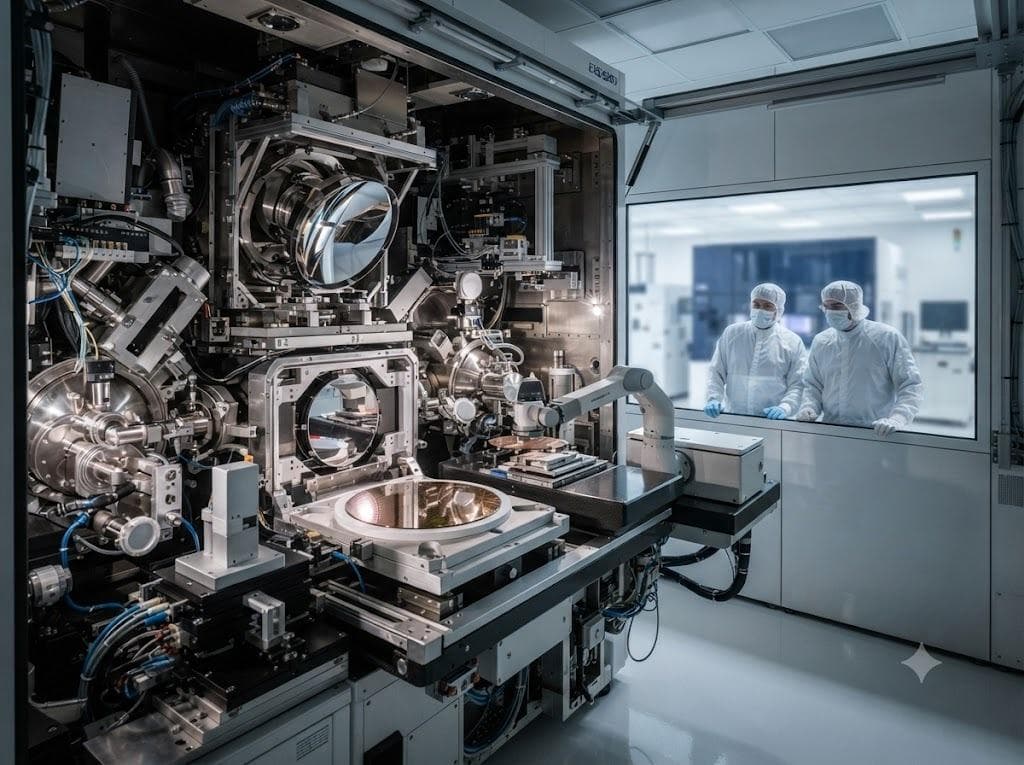
Image: iXBT
Intel says it has become the first company to use High-NA EUV lithography in mass production of commercial processors. The technology is already being used for certain layers of Panther Lake, the upcoming Intel Core Ultra Series 3 chips. Until now, High-NA EUV had been limited to research work and test wafers.
The shift centers on ASML EXE tools with a 0.55 numerical aperture, up from 0.33 in current NXE systems. According to ASML, that improves optical resolution from 13 nm to 8 nm. As the source notes, those figures describe the capability of the optical system, not a marketing label for a process node.
Intel is not building entire processors on High-NA tools yet. Instead, it has qualified two ways to produce individual Panther Lake layers: one on traditional NXE machines and one on the newer EXE systems. That gives Intel flexibility to shift production between generations of equipment rather than relying solely on the new lithography platform.
According to Reuters, a single High-NA EUV machine costs about $400 million — nearly twice the price of a standard EUV system. The transition also requires new photoresists, masks, metrology methods, and manufacturing processes, making this much more than an equipment upgrade.
Recommended reading
PsiQuantum bets on light for a 100-cabinet quantum computer
The main promise of High-NA is simpler patterning for some complex structures, with fewer exposure steps. That could cut wafer production time, reduce material use, lower overlay errors and defect risk, and potentially bring down manufacturing costs. Whether those gains offset the price of the new tools will depend on specific chip designs and production volumes.
For Intel, the move is also strategic. The company is betting that experience from mass-producing Panther Lake will help strengthen Intel Foundry as it competes with TSMC and Samsung.

Computing Editor
Tomas lives in the terminal. He covers chips, laptops, and operating systems with a focus on performance and efficiency. He reads kernel changelogs the way other people read fiction, and he's always on the hunt for the perfect mechanical keyboard switch. If it processes data, Tomas has an opinion on it.
via iXBT