• 2 min read
Moonshot’s Kimi K3 aims to reset open-model scale
Moonshot AI says its new Kimi K3 has 2.8 trillion parameters, making it the largest open-weight model announced so far.
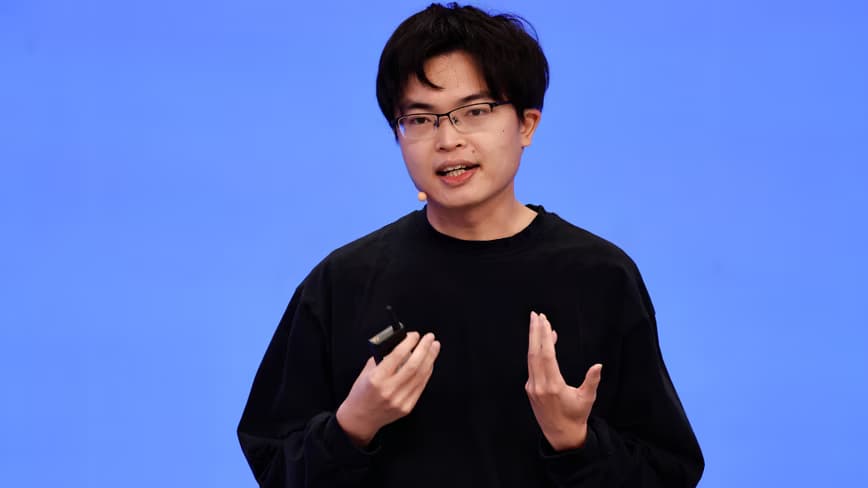
Image: TNW
Moonshot AI has unveiled Kimi K3, a 2.8-trillion-parameter system the Chinese startup describes as the world’s largest open-weight AI model. Announced on 16 July, the release pushes Moonshot closer to the US frontier labs it has spent the past two years chasing.
The timing is notable. Weeks after reports that Moonshot was seeking a $30bn valuation, K3 looks like a direct attempt to back up that number. On the company’s own benchmarks, the model ranks second overall, behind only Anthropic’s Fable 5 and OpenAI’s GPT-5.6 Sol.
Moonshot, best known outside China for its Kimi chat assistant, says K3 uses a sparse mixture-of-experts architecture. It activates roughly 50 billion of its 2.8 trillion parameters for each token by routing through 16 of 896 experts.
K3 also has a 1-million-token context window and includes what Moonshot calls Kimi Delta Attention, which the company says decodes up to 6.3 times faster on million-token inputs. Another technique, Attention Residuals, is credited with delivering about 25% higher training efficiency at under 2% extra cost. Moonshot says K3 achieves roughly 2.5 times better scaling efficiency than Kimi K2.

Recommended reading
Chinese startup Z.ai nears $1bn in sales
For now, the “largest open model” claim is difficult to challenge on paper. DeepSeek’s V4-Pro is listed at 1.6 trillion parameters, Kimi K2 at 1 trillion, and Grok 4.5 is estimated at around 1.5 trillion. But Moonshot will not release K3's weights until 27 July, so outside researchers cannot yet verify the parameter count or reproduce the benchmark results.
Benchmarks, pricing, and licence
Where independent signals do exist, K3 appears strong but not dominant. It scored 77.8 on Program Bench and 93.5 on GPQA-Diamond. Moonshot says it leads the US models on several coding suites, while trailing on tougher software-engineering tests such as FrontierSWE. On Arena.ai’s blind front-end coding leaderboard, developers ranked K3 above both GPT-5.6 Sol and Fable 5.
The model is natively multimodal, handling text and images, and Moonshot is offering it through its Kimi apps and an API compatible with the OpenAI software development kit. Pricing is aggressive:
- $0.30 per million cached input tokens
- $15 per million output tokens
Moonshot is expected to publish K3 under a modified MIT licence, though it has not confirmed the final wording. The launch also comes as the company unwinds its VIE structure ahead of a planned Hong Kong listing. If the weights arrive on 27 July as promised, Moonshot’s biggest claim will finally be open to public scrutiny.

AI Editor
Ava covers the rapidly evolving world of artificial intelligence, from foundational models and research labs to the real-world economics of intelligence. With a background in computational linguistics, she cuts through the hype to find out what actually works. She firmly believes that benchmarks are just marketing until reproduced in the wild.
via TNW