• 2 min read
Roscosmos and NASA step up satellite coordination
Roscosmos and NASA will share more detailed orbital data to reduce collision risks as satellite numbers surge in orbit.

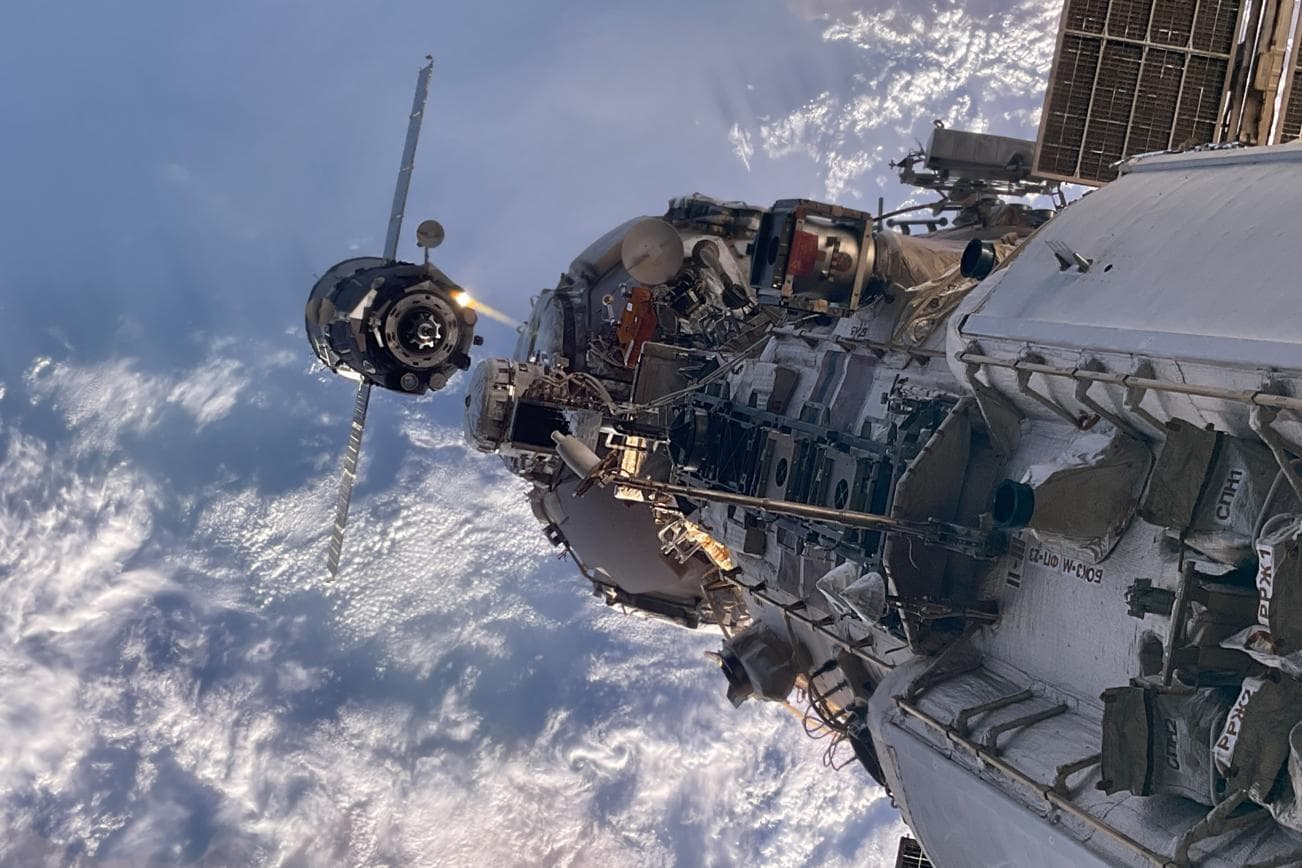
Image: iXBT
Roscosmos and NASA have agreed to begin detailed coordination of their satellite constellations to reduce the risk of spacecraft collisions in orbit. The announcement came from Roscosmos Director General Dmitry Bakanov, who said the move reflects the rapid growth in the number of satellites now operating in space.
According to Bakanov, Russia’s orbital group includes hundreds of satellites, while foreign partners already operate thousands. In that environment, he said, closer information-sharing and coordination are becoming necessary for the safe operation of spacecraft.
“Our colleagues from NASA made a very logical request to begin more detailed coordination between satellite constellations. <…> There are collision risks, and that cannot be allowed, so Roscosmos and NASA will work very closely together in this area.”
The statement came after the launch of the crewed spacecraft Soyuz MS-29 to the International Space Station. The Soyuz-2.1a launch vehicle lifted off from Baikonur on July 14 at 17:48 Moscow time, and the spacecraft docked successfully with the ISS just over three hours later.
The mission delivered Roscosmos cosmonauts Pyotr Dubrov and Anna Kikina, along with NASA astronaut Anil Menon, to the station. Their expedition is scheduled to last 261 days, during which the crew will carry out dozens of scientific experiments and other tasks under the flight program.

Recommended reading
31% solar module drops indium for cheap tin oxide

Frontier Editor
Dan is our resident futurist, covering electric mobility, space exploration, and the smart home. He's interested in atoms just as much as bits. Whether it's a new battery chemistry, a reusable rocket, or a protocol that finally makes IoT devices talk to each other, Dan breaks down the engineering that pushes humanity forward.
via iXBT