• 2 min read
Russian Moon Base Airlock Targets Lunar Dust
MAI and FMBA have designed a lunar station airlock to keep regolith off suits and equipment, with prototype testing set to start in 2027.

Image: ITzine
A team from MAI and FMBA has designed an airlock module for a future Russian lunar station, aimed at one of the Moon’s most stubborn engineering problems: keeping lunar dust off spacesuits and equipment before crews re-enter the habitat.
The planned compartment will have a diameter of about 2.2 to 2.4 meters. Inside, engineers intend to install thermal control systems, links for connecting spacesuits to onboard power, and equipment for removing regolith.
The dust-control work is central to the project. Engineers are currently testing two approaches for cleaning suits after surface activity: mechanical cleaning and treatment with alternating current to shake particles loose. That matters because lunar regolith is far harsher than ordinary dust on Earth. Its particles are finer, sharper, and stickier after billions of years of bombardment by micrometeorites and radiation.
That behavior was already seen during the Apollo program. Regolith can cling to fabrics, seams, glass, and joints, carrying abrasive material into a module, damaging equipment, and potentially irritating astronauts' airways.
Recommended reading
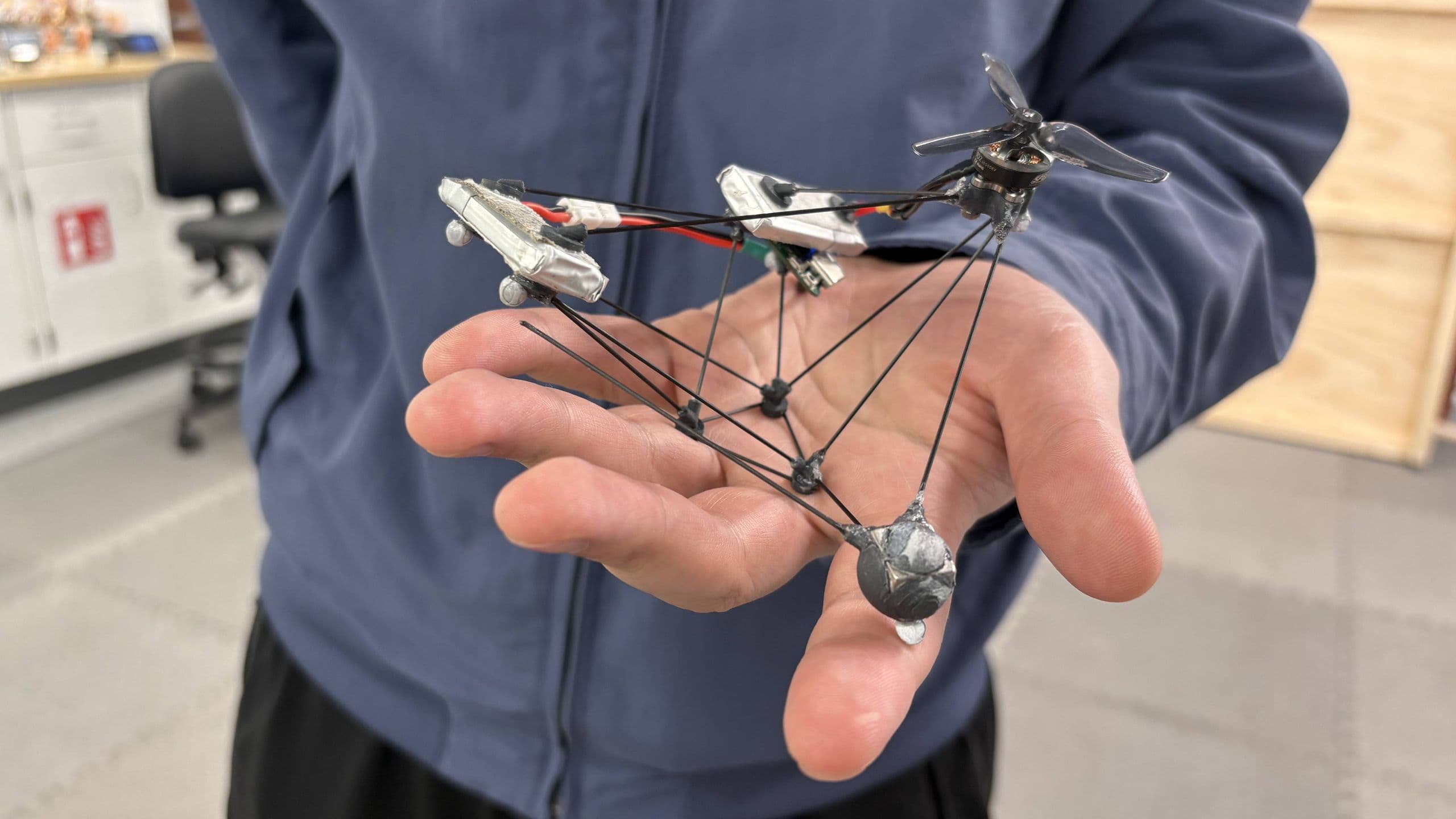
This drone spins itself nearly out of sight
The issue is not unique to Russia. According to the source, NASA is building regolith protection into the architecture of its Artemis missions, while China, through the International Lunar Research Station program, is also focusing on practical habitation and engineering scenarios on the Moon.
The Russian prototype will be built as part of an experimental mock-up of a lunar base in Moscow, at an FMBA site. The team plans to surround the structure with an artificial lunar landscape and a regolith analogue so testing can happen in conditions closer to actual landings and surface operations rather than in a sterile lab.
Beyond dust protection, the mock-up will also be used to test other future habitat systems, including:
- emergency rescue systems
- pressure maintenance
- temperature control
- shielding from cosmic radiation
The airlock prototype is expected to be built within a year, with test operation starting in 2027. If the schedule holds, the project could have a working set of lunar surface access solutions by the middle of the decade, rather than just a presentation model.

Frontier Editor
Dan is our resident futurist, covering electric mobility, space exploration, and the smart home. He's interested in atoms just as much as bits. Whether it's a new battery chemistry, a reusable rocket, or a protocol that finally makes IoT devices talk to each other, Dan breaks down the engineering that pushes humanity forward.
via ITzine