• 2 min read
Samsung’s 16TB PCIe 6.0 SSD hits 28.4GB/s
Samsung has started mass-producing the 16TB PM1763, a PCIe 6.0 enterprise SSD built for AI data centers, not consumer PCs.
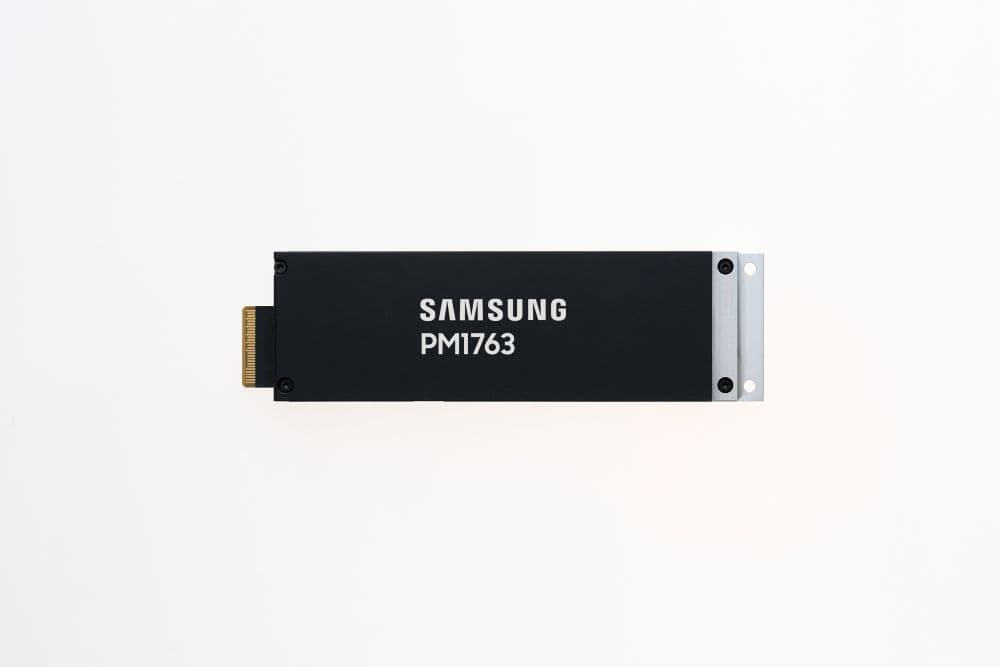
Image: TechRadar
Samsung says it has begun mass production of the PM1763, a 16TB PCIe 6.0 SSD aimed at AI data centers. On paper, it is now the company’s top enterprise SSD, with quoted speeds of 28,400 MB/s for reads and 21,900 MB/s for writes.
That makes it roughly twice as fast as its predecessor, the PM1753, and one of the fastest enterprise drives currently announced. The PM1763 uses Samsung’s 9th-generation V-NAND and a 4nm controller, taking advantage of PCIe 6.0, which doubles per-lane bandwidth over the previous generation.
The catch is simple: this is not a drive for regular PCs. The PM1763 uses an EDSFF-only form factor and needs PCIe 6.0 connectivity, which is not yet available in consumer hardware.
Recommended reading
Micron’s 245.76TB SSD posts standout benchmark gains
Compared with rival offerings, Samsung appears to have a narrow edge in peak sequential performance. The Micron 9650 is rated for 28,000 MB/s reads and 14,000 MB/s writes, also over PCIe 6.0. Samsung’s bigger lead comes in a metric that matters to AI workloads, with 6.92 MIOPS in sequential read speed versus 5.5 MIOPS for Micron’s drive.
Samsung also says the PM1763 is 1.8x more power efficient than the PM1753, and supports post-quantum cryptography (PQC) algorithms as well as the TEE Device Interface Security Protocol (TDISP).
Server platforms and consumer reality
The timing lines up with next-generation server hardware. Nvidia’s Vera platform and AMD’s EPYC “Venice” both support PCIe 6.0, giving enterprise buyers the infrastructure these drives need to reach full speed.
Consumers are nowhere near that point. Even high-end retail drives like Samsung’s 9100 Pro still top out at 14,800 MB/s read and 13,400 MB/s write speeds on PCIe 5.0. TechRadar notes that PCIe 6.0 consumer platforms do not yet exist, and even when they do, pricing is likely to keep this class of storage far out of reach.
There is also a supply issue. As TechRadar points out, Phison’s CEO has warned that AI demand will keep NAND and DRAM in shortage through 2026. For now, the PM1763 looks less like a future desktop upgrade and more like a showcase of what the data center market can buy first.

Enterprise Editor
Marcus follows the money. He covers enterprise software, cloud architecture, and the tectonic shifts in Big Tech strategy. He translates dense earnings calls and complex M&A activity into actionable insights about where the industry is actually heading. If a tech giant makes a silent pivot, Marcus is usually the first to notice.
via TechRadar