• 2 min read
New solar panel tops 26% and shrugs off shade
PolyU researchers say a new perovskite-organic tandem solar panel keeps over 90% efficiency after -40 V stress and now exceeds 26% efficiency.
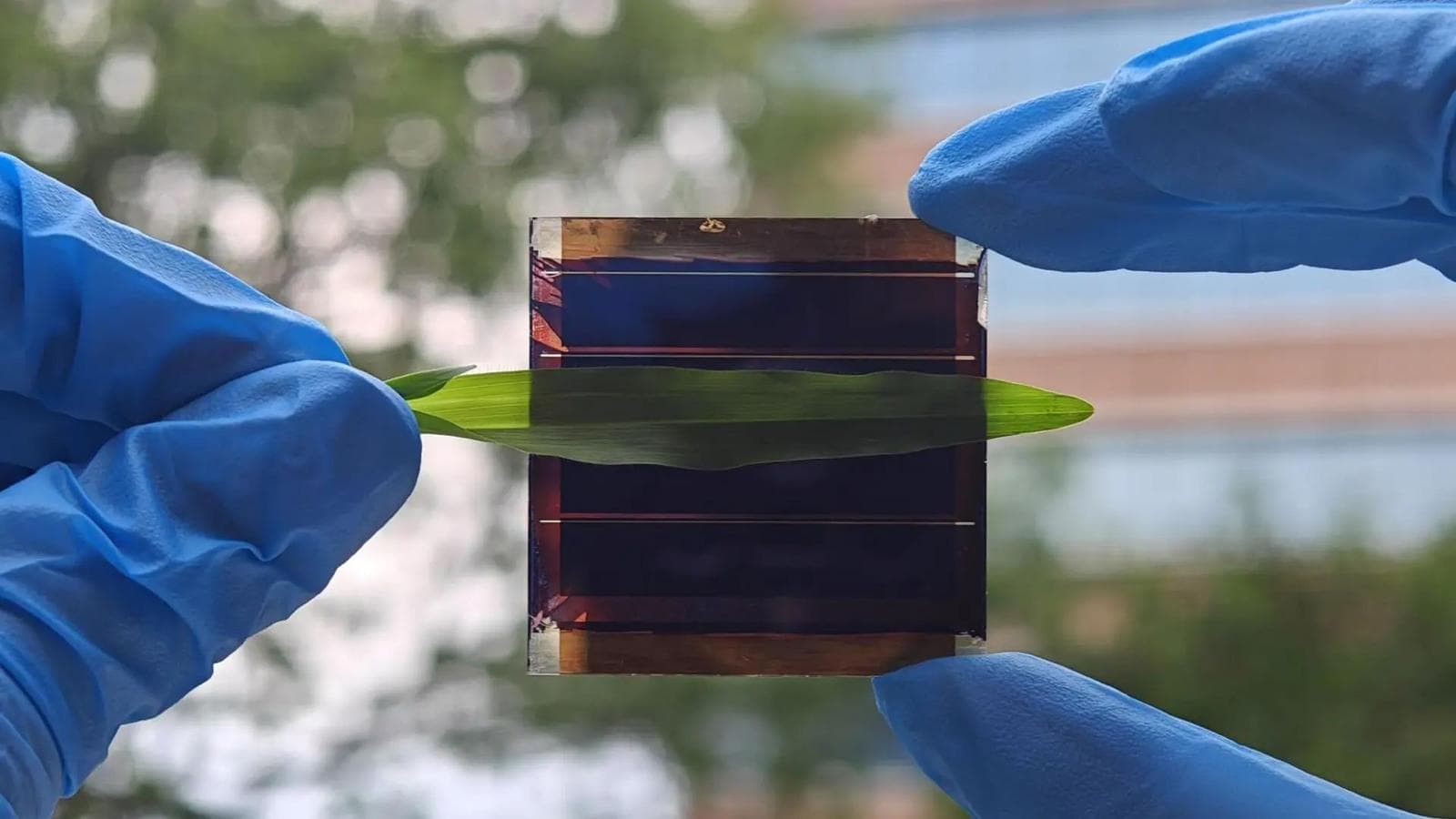
Image: iXBT
Researchers at The Hong Kong Polytechnic University (PolyU) have developed a new perovskite-organic tandem solar panel designed to keep working under partial shading, one of the biggest weaknesses of modern thin-film solar panels.
If part of the panel is shaded by trees, buildings, or clouds, the new cells continue operating without major degradation. In testing, they retained more than 90% of their original efficiency after exposure to reverse bias up to -40 V, a level that typically causes irreversible damage in most existing thin-film solar cells.
Partial shading has long been a hard problem for solar power. When some cells stop receiving light, reverse voltage builds up in the shaded sections. That cuts power output and gradually damages the material, shortening the lifespan of the whole panel.

Recommended reading
German team speeds PFAS breakdown in water
The researchers found that the main source of this degradation is deep charge traps in the organic active layer. These defects hold charge carriers, reducing energy-conversion performance and speeding up structural damage.
To fix that, the team redesigned the active-layer architecture to reduce the number of isolated acceptor regions. According to the report, that sharply lowered defect density and improved the cells' resistance to reverse voltage. The resulting organic photovoltaic cells can withstand more than -35 V without irreversible damage.
The upgraded organic layer also protects the perovskite part of the tandem structure by preventing reverse current tunneling, one of the key failure mechanisms under shading. Even after -40 V exposure, the tandem cells still preserved more than 90% of their initial efficiency.
Durability tests were also strong:
- After 12 hours at -20 V, the cells kept about 90% of their initial efficiency
- After 2000 hours — about 83 days — at -4.5 V, they retained 97%
The team also improved conversion efficiency. In earlier work published in 2025, the tandem cells reached 25.9% efficiency. The new version now exceeds 26%.
The study authors say the mix of higher efficiency, shading tolerance, and durability pushes the technology closer to commercial use, both in large solar power plants and in a new generation of flexible solar panels.

Frontier Editor
Dan is our resident futurist, covering electric mobility, space exploration, and the smart home. He's interested in atoms just as much as bits. Whether it's a new battery chemistry, a reusable rocket, or a protocol that finally makes IoT devices talk to each other, Dan breaks down the engineering that pushes humanity forward.
via iXBT